Your First Korean Noraebang: Choose a Room, Find a Song and Take Your Turn
A practical introduction to Korean karaoke: coin booths versus room rentals, song controls, payment questions and relaxed group etiquette.
You do not need to sing well to enjoy a noraebang. The useful skill is knowing what you are paying for and how to put one song into the queue. Once those two things are clear, a first visit can be pleasantly uncomplicated.
The Korean word 노래방 means singing room. 코인노래방 points you toward a coin-style setup, often with small booths. These are useful map search terms, but a map label does not replace the entrance price board.
Choose the kind of session you actually want
| Your plan | What to look for | Confirm before paying |
|---|---|---|
| Try a few songs alone | A small coin-style booth | Whether credit buys songs or time |
| Sing with two or three friends | A booth with enough space | Capacity and the total charge |
| Spend longer with a group | A timed private room | Room rate, any per-person charges and extensions |
| Find particular foreign-language songs | A machine with that catalog | Provider, search options and song availability |
The Korea Tourism Organization's dailycation guide includes finding a noraebang and using the remote. Treat it as an introduction: a feature shown on one machine is not a promise that another venue offers it.
Read the bill before the first song
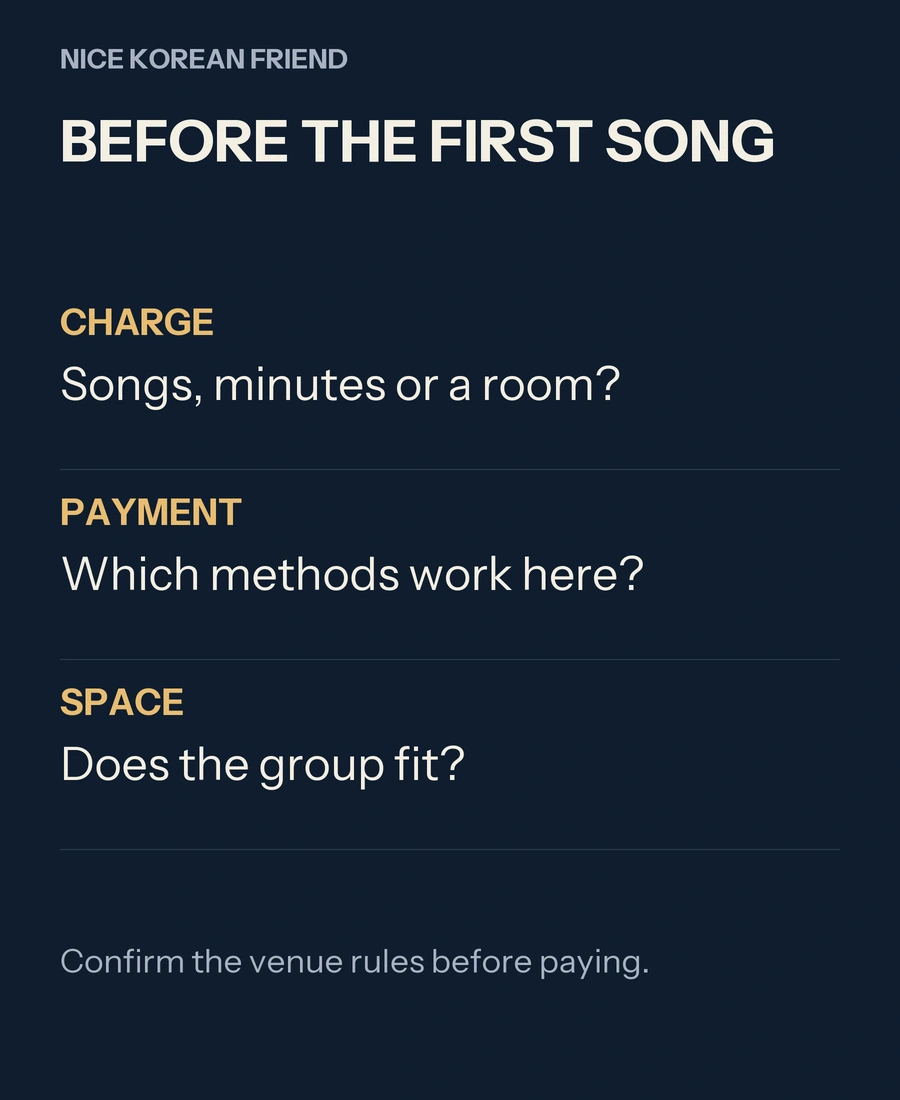
Ask 이 금액으로 몇 곡 부를 수 있어요? — How many songs can I sing for this amount? if credit is sold by song, or 이 금액으로 몇 분 이용할 수 있어요? — How many minutes can I use it for this amount? if it is sold by time. For a group room, ask 방 하나 가격이에요, 1인당 가격이에요? — Is that per room or per person?
Look for the displayed rules about payment, room occupancy, outside food and drinks. If you want an extension, find out how it is added before your original session runs out. Do not assume that extra time displayed on a screen will always be complimentary or that a previous visit's price still applies.
A practical first choice is a small purchase: enough to learn the controls and sing a song or two. You can decide whether to continue after you understand the setup. There is no need to commit to a long room rental simply because other people in the entrance area are doing so.
Find a song without filling the whole queue
Start by checking the machine provider. A number from one catalog may not identify the same song on another. Use the provider's own search service where available; TJ Media is one example. An online result still needs to match the equipment in your room.
As of November 2026, TJ's website search covers Korean songs, pop songs and Japanese songs; it does not search every foreign-language catalog. A missing website result therefore does not by itself prove a song is absent from the venue machine.
Search for a familiar artist or title. Ask staff to show the language selector if you cannot find it. Avoid pressing many unlabeled buttons in a hurry: you may change a setting or queue songs while trying to search.
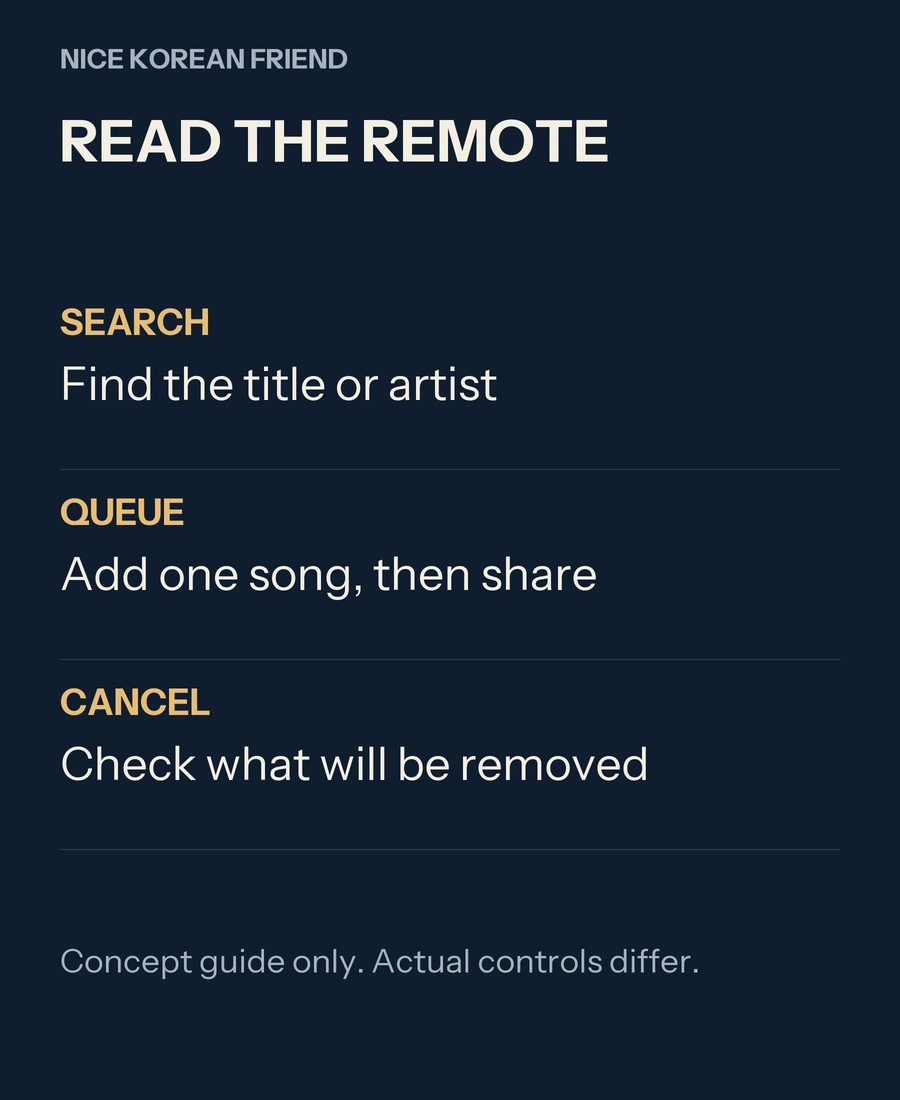
| Korean label | Common meaning | What to check |
|---|---|---|
| 검색 | Search | Which field or language is selected |
| 시작 | Start | Whether it begins the highlighted song |
| 예약 | Queue or reserve | Which song is about to be added |
| 취소 | Cancel | Whether it cancels a selection or the current song |
| 음정 | Key or pitch | Change only if you want a different singing key |
| 템포 | Tempo | Change only if you want a different speed |
For a first song, search the title and artist, select the matching version, add it with the queue control, and check the on-screen list before starting. Labels and button behavior vary by machine; ask staff to demonstrate if the screen does not match.
For the wider shared-space habits, see our Korean etiquette guide.
Make a group session comfortable
Queue one song, then give someone else a turn. Ask before turning another person's solo into a duet or canceling their song. If a friend prefers to listen, let that be a complete way to join in.
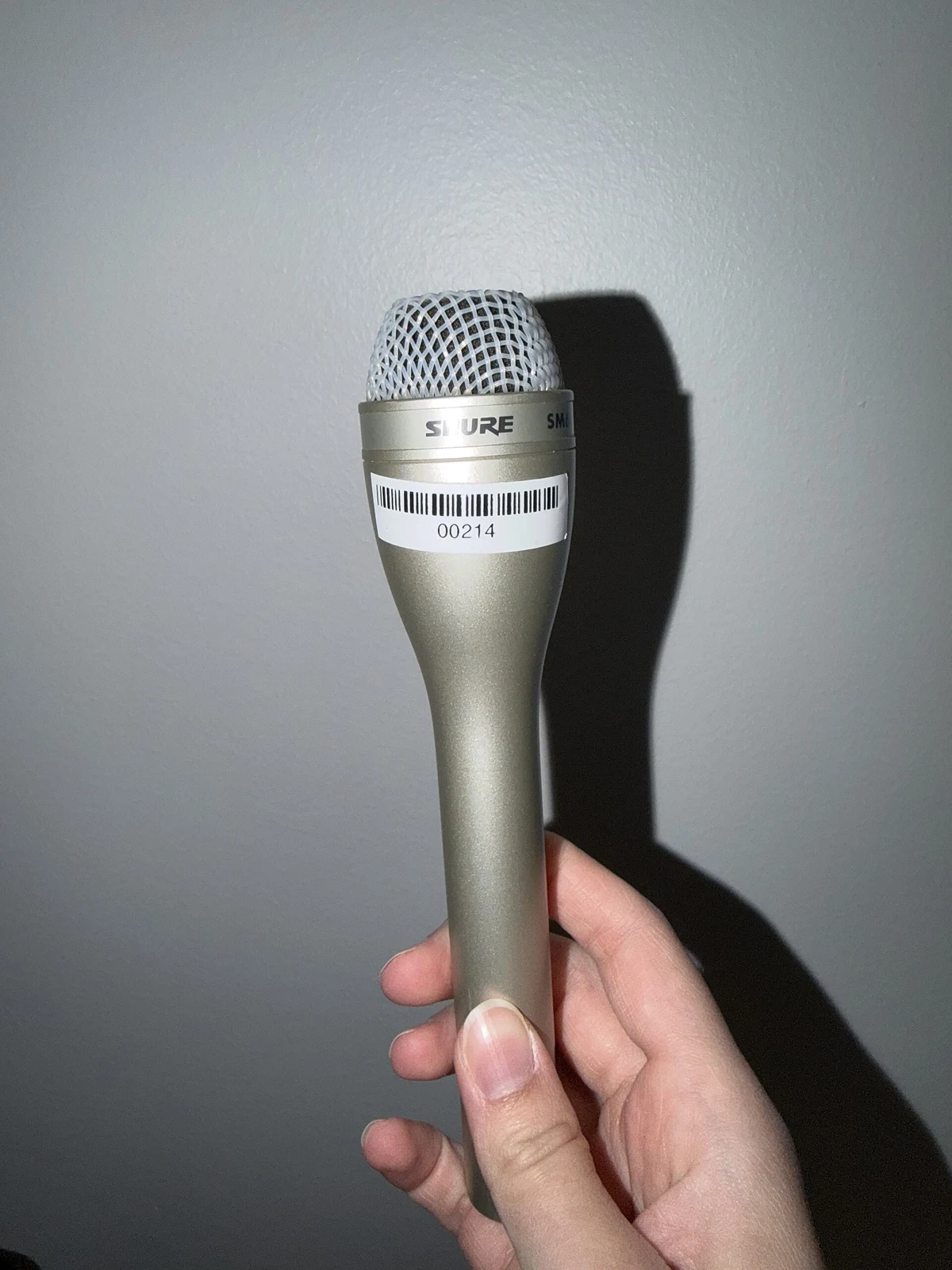
Keep the microphone at a comfortable distance, and lower the volume if the room feels painfully loud. Avoid holding it against a speaker. Use microphone covers if the venue supplies them, and follow its cleaning and food rules.
Recording is a separate question from singing together. Ask your friends before filming, then ask again before uploading a clip. A private room does not turn someone else's performance into public content.
Finish without an awkward surprise
Watch the remaining time or credits. Before leaving, check the seat, shelf and charging area for your phone and wallet. Return equipment as instructed and settle any extra charges with staff.
For a first visit, success can mean finding one song you know and leaving with a better understanding of the controls. Save the venue name and machine provider if you liked them. That is more useful for the next visit than memorizing a price from someone else's video.
Official sources
Frequently asked questions
›Can I go to a noraebang alone?
Yes, a small booth can suit a solo session. Check the venue capacity and charging method before paying.
›Does coin noraebang mean coins are the only payment?
Not necessarily. Read that venue’s payment instructions and ask which methods its machine accepts.
›Will every machine have the same English songs?
No. Song libraries and numbering depend on the machine provider and updates. Check the actual system before relying on a saved number.
Sources and updates
Last edited on November 20, 2026. Sources support the specific details discussed in the guide; check the provider for current prices, availability and eligibility.