Korean Etiquette Basics: What Matters, What's a Myth
The Korean customs that actually matter for visitors — shoes, two hands, subway norms — and the internet myths you can safely ignore.
Search "Korean etiquette" and you'll find fifty-item lists that read like exam prep. Relax: locals don't grade visitors, and most of those items are for Korean-to-Korean relationships. Here's the honest split between what actually matters, what's nice, and what's a myth.
The short version
Shoes off indoors, two hands when giving or receiving, quiet on transit, no chopsticks standing in rice, no tipping. Learn "안녕하세요" (hello) and "감사합니다" (thank you) and deliver them with a small nod. That's the whole required course.
How it actually works
Shoes: read the floor. Homes are always shoes-off. Restaurants with raised floors or floor seating: shoes off (there'll be a shelf or a sea of shoes as your cue). Regular-table restaurants, shops, hotels: shoes on. The signal is always visible at the threshold — when you see shoes, add yours.
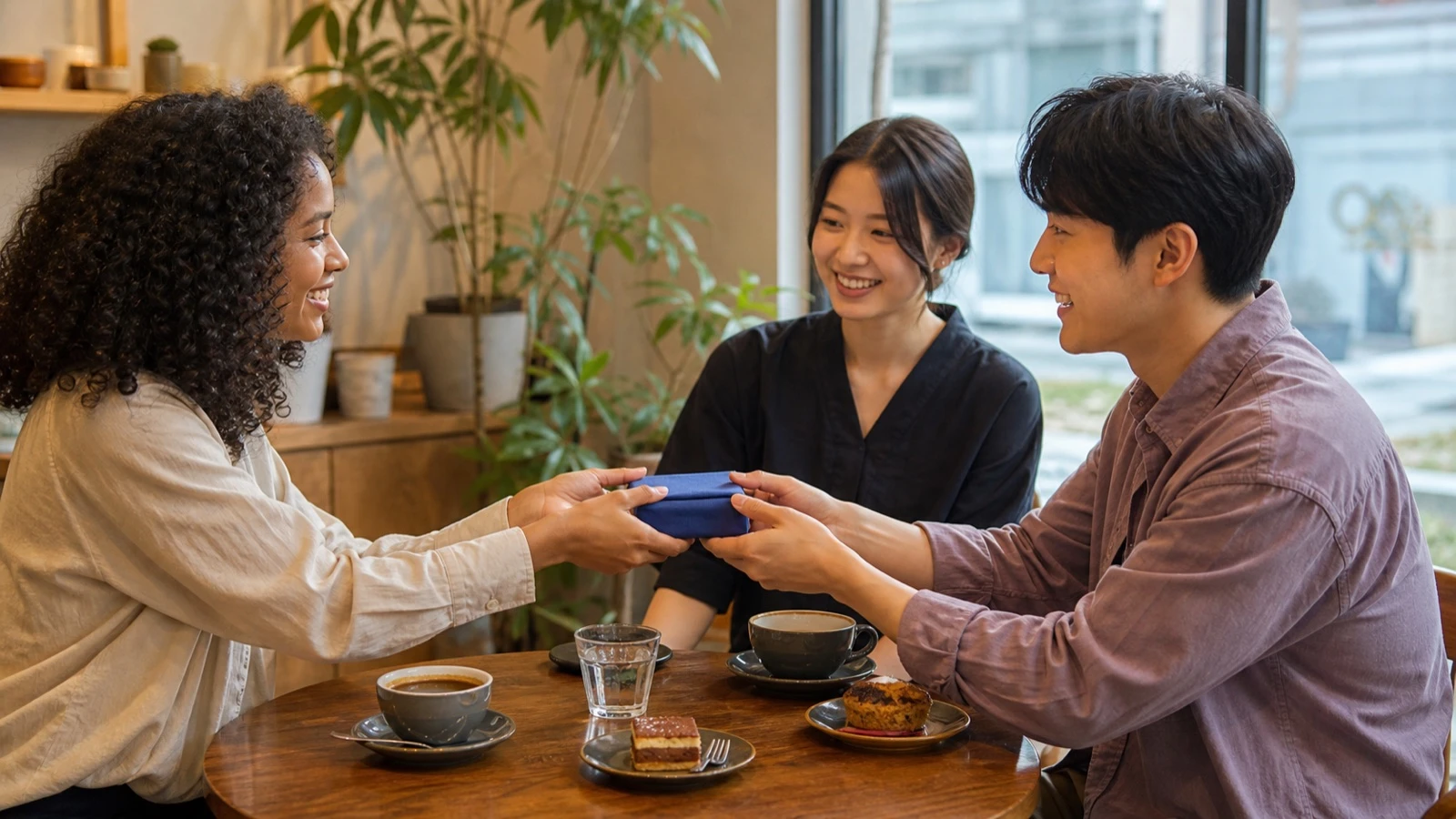
Two hands is the respect signal. Handing over money or a card, receiving a gift or business card, pouring a drink — using both hands (or your right hand with the left touching your forearm) reads as courteous, and matters most with people older than you. As habits go, it's cheap to adopt and quietly appreciated every time.
Public transit has a real code. Keep conversations and calls low; give up or avoid the marked priority seats; let passengers off before boarding; no eating meals aboard. The subway guide covers the fine print.
Table basics. Wait for the eldest to start eating at a shared meal, don't plant chopsticks upright in rice (funeral imagery), and pour drinks for others rather than yourself when drinking together. Full detail in Korean table manners.
Age is structural, not nosy. People may ask your age early — they're calibrating language and roles, not prying. The whole system is decoded in our age and honorifics guide.
Common misconceptions
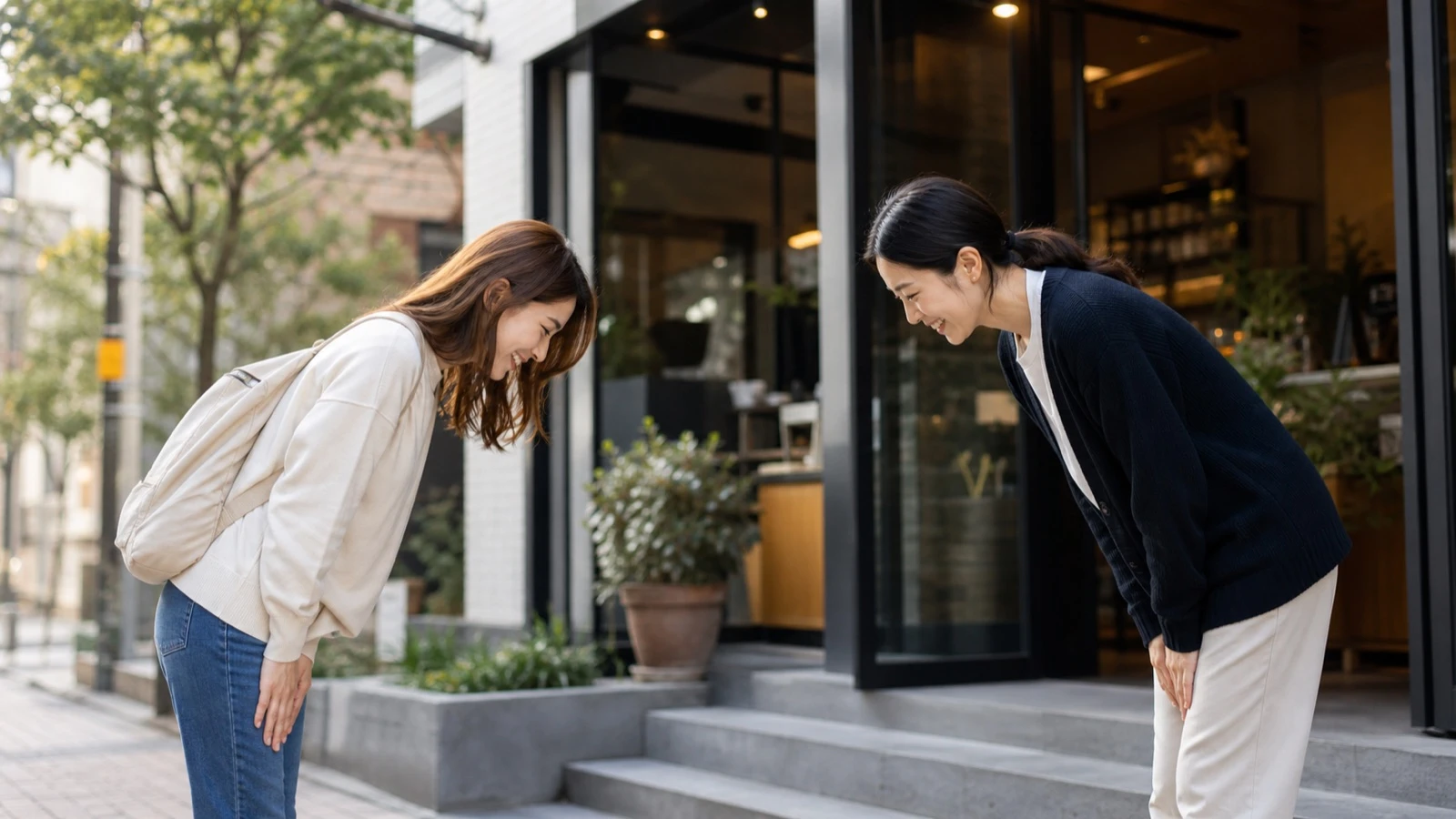
- Myth: you must bow deeply to everyone. A nod plus greeting is the visitor standard.
- Myth: tipping is secretly appreciated. It genuinely isn't a thing — restaurants, taxis, cafes, nowhere. Attempting it creates confusion and occasionally a foot chase to return your money.
- Myth: blowing your nose is deeply offensive. At the table it's considered unpleasant — step away or turn aside — but it's a mild courtesy point, not a scandal.
- Myth: you can't write names in red ink / gift shoes / etc. These older superstitions exist but the stakes for a foreigner are zero. File under trivia.
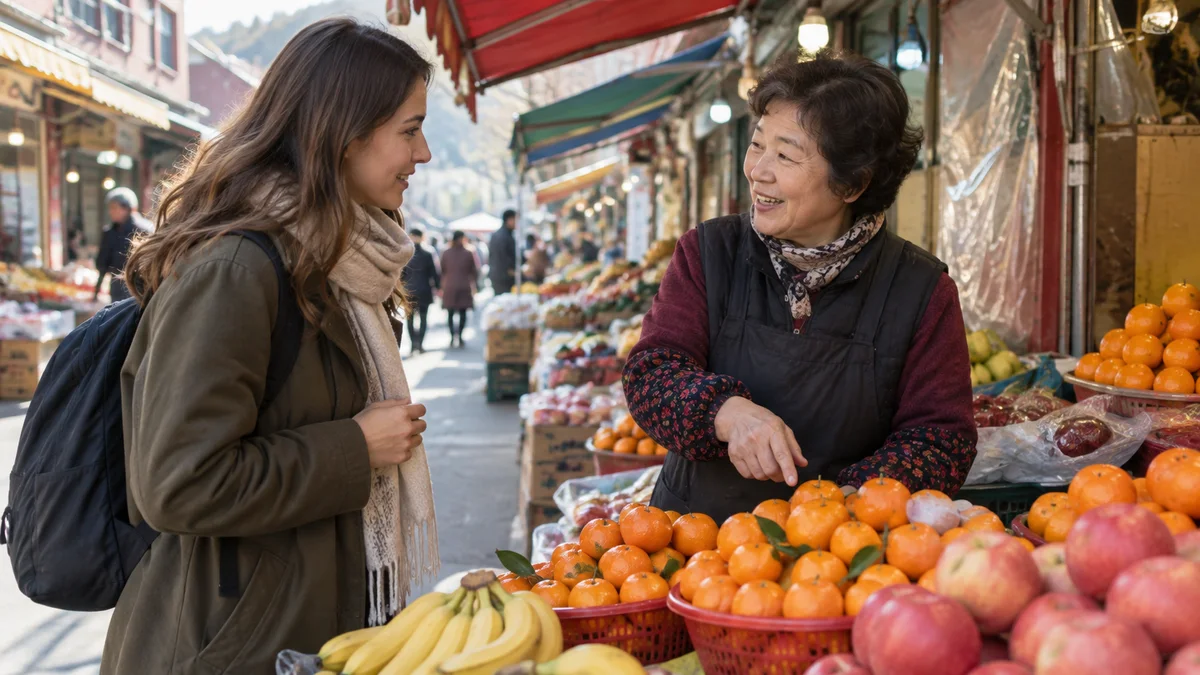
- Myth: Koreans are formal and reserved with strangers. Public-space reserve coexists with startling warmth once any interaction begins — expect grandmothers pressing snacks on you and strangers walking you to a destination rather than explaining directions.
What locals do
They break the small rules constantly — that's how you know which rules are load-bearing. What locals don't skip: the quiet on transit, the shoes, and respect markers toward elders. Copy their priorities, not their exceptions.
Good to know
Trash cans are rare on Korean streets (a policy choice, not neglect), so pocket your wrappers until a convenience store bin appears; littering is genuinely frowned upon. And the deepest etiquette hack in Korea isn't a rule at all — it's using the handful of Korean phrases that show you tried.
Asking politely when you are unsure
The National Institute of Korean Language’s dictionary entry for 좀 includes its use to soften a request. The phrase examples in this guide are practical editorial suggestions, not guarantees of how every person or restaurant will respond. Listen to the pronunciation where available and show the written Korean if your meaning is unclear.
Our editor’s local advice is to feel comfortable asking for help. Many people are willing to assist even if they do not speak much English. A translation app or ChatGPT can help you prepare a short question; let the other person confirm the meaning. At a restaurant, point to the exact menu item and confirm quantity, price and any dietary restriction before ordering. Customs vary by setting, so follow the host’s cues and ask rather than worrying about performing every gesture perfectly.
Frequently asked questions
›Do I need to bow, and how deep?
A small nod of the head with a greeting is plenty for a visitor — it reads as polite and natural. Deep bows are for formal or ceremonial situations locals will navigate for you. Nobody expects choreography from a foreigner; they notice warmth, not angles.
›Are tattoos and revealing clothes a problem?
Visible tattoos are common among younger Koreans now and unremarkable on the street; a few saunas and pools still restrict large ones. Clothing-wise, shorts and short skirts are everyday wear — the mild convention you may notice is that low-cut tops draw more looks than short hemlines.
›What's the single rudest thing tourists do without realizing?
Being loud in enclosed shared spaces — subway cars, buses, quiet restaurants. Korean public space runs quieter than most visitors' baseline, and volume is the fastest way to stand out. Match the room's noise level and you're instantly ahead of the curve.
Sources and updates
Last edited on October 12, 2026. Sources support the specific details discussed in the guide; check the provider for current prices, availability and eligibility.