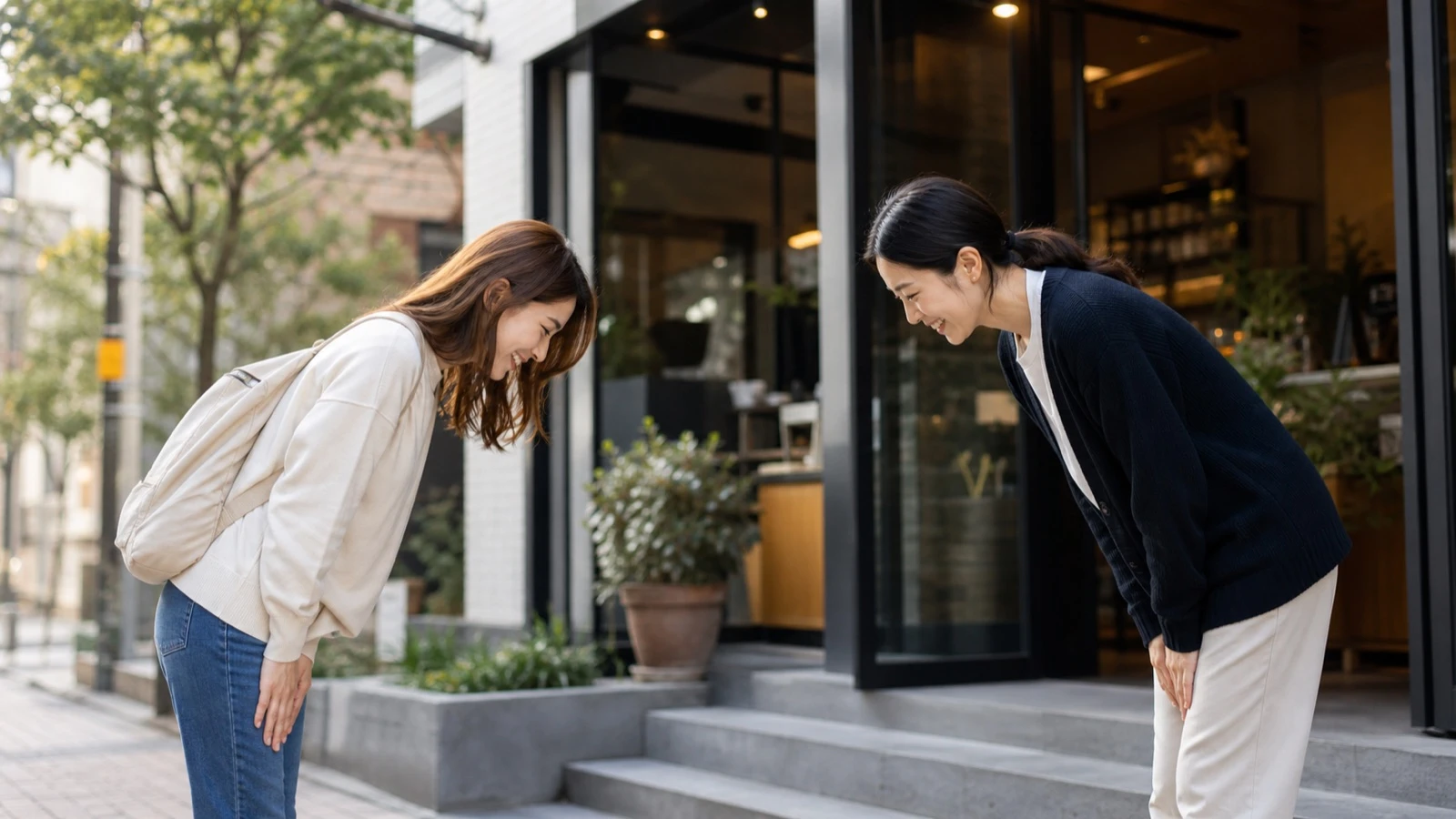
Korean Table Manners: The Friendly Rulebook
Chopstick rules, drinking rituals, who eats first and what's shared — Korean table manners explained without the fear-mongering.
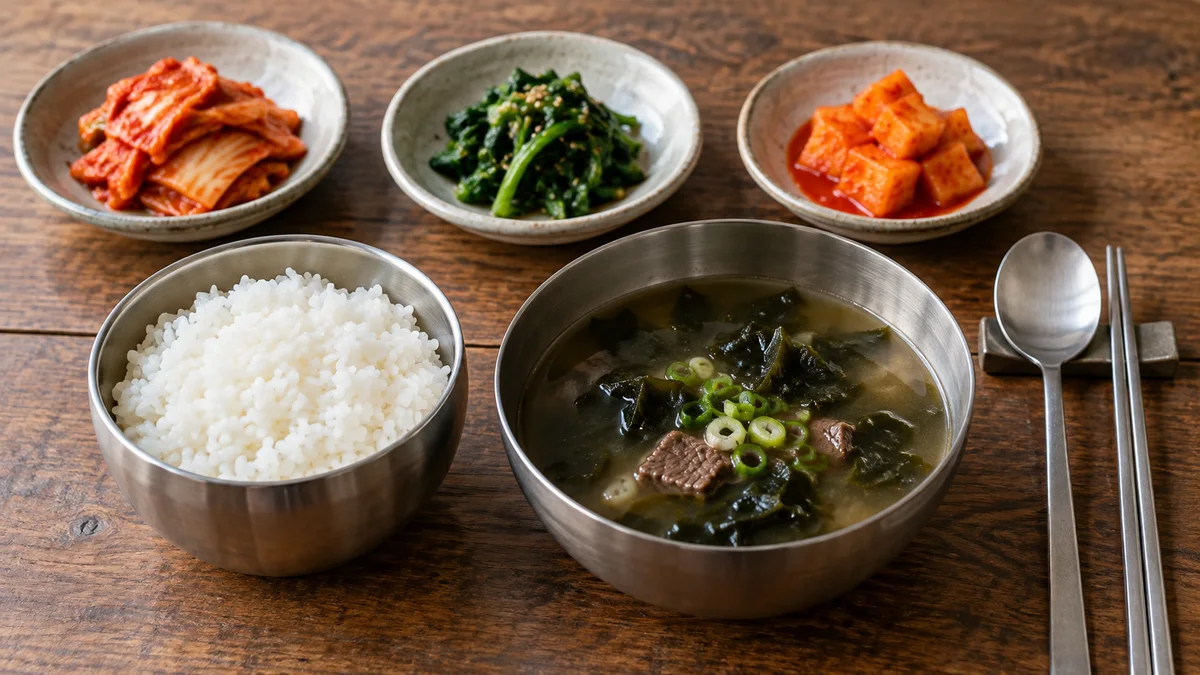
Korean meals are social machinery: shared dishes, shared grill, shared bottle. The manners exist to keep that machinery friendly, and they're less scary than the internet suggests. Here's the honest rulebook, sorted by how much each rule actually matters.
The short version
Chopsticks never stand upright in rice. Rice bowl stays on the table. Elders start first. Pour for others, not yourself, ideally with two hands. Congratulations — you now outperform most first-time visitors.
How it actually works
The spoon is your friend. Korean dining uses a chopsticks-plus-spoon set (수저, sujeo). The spoon handles rice and soup — lifting the bowl to your mouth, normal in Japan or China, is the thing not done here. Bowl on table, spoon to mouth. Chopsticks handle everything else; using both at once in one hand is the only real foul.
Chopstick red lines. Upright in rice: never (it mimics funeral incense). Beyond that: don't spear food like a harpoon, don't dig through a shared dish for the best piece, and rest chopsticks on the bowl's edge or the table, not across your rice.
Shared dishes are actually shared. Banchan and stews are communal; taking from them with your own chopsticks is normal among friends and family. In formal company, use serving spoons where provided. Double-dipping into shared sauce after biting: same rule as everywhere on earth.
Elders anchor the meal. At a shared table, the eldest lifts their spoon first and, ideally, sets it down last-ish — don't sprint ahead or bolt early. In practice someone will wave you to start ("먼저 드세요" — please go ahead); accept graciously.
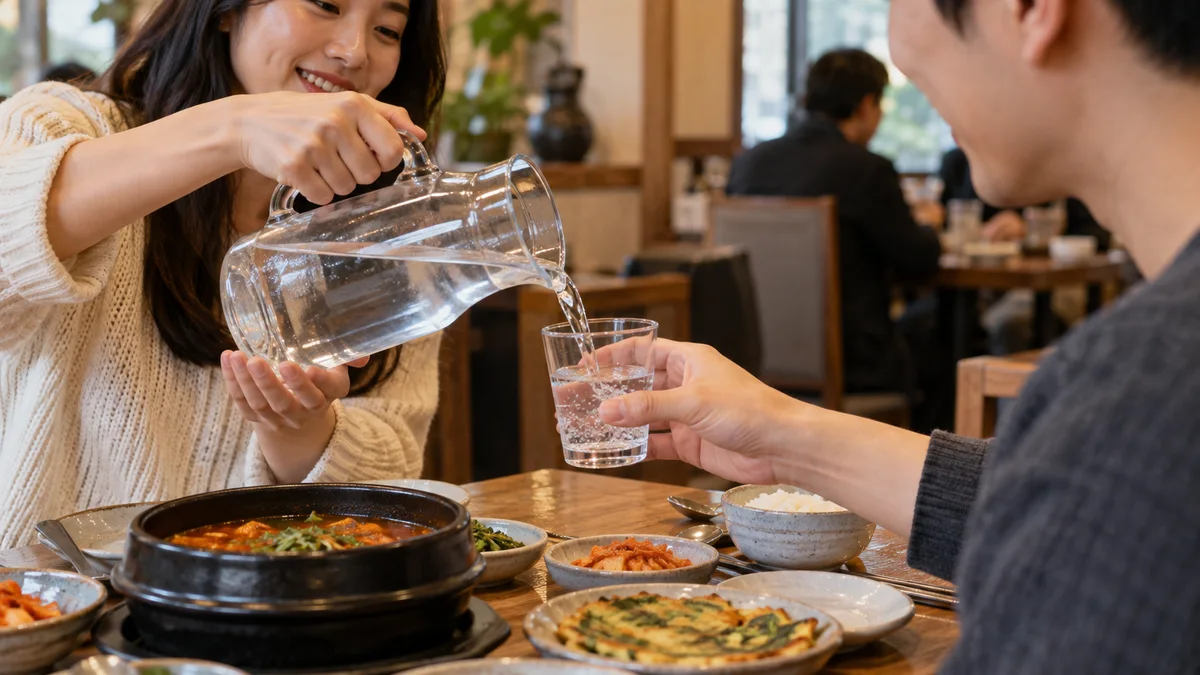
The drinking ritual is the real etiquette exam — and the most fun. Never pour your own glass; fill others' glasses when they're empty and someone will fill yours. Receive a pour by holding your glass with two hands (or one hand with the other touching your arm); pour for elders the same way. First toast is communal — "건배!" (geonbae). With notably senior company, the traditional extra credit is turning slightly away as you sip. Soju mechanics, chimaek culture and how to pace yourself deserve their own guide — the short version is: eat while you drink, Koreans always do.
Sounds and signals. Slurping noodles: mildly acceptable, less enthusiastic than Japan. Blowing your nose at the table: step away instead. Talking with mildly full mouth mid-banchan-debate: happens at every Korean table, don't stress.
Common misconceptions
- "Finishing every grain is mandatory" / "leaving food is mandatory." Neither. Eat what you can; leaving some banchan untouched is completely fine — they're a spread, not a challenge.
- "You must use metal chopsticks perfectly." Korean flat metal chopsticks are objectively harder than wooden ones — locals know this and find visitor struggles endearing. Forks exist. Pride is optional.
- "Paying is split at the table." Historically the eldest or the inviter pays, and friendly fights over the bill are a national sport; younger groups increasingly split via app. As a guest, offer once sincerely, lose gracefully, and reciprocate with coffee after — that two-step is textbook Korean.
What locals do
Watch any table of Koreans: spoons in soup, chopsticks flying over shared dishes, glasses refilled the moment they empty, "잘 먹겠습니다" (jal meokgesseumnida — "I'll eat well," said before eating) and "잘 먹었습니다" (jal meogeosseumnida — "I ate well," said after). Those two phrases, plus the pouring ritual, are 90% of looking like you belong. The phrases live in our essential phrases guide, and the mechanics of actually ordering are in how to order in a Korean restaurant.
Asking politely when you are unsure
The National Institute of Korean Language’s dictionary entry for 좀 includes its use to soften a request. The phrase examples in this guide are practical editorial suggestions, not guarantees of how every person or restaurant will respond. Listen to the pronunciation where available and show the written Korean if your meaning is unclear.
Our editor’s local advice is to feel comfortable asking for help. Many people are willing to assist even if they do not speak much English. A translation app or ChatGPT can help you prepare a short question; let the other person confirm the meaning. At a restaurant, point to the exact menu item and confirm quantity, price and any dietary restriction before ordering. Customs vary by setting, so follow the host’s cues and ask rather than worrying about performing every gesture perfectly.
Frequently asked questions
›Is it rude to ask for a fork?
Not at all — most restaurants have forks and hand them over without ceremony, especially for kids and visitors. That said, Korean food is unusually spoon-friendly: the long-handled spoon is a full citizen of the Korean table, used for rice and stews, so you're never stuck with chopsticks alone.
›Do I really have to turn away when drinking with older people?
In formal or first-meeting situations with notably older Koreans, turning slightly away from the eldest while sipping is the traditional respect move — and doing it as a foreigner earns delighted reactions. Among friends and in casual settings it's not expected. Watch the table and mirror what you see.
›Can I refuse alcohol without offending anyone?
Yes. Refusing an offered drink is fine — the smoothest scripts are health, medication or 'I don't drink,' delivered with a smile. If you'd rather not refuse outright, accepting the pour and barely sipping is a time-honored technique. What matters socially is participating in the pouring ritual, not the consumption.
Sources and updates
Last edited on October 12, 2026. Sources support the specific details discussed in the guide; check the provider for current prices, availability and eligibility.