How to Order in a Korean Restaurant (Tablets, Bells and All)
Call buttons, tablet menus, self-serve water and free side dish refills — the Korean restaurant operating system, explained step by step.
Before choosing a table, our guide to restaurant reservations and waitlists without a Korean phone number explains how to book ahead or join a queue.
Korean restaurants can feel like everyone else got a manual you didn't: people summon staff with buttons, water appears from a machine in the corner, and the bill gets paid standing up by the door. Here's the manual.
Before you start
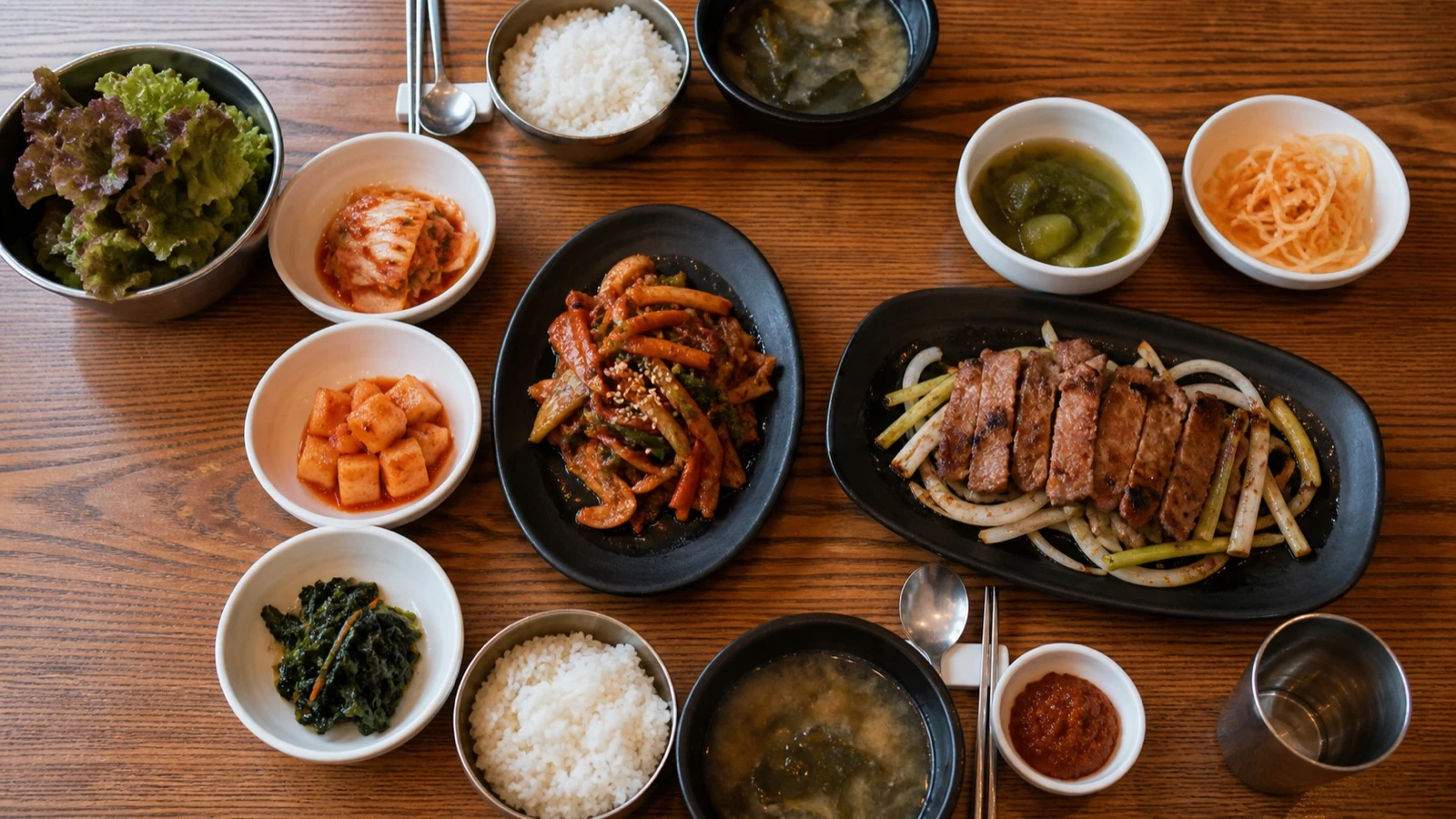
Two mindset shifts. First, service is on-demand: staff come when called, which is a feature, not neglect. Second, banchan (반찬) — the small side dishes that arrive unasked — are free, shared by the table, and usually refillable. They're not an appetizer you'll be charged for.
What you need
Nothing but an appetite. Menus at busy places increasingly have photos, English, or both; when they don't, Papago's camera mode (get it here) reads menus fine, and pointing at another table's food is a time-honored, completely acceptable technique.
Step-by-step
- Enter and read the room. If there's a host, they'll ask "몇 분이세요?" (how many?) — hold up fingers. If nobody greets you at a casual place, seat yourself at any open table.
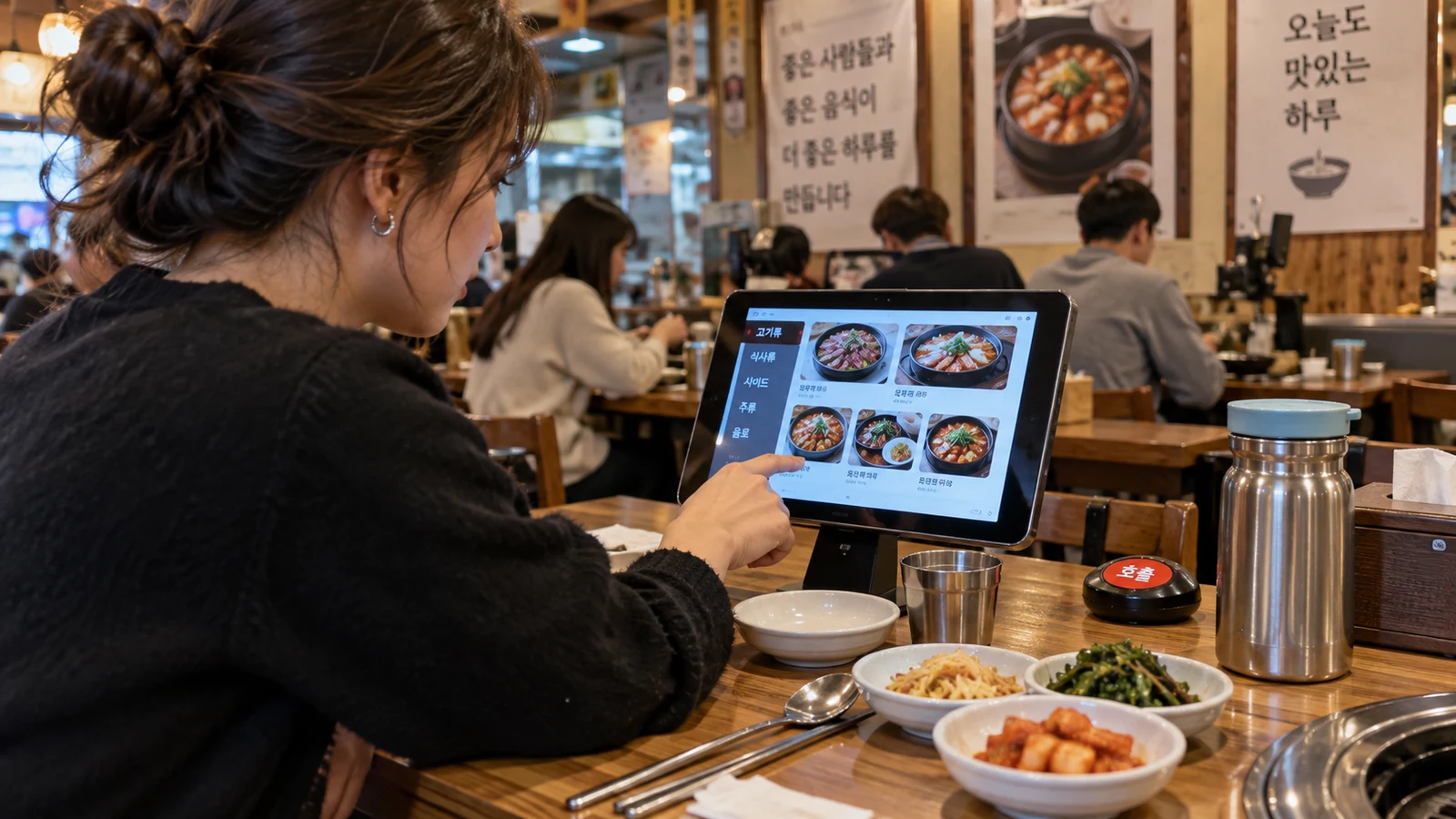
- Find the ordering method. In rough order of frequency: a tablet on the table (look for an English toggle, usually a flag or "ENG" button), a call bell on the table's edge or wall, or the classic shout — "저기요!" (jeogiyo).
- Order. Dish name plus quantity is plenty: "비빔밥 두 개 주세요" (bibimbap du gae juseyo — two bibimbap, please). Pointing at the menu with "이거 주세요" (igeo juseyo — this, please) works flawlessly.
- Get your own water. Look for the water station (정수기): metal cups, cold water, self-serve. Cutlery lives in a box on the table or in a drawer built into the table's side — check the drawer; it delights everyone the first time.
- Eat, refill, repeat. Want more of a side dish? Bell + "반찬 좀 더 주세요" (banchan jom deo juseyo). Free, expected, no eye-rolls.
- Pay at the counter. In most casual places the bill lives on your table or is tracked by table number, and you pay standing at the register by the exit. Cards are accepted essentially everywhere. No tipping — there's no tip line, and leaving cash causes confusion, not gratitude.
What it costs
Everyday solo meals (soups, rice bowls, noodle dishes) cluster around the several-thousand-won range that makes Korea one of the best value food countries anywhere; BBQ and shared feasts scale with meat and drinks. Prices are on the menu, tax included — what's printed is what you pay.
Common problems (and fixes)
- The tablet is Korean-only. Look for 🇬🇧/ENG in a corner; failing that, photo-translate it, or press the bell and order the old way.
- A dish arrived that I didn't order. It's almost certainly a free side or a service item ("서비스" — on the house). Enjoy it.
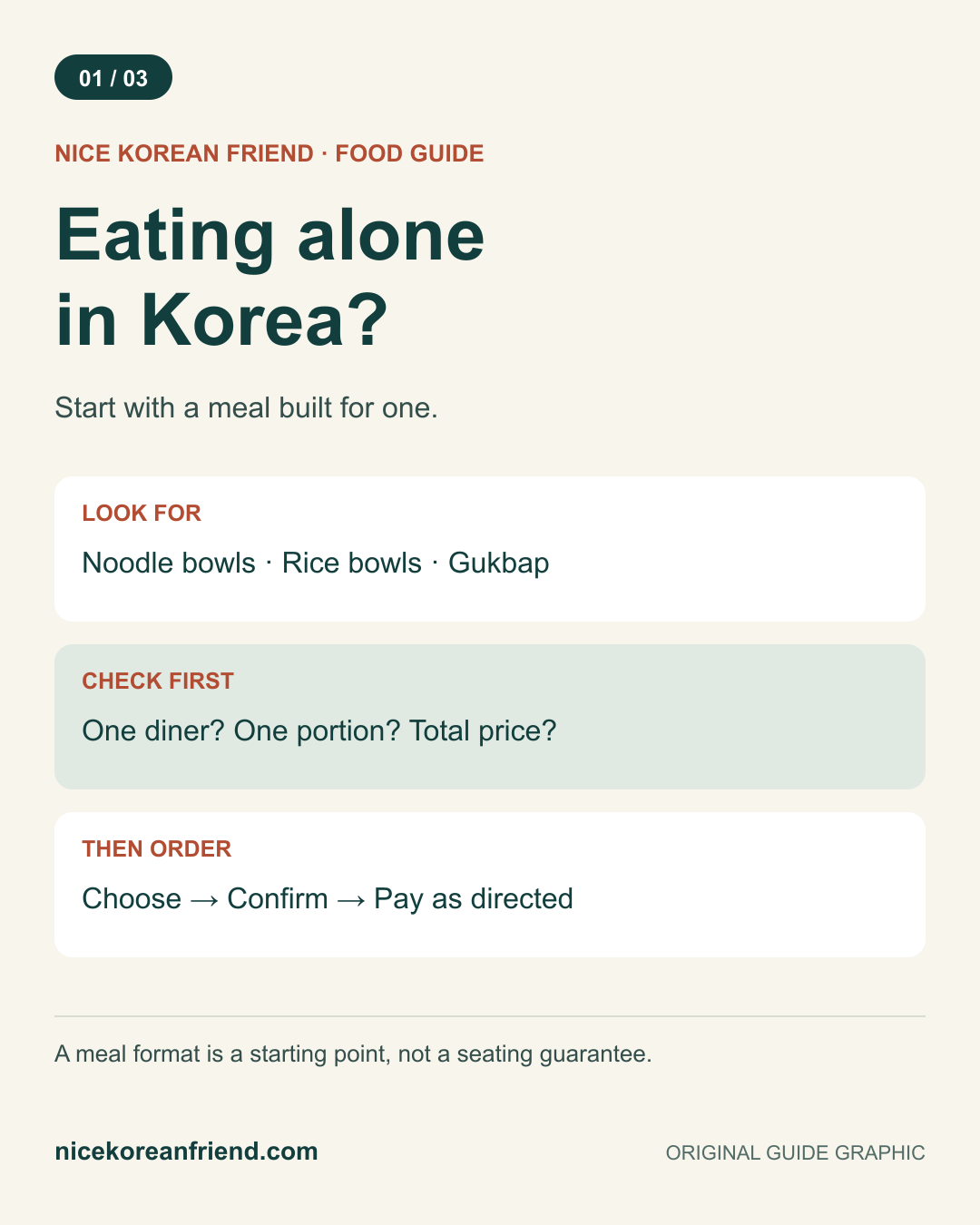
- I'm eating alone — is that weird? Solo dining (혼밥) is mainstream, and counter seating exists for exactly this. Some BBQ places want 2+ portions; the menu will say.
Good to know
- At Korean BBQ, staff often cook or start the meat for you, and scissors-and-tongs are the standard tools. Let them lead; jump in when they hand things over.
- Table manners have their own short rulebook — the two-minute version is in our Korean table manners guide.
- Not sure what to order in the first place? Start with our 12 dishes for beginners.
Asking politely when you are unsure
The National Institute of Korean Language’s dictionary entry for 좀 includes its use to soften a request. The phrase examples in this guide are practical editorial suggestions, not guarantees of how every person or restaurant will respond. Listen to the pronunciation where available and show the written Korean if your meaning is unclear.
Our editor’s local advice is to feel comfortable asking for help. Many people are willing to assist even if they do not speak much English. A translation app or ChatGPT can help you prepare a short question; let the other person confirm the meaning. At a restaurant, point to the exact menu item and confirm quantity, price and any dietary restriction before ordering. Customs vary by setting, so follow the host’s cues and ask rather than worrying about performing every gesture perfectly.
Frequently asked questions
›Is it rude to press the call bell?
The opposite — it's the system. Staff aren't hovering because the bell exists; pressing it is exactly how ordering works, and nobody will think twice. Where there's no bell, a clear "저기요!" (jeogiyo — "excuse me!") is the standard, polite way to call staff across the room.
›Do I have to order one dish per person?
For individual meals (soups, rice dishes) that's the norm. Shared items like Korean BBQ often have a two-portion minimum per table, and it'll say so on the menu. When in doubt, order less — adding more later takes one bell-press.
›How do I ask for less spicy food?
Say "덜 맵게 해 주세요" (deol maepge hae juseyo — "please make it less spicy"). Kitchens can adjust some dishes but not stews whose base is already made. Our beginner dishes guide flags which favorites are genuinely mild.
Sources and updates
Last edited on October 14, 2026. Sources support the specific details discussed in the guide; check the provider for current prices, availability and eligibility.