12 Korean Dishes to Try First (and What's In Them)
A beginner's ordering list for Korean food: twelve dishes ranked from mild to fiery, what's actually in each, and how to order them.
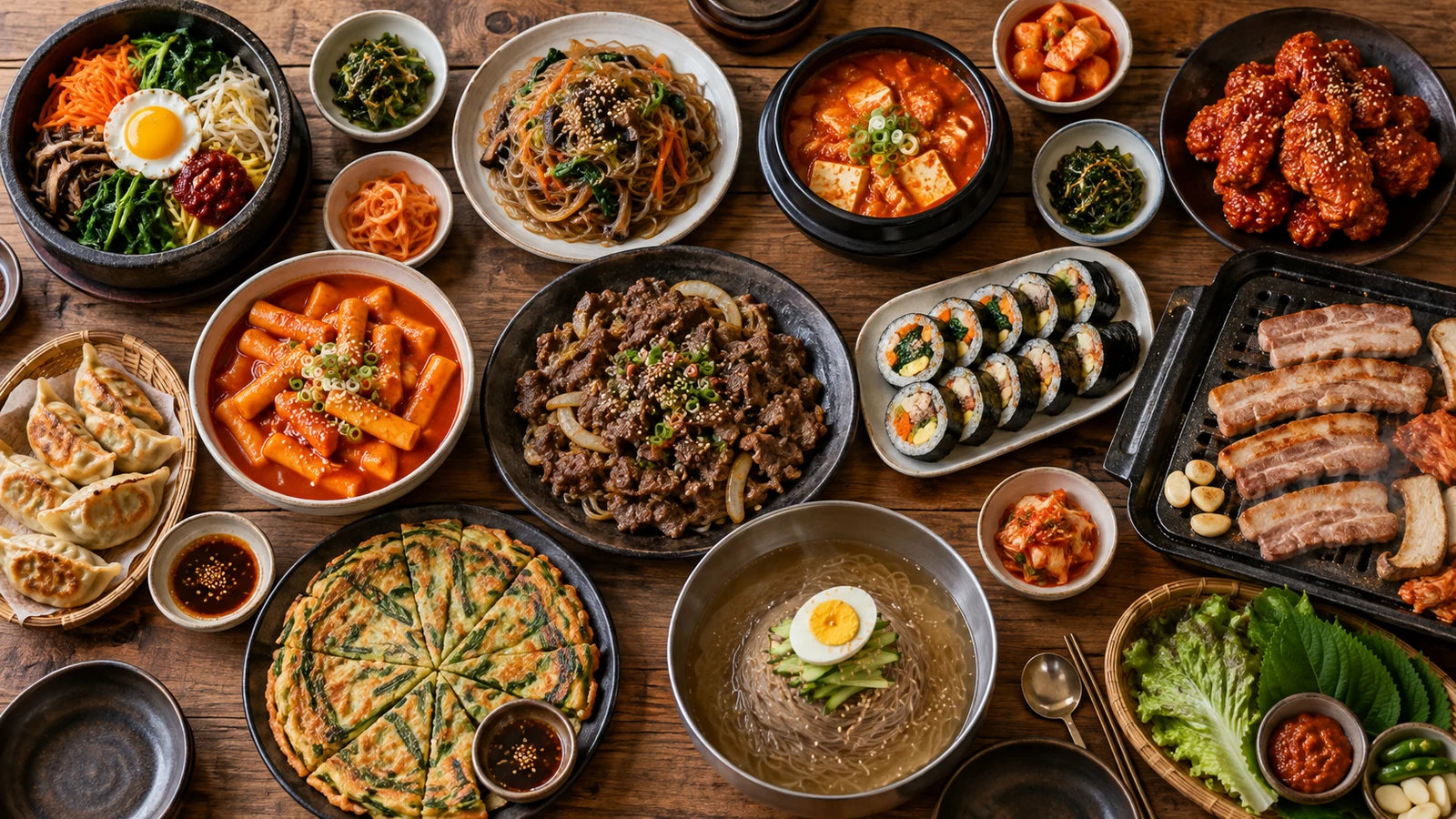
Korean food has a reputation for heat, and it's half-true — but the cuisine is really a spectrum from gentle, savory comfort food to industrial-grade chili. This list walks the spectrum in order, so you can calibrate as you go.
How we chose
Three filters: available at ordinary restaurants everywhere (not just food-tour spots), friendly to a first-timer's palate somewhere on the list, and each one teaches you something about how Korean food works.
The list
The gentle openers (no chili involved)
1. Bulgogi (불고기) — thin beef in a sweet soy-garlic marinade, grilled or pan-cooked. The universal gateway dish; if a picky eater exists in your group, bulgogi is the answer.
2. Kimbap (김밥) — rice, vegetables, egg and ham rolled in seaweed, sold everywhere from ₩-cheap kimbap shops to convenience stores. Picnic food, train food, budget-saver.
3. Samgyetang (삼계탕) — a whole young chicken stuffed with rice and ginseng in clear broth. Koreans eat it hot in midsummer to fight heat with heat; you can eat it whenever you need a hug.
4. Japchae (잡채) — sweet-potato glass noodles stir-fried with vegetables and a little meat, sesame-fragrant and mild. Often a side at feasts; also a main at home-style restaurants.
5. Kalguksu (칼국수) — hand-cut wheat noodles in anchovy or chicken broth. What locals eat on rainy days.
The adjustable middle
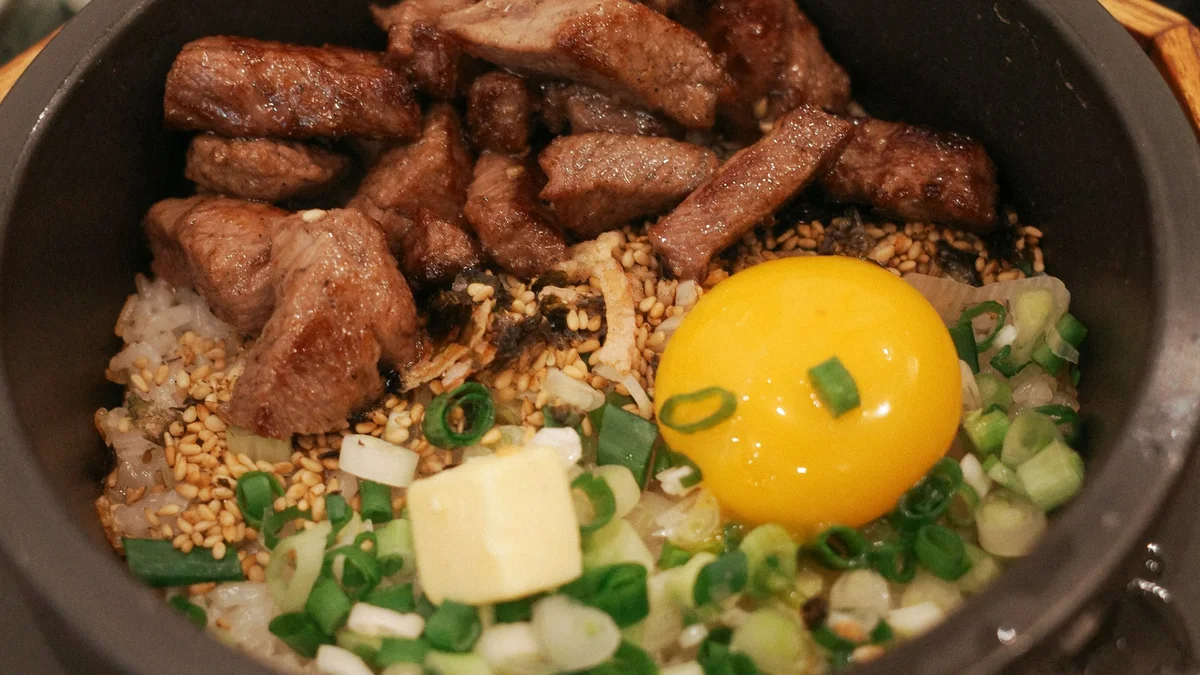
6. Bibimbap (비빔밥) — the famous mix-everything rice bowl: vegetables, egg, often beef, and gochujang (chili paste) served on the side or on top for you to dose yourself. Add a little, mix violently (this is correct technique), taste, repeat.
7. Samgyeopsal (삼겹살) — thick pork belly you grill at the table, then wrap in lettuce with garlic, ssamjang (a savory, barely-spicy paste) and whatever else looks good. Not spicy unless you make it so; maximally social. Ordering logistics are in our restaurant guide.
8. Dakgalbi (닭갈비) — chicken, cabbage, rice cakes and sweet chili paste stir-fried on a communal pan. Warm heat rather than pain; the fried-rice finale made in the leftover sauce is mandatory.
Basic training complete
9. Kimchi jjigae (김치찌개) — the national comfort stew: aged kimchi, pork, tofu, bubbling in a stone pot. Medium heat with deep sour-savory flavor; the dish that converts kimchi skeptics.
10. Sundubu jjigae (순두부찌개) — silken tofu stew, usually with seafood or pork and an egg cracked in at the table. Adjustable at many places ("순한맛" = mild).
11. Tteokbokki (떡볶이) — chewy rice cakes in glossy red sauce; street-food royalty. Sweeter than it looks but genuinely spicy. Buy a small cup from a street cart first, not a full restaurant portion.
12. Naengmyeon (냉면) — buckwheat noodles in icy broth (물냉면, mild) or chili sauce (비빔냉면, not mild). Bizarre on paper, addictive in a Korean summer, traditionally the closing course after BBQ.
Honorable mentions
Fried chicken and beer (치맥, chimaek) as a cultural institution; hotteok (호떡), the molten brown-sugar pancake of winter street stalls; gamjatang, the pork-spine potato stew rewarding the brave.
How to use this list
Eat downward. Days 1–2: dishes 1–5. Days 3–4: the adjustable middle. After that, order kimchi jjigae like you've lived here for years. Screenshot the Korean names — pointing at them works in any restaurant in the country.
In-article photo by Chee Kee, used under the Unsplash License.
Frequently asked questions
›I can't handle spicy food at all — will I starve in Korea?
Not remotely. Korean cuisine has an entire non-spicy wing: bulgogi, galbi, samgyetang, kalguksu noodles, gimbap, japchae, seolleongtang (milky beef soup). Roughly half this list involves zero chili, and 'less spicy, please' (deol maepge juseyo) works for several more.
›What if I have allergies or don't eat certain meats?
Soy, sesame, seafood and wheat are woven deep into Korean cooking, so learn your allergy's Korean name and show it in writing — Papago translates it well. Broths are the hidden factor: many soups use anchovy or beef stock even when the dish looks vegetable-based. Our vegetarian guide covers the workarounds in detail.
›How do I know how spicy something will be?
Menu color is a decent proxy (red = chili), and anything named with 'maeun' (매운, spicy) means business. Tteokbokki and anything 'buldak' (fire chicken) are the tourist ambushes — try a single piece before committing.