The Korean Convenience Store Survival Guide
GS25, CU, 7-Eleven and Emart24 are mini life-support stations: meals, banking, transit top-ups and midnight ramyeon. Here's how to use them well.
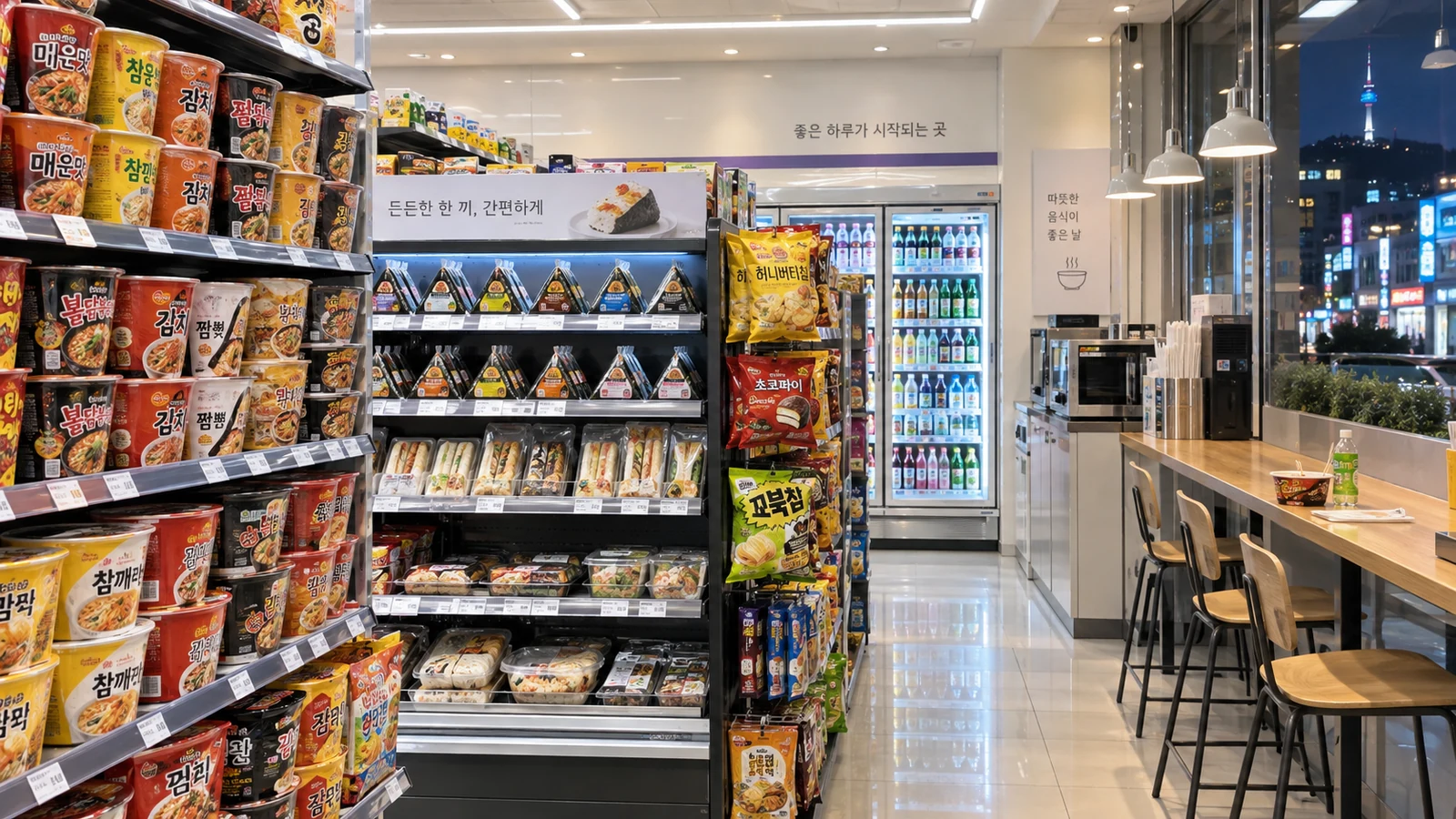
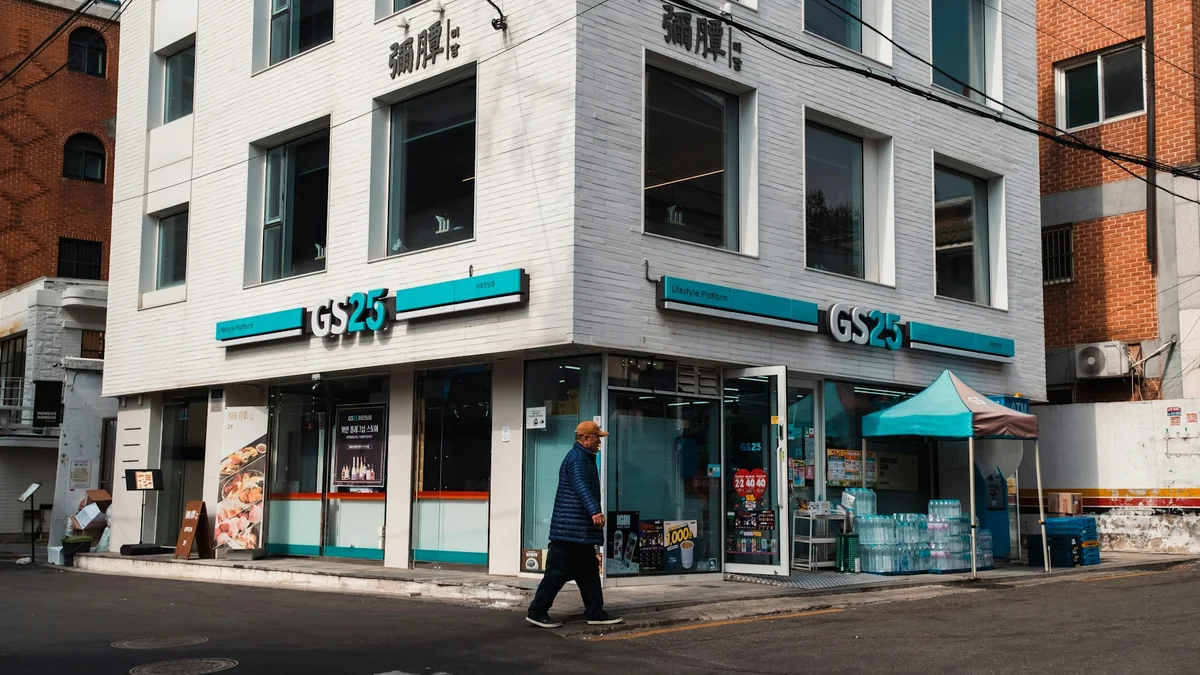
Within a day of landing you'll notice them: a glowing GS25, CU, 7-Eleven or Emart24 on seemingly every block, with hours and facilities that vary by branch. Koreans treat convenience stores as an extension of their kitchen, wallet and junk drawer — and once you learn the moves, you will too.
The short version
Convenience stores solve five travel problems at once: food right now, cash right now (ATM), transit (T-money cards sold and topped up), forgot-my-stuff (chargers, socks, umbrellas, toiletries) and it's 3 a.m. and everything else is closed.
How it actually works
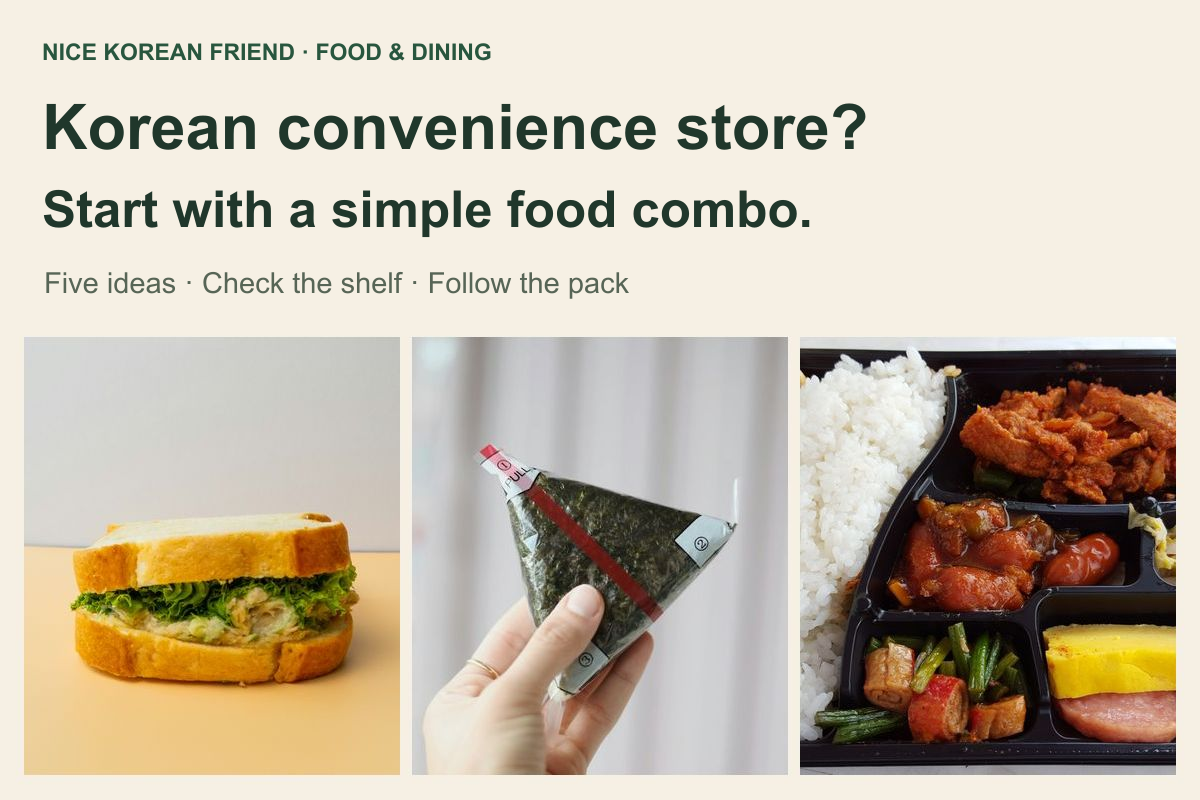
The food is real food. Beyond snacks, there's a wall of fresh items restocked daily: lunchboxes (도시락, dosirak) with rice and several sides, triangle kimbap (삼각김밥), sandwiches, salads, fruit cups and a serious dessert section.
Check the equipment first. Many branches offer a microwave, hot water or eating space, but none of these is guaranteed at every store. Pay before opening, and prepare each item exactly as its package says. Some cup noodles cannot be microwaved. Our five food combos explain what to choose and what to check.
Triangle kimbap has a technique. Follow the numbers printed on the wrapper: pull tab 1 straight around, then pull corners 2 and 3 sideways. The seaweed wraps the rice as the plastic leaves. Get it wrong once like everyone else, then never again.
The 1+1 wall is a game. Tags reading 1+1 or 2+1 mean buy one (or two), get one free — Korea's beloved convenience-store sport. Eligible products, combinations and participating stores vary. Ask the cashier which items count before picking up extras.
What it costs
Use the shelf label for the exact product and confirm any promotion and the checkout total before paying. Lineups and prices change; an old online price range is not a current store quote.
Common misconceptions
- "It's junk food only." Lunchboxes are balanced enough that office workers live on them; there's fruit, salads, boiled eggs and protein snacks.
- "The cashier will chat with me." Interactions are minimal and script-free: greeting, total, payment, done. "봉투 드릴까요?" means "do you want a bag?" — bags cost a small fee by law, so say "네" (yes) or "아니요" (no).
- "ATMs inside take every card." Many do take international cards (look for a "Global ATM" sticker or English menu), but fees and acceptance vary by machine — details in our ATM guide.
What locals do
Use them constantly and unromantically: morning banana-milk-and-kimbap, midnight ramyeon after a night out, topping up T-money on the way to the subway, buying a clear umbrella the second it rains (it's the same umbrella everyone has, for a reason). Convenience-store tables are also a licensed people-watching venue — a beer at the window counter is a legitimate Seoul evening.
Good to know
- Trash at the in-store bins is sorted — follow the pictures (liquids out first, cups here, plastic there). It's good practice for Korea's recycling culture.
- Stores near offices sell surprisingly decent coffee machines' brew for a fraction of cafe prices.
- Package pickup/drop-off services at CU and GS25 counters are a life upgrade for residents — see receiving mail in Korea.
In-article photo by F aint, used under the Unsplash License.
Frequently asked questions
›Which chain is best — GS25, CU, 7-Eleven or Emart24?
They're interchangeable for essentials; loyalty is mostly about which one is closest. Food nerds hunt specific chains for specific exclusives (each chain runs its own lunchbox and dessert collabs), but as a visitor, the nearest one is the best one.
›Can I pay with a foreign credit card?
Almost always yes — tap or insert like anywhere else. Cash and T-money also work. The one thing foreign cards usually can't do at a convenience store is reload a T-money card; that top-up is typically cash.
›Is it rude to eat inside the store?
If the branch provides an eating area and allows its use, eating your purchases there is normal. Check first, keep the space tidy and follow the branch’s waste-sorting instructions.