The T-money Card: How to Buy, Top Up and Use It
Where to buy a T-money card, how much it costs, how to load money onto it, and the transfer discount that makes it essential in Korea.
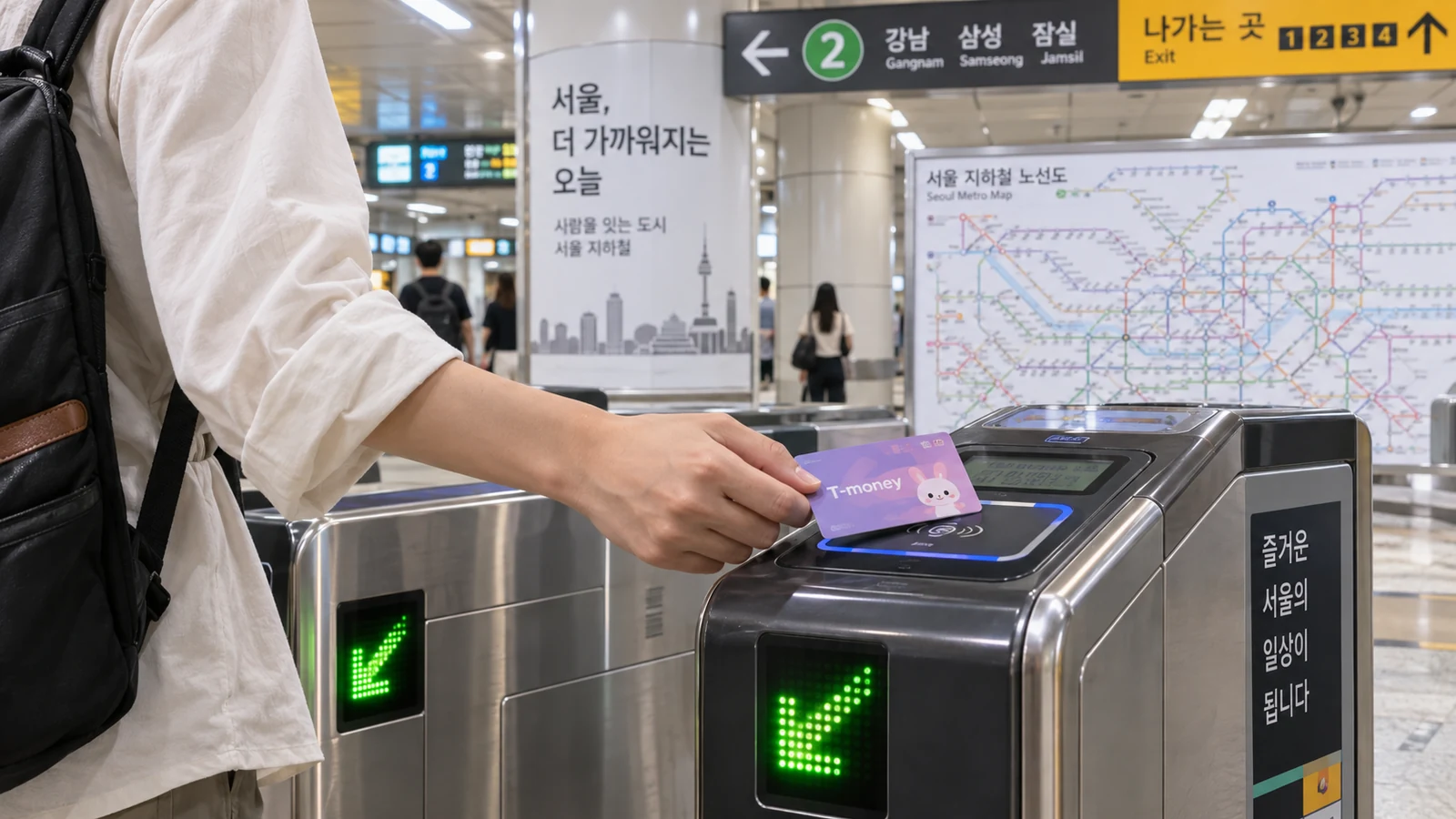
A transit card removes one small decision from every journey: you can tap instead of buying a separate ticket. The important part is choosing a compatible card, adding credit separately, and tapping out as well as in.
Buy the card, then add travel credit
Korea Tourism Organization lists KRW 3,000–5,000 for a general T-money card. Convenience stores and designated Seoul subway information centers sell cards; station machines can reload them. The purchase price does not include travel credit. See the official transportation-card comparison.
Carry Korean won for an ordinary visitor top-up. Before paying, show the cashier the amount you want added and confirm that you are buying a card as well as charging it. A card bought from a shop is not the same thing as a bank card, mobile wallet or sightseeing pass.
Use it on a journey
- Plan the route and station exit before tapping in.
- Tap the card by itself. Keeping several contactless cards together can make the reader choose the wrong one.
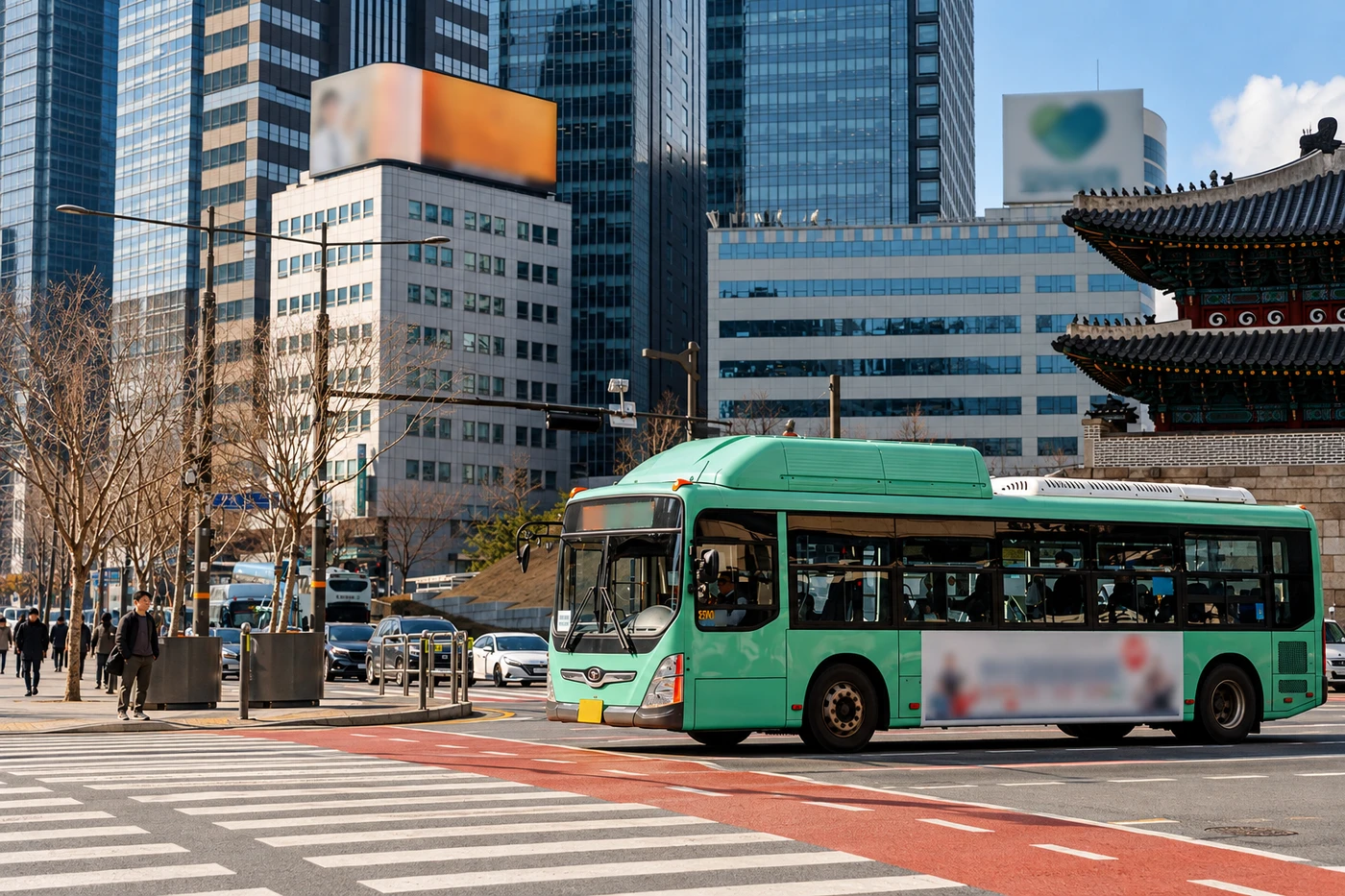
- On a bus, tap when boarding and again when leaving. At the subway, tap at both gates.
- Read the balance display. If funds are low, add credit before the next journey.
Seoul's adult subway base fare is KRW 1,550 with a transit card, compared with KRW 1,650 for a single journey, before distance supplements. These are the fares on Seoul's published table, effective June 28, 2025. Other cities and premium services can use different fares.
Transfers have conditions
A transfer is not automatically free just because you carry a card. Seoul's bus transfer rules require tapping out and normally boarding the next eligible service within 30 minutes, extended to 60 minutes between 9 p.m. and 7 a.m. Distance charges and the higher base fare can still apply. Returning to the same bus route does not receive the ordinary transfer discount.
Before you leave Korea
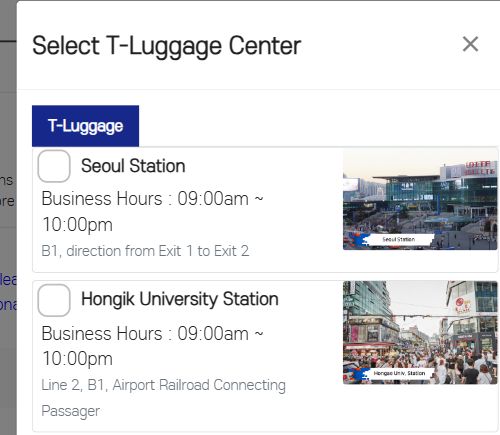
Keep the remaining credit modest near the end of a trip. The tourism guide says that a refund above KRW 50,000 must be handled at Tmoney Town near Seoul Station; smaller refunds depend on the outlet. Ask about the refund fee and whether your exact card is supported before handing it over.
Do not confuse the T-money stored-value balance with the cost of the physical card or a separate Climate Card pass. For a short Seoul-only itinerary, compare the pass's included services against your route before choosing it.
If the reader rejects your card
Check the balance and try the card without your phone or bank cards alongside it. If it still fails, show the card to station staff and ask for help instead of repeatedly tapping. Save the destination in Korean so staff can help you choose a ticket or route. See also our subway guide.
Frequently asked questions
›Can I tap a foreign credit card instead of T-money?
Do not assume an international contactless card will work at the transit gate. Ticket-machine card acceptance and gate acceptance are different. Use a compatible transit card or buy the station’s single-journey ticket.
›How much does the card cost?
Korea Tourism Organization lists a general T-money card at KRW 3,000–5,000. Special designs can differ, and you add travel credit separately.
›Can I refund the balance?
Refund locations depend on the balance and the outlet’s rules. Korea Tourism Organization directs balances above KRW 50,000 to Tmoney Town near Seoul Station. Check the operator before loading more than you will use.
Sources and updates
Last edited on October 12, 2026. Sources support the specific details discussed in the guide; check the provider for current prices, availability and eligibility.