How to Ride City Buses in Korea: A First-Timer’s Guide
A calm first-timer's guide to Seoul city buses: finding the right stop, checking the bus, tapping on and off, requesting your stop and using transfers.
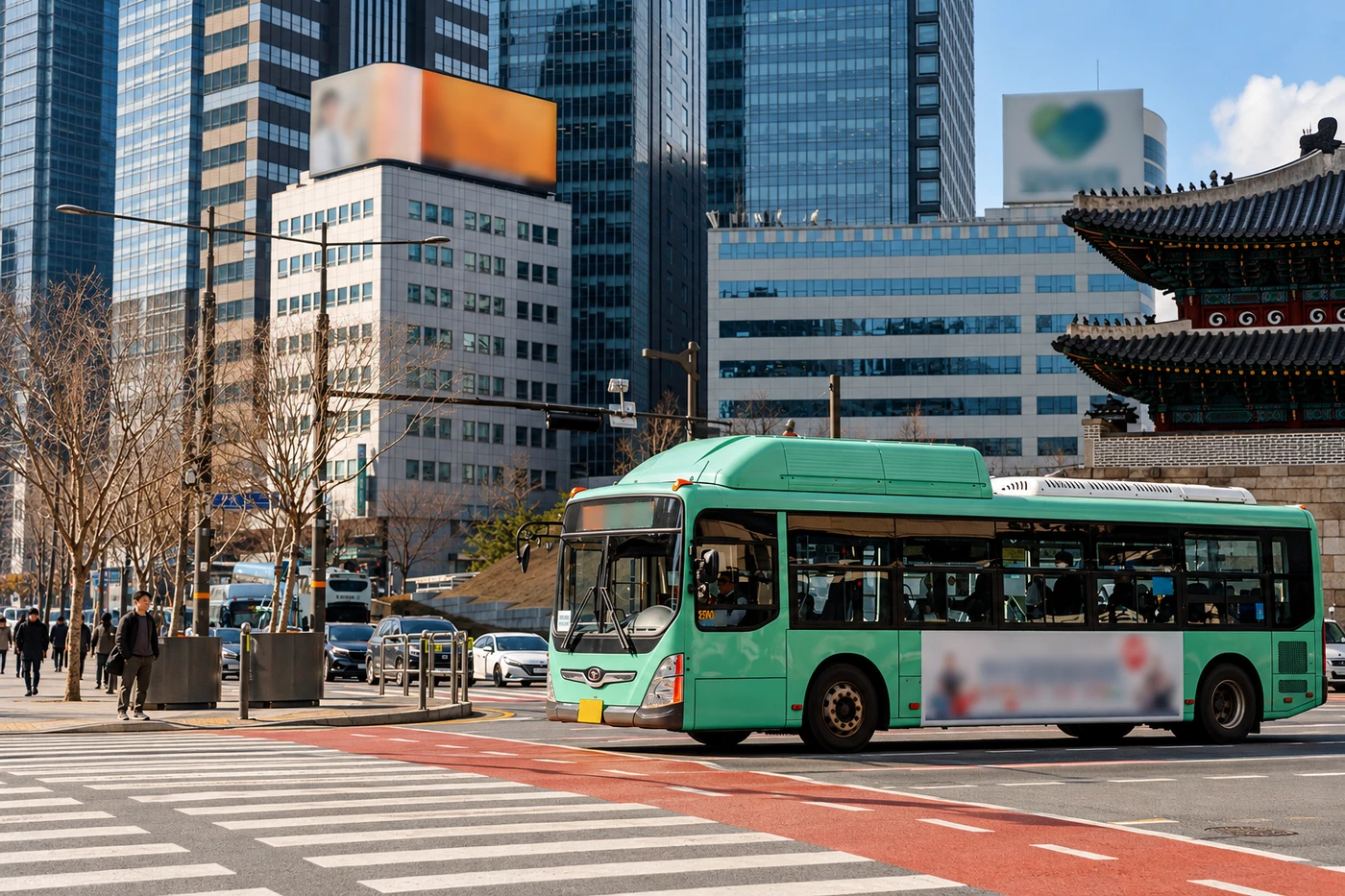
Seoul's city buses reach neighborhoods the subway skips. Knowing the boarding, payment and exit sequence makes a first ride easier. This guide covers ordinary city buses in Seoul only. Airport limousines and intercity or express coaches work differently, and other Korean cities set some of their own rules, which we cover below.
Two things help most before you go. The first is a route planner on your phone; see our comparison of Google Maps, Naver Map and KakaoMap. The second is a loaded transit card.
Before you leave: get a transit card ready
Seoul has been moving many routes to cashless operation. The city's cashless bus page, updated in March 2026, lists the affected routes as of January 2026. Don't assume every route anywhere in Korea is cashless, but don't count on paying with cash either. Board with a compatible, loaded transit card.
Don't assume an ordinary foreign Visa card, or a bank card stored in Apple Pay or Google Pay, will work as a transit card. Eligibility for mobile transit cards also varies. Our T-money card guide explains the options. Top up before boarding, and give each traveler their own card. One card per person keeps trips simple, especially when you mix buses and the subway.
Step 1: Find the correct stop and direction
Stops on opposite sides of a road often share the same name, so the name alone doesn't tell you which way you're heading. On major roads, some stops sit in the middle of the road and are reached by a marked crosswalk. Use the crossing, and never cut across traffic.
Compare the stop ID number on the sign with the one in your route planner, and check that the next stops listed match where you want to go. Arrival times on screens and in apps are estimates, not promises. Traffic changes them.
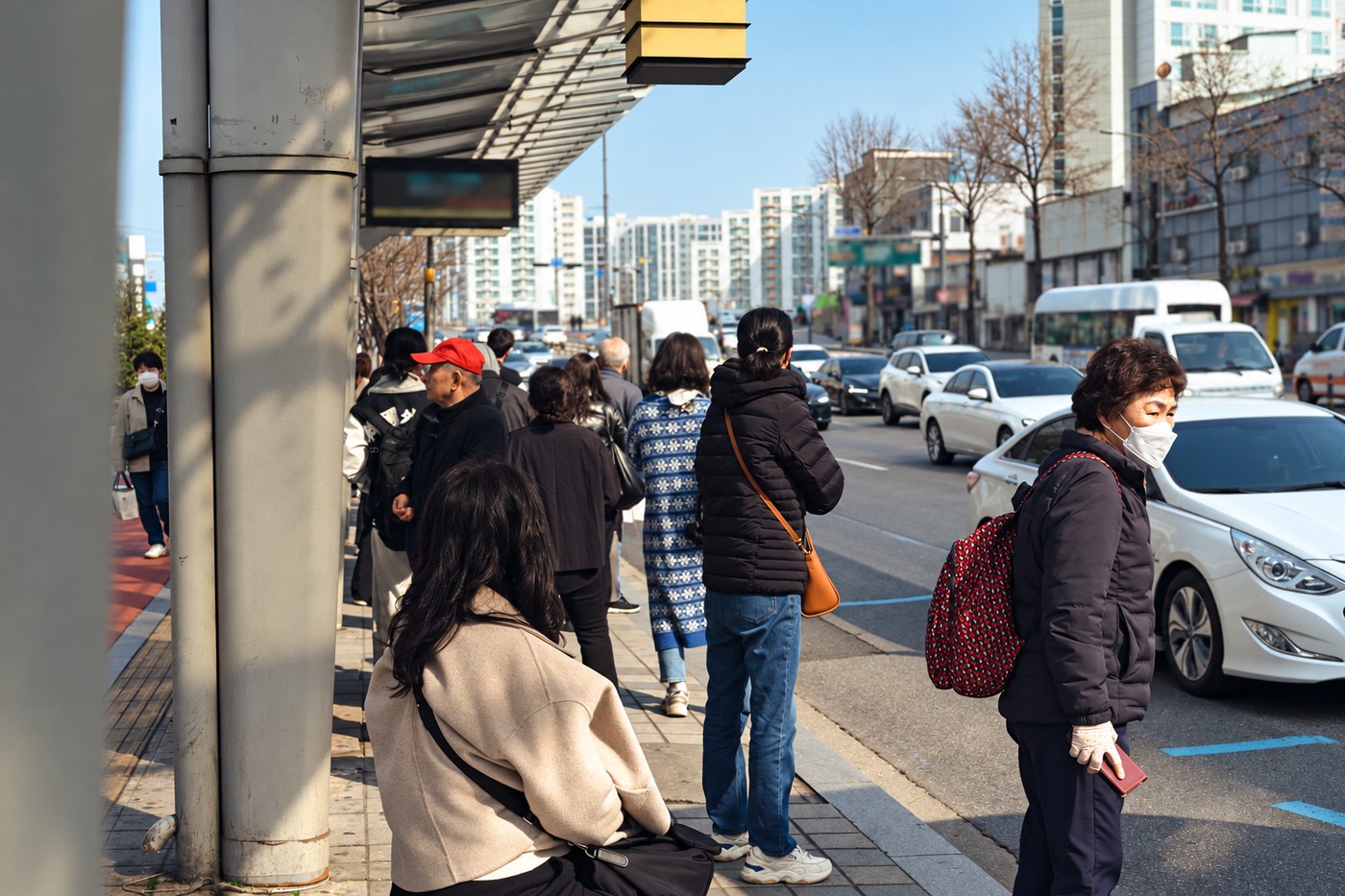
A Seoul bus-stop scene. Check current route information; signs have been softened for this illustration.
Step 2: Check the exact bus
Several routes may serve one stop. Read the full bus number, including any letters, and check its direction. Don't rely on color alone. Color hints at the type of route, not where it is going. Stay on the curb as the bus approaches. Don't step into the road to flag it down or run after one that's leaving. Check the next departure before deciding whether to wait.
Step 3: Board and tap on
The Korea Tourism Organization's city bus guide, last updated in September 2025, says most city buses use the front door for boarding and the rear door for getting off, with card readers at both. Treat that as the norm, but follow the actual vehicle and any instruction from the driver.
Let passengers step off first. Have your card in hand before the door opens, tap the reader by the driver once, and wait for the confirmation before moving in. If the reader rejects your card, ask the driver what to do and keep the doorway clear where possible. Do not keep tapping without checking the problem.
Step 4: Ride safely and request your stop
Hold a handrail or strap as soon as you're aboard, because buses can pull away while you're still finding your footing. Leave priority seats for older riders, pregnant passengers, people with disabilities and anyone who needs them more. Keep bags out of the aisle and away from the doors.
Watch the next-stop display and listen for announcements. Don't assume every announcement or every driver will use English, so track your progress on your map as well.
When the bus pulls away from the stop before yours, press a STOP button; you'll usually find them by the windows. Then stay where you are, holding on, until the bus has fully stopped. You don't need to stand up or walk to the door while the bus is moving if it feels unsafe.
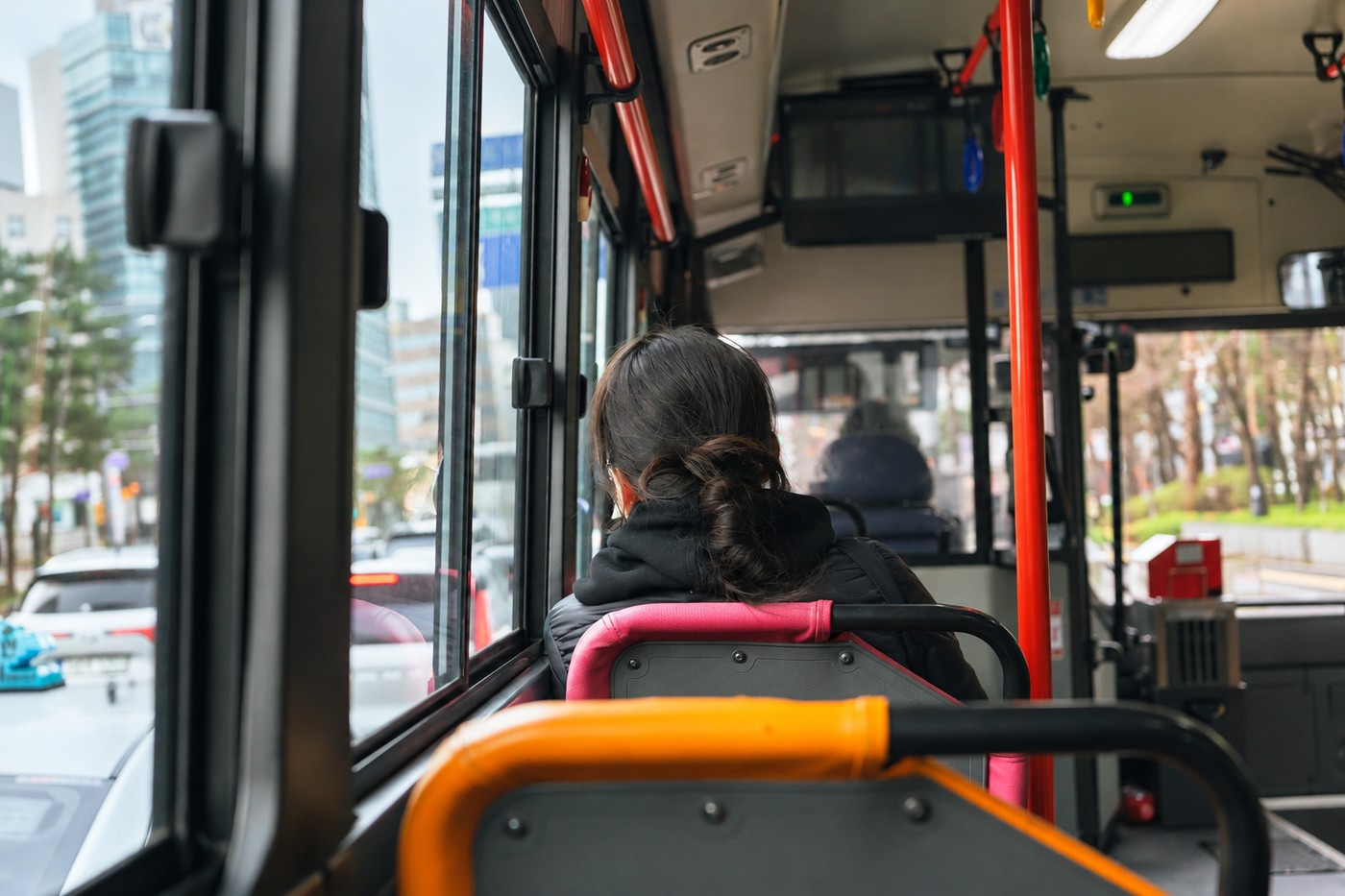
Inside a Seoul bus. Vehicle layouts vary; small labels have been softened.
Step 5: Tap off and get off
Tap the same card on the reader by the rear door as you leave. In Seoul this matters, because tapping off is what lets the system recognize a transfer.
If you miss your stop, don't panic, and don't ask to be let off between stops. Get off at the next designated stop and reroute from there. Don't try to chase the bus or expect a free ride back.
How transfers work in Seoul
Seoul's bus system overview, updated in March 2026, explains the transfer discount. After you tap off, board your next vehicle within 30 minutes. Between 9 p.m. and 7 a.m., the window extends to 60 minutes. You can make up to four transfers, which means five boardings in total. Getting back on the same vehicle or route doesn't count as a transfer.
A transfer discount does not make every leg free. Switching to a route with a higher base fare, or traveling a long total distance, can add charges.
T-money's own guide, published in October 2026, notes that legs only link when you use the same card. It also notes that airport buses, intercity buses, taxis and cash payments fall outside ordinary transfers. For trips that combine buses and trains, see our Seoul subway guide.
Outside Seoul: expect regional differences
There is no single nationwide bus rule. Busan, Daegu, Jeju and other cities run their own systems. Transfer windows, cash acceptance, card compatibility and door practices can differ. Before riding outside Seoul, check that city's official transport information and your route planner, and leave your Seoul assumptions behind.
Six useful Korean phrases
- 이 버스 ○○ 가요? (I beoseu ○○ gayo?): Does this bus go to ○○?
- 반대쪽에서 타야 해요? (Bandaejjogeseo taya haeyo?): Should I board on the other side?
- 잠시만요. (Jamsimanyo.): Excuse me (to get past).
- 카드가 안 찍혀요. (Kadeuga an jjikhyeoyo.): My card isn't registering.
- 다음 정류장이 어디예요? (Daeum jeongnyujang-i eodiyeyo?): What's the next stop?
- 내릴게요. (Naerilgeyo.): I'm getting off.
If speaking feels hard, show the destination name in Korean on your phone.
Before your last ride of the night
Check service times for your exact stop, direction and day. Published first- and last-bus times often refer to when the bus leaves the start of its route, not when it passes your stop. Arriving from the airport? Our Incheon to Seoul guide covers that part of the journey.
Frequently asked questions
›Can I bring a large suitcase on a Seoul city bus?
Check the operator’s baggage rules before bringing a large suitcase; boarding can be restricted by item size, crowding or safety. If accepted, keep luggage steady and clear of aisles and doors. Consider a luggage-friendly alternative for an airport journey.
›Are Seoul city buses accessible for wheelchair users or travelers with limited mobility?
Accessibility features vary by vehicle and by stop, so don't assume step-free boarding on every bus. If you need it, plan an alternative route, allow extra time and check current information before you travel. Priority seating is available for passengers who need it.
›What if I don't have a transit card?
Get one before you ride. Many Seoul routes are cashless, and paying cash doesn't qualify for transfer discounts. Don't assume a foreign bank card or phone wallet will work as a transit card. Our T-money card guide explains how to buy one and top it up.
›How do I know when the last bus comes?
Check your route planner for your exact stop, direction and day of travel. Published first- and last-bus times often refer to the start of the route, not to your stop. Have a backup plan if you're cutting it close.