Taxis in Korea: Kakao T, International Taxi and Street Hailing
How taxis really work in Korea in 2026: Kakao T vs k.ride vs UT, base fares, call fees, foreign-card payment, and why you never tip. A practical rider's guide.
Taxis in Korea are cheap, plentiful and honest — meters run straight, drivers rarely detour, and there is no haggling. The one thing that trips up visitors is payment: the app everyone uses can quietly reject your card. Here is how the system actually works and how to ride without friction.
The short version
The market is basically one app: Kakao T (카카오 T — Kakao Taxi) handles roughly 90% of app-hailed rides. It works in English and you can register with a foreign number, but its in-app payment often refuses foreign cards. Two clean workarounds: use k.ride, Kakao Mobility's sister app made for foreign visitors (it takes overseas cards), or book on Kakao T with "pay the driver" and tap your card or T-money on the terminal in the taxi. And you can always just raise your hand on the street — hailing is still completely normal.
How it actually works
There are three ways to get a cab, and they overlap.
- Kakao T: download it, switch the interface to English or Japanese in the profile/language menu, set your pickup pin and destination, and the app translates your destination into Korean for the driver, shows a fare estimate, and matches you with a nearby car. It commands about 90% of the hailing market, so a car usually arrives in a couple of minutes.
- k.ride: launched by Kakao Mobility specifically for international users, tapping the same driver network. You can sign up with a foreign phone number or a Google/Apple account and register an overseas Visa, Mastercard, JCB or UnionPay card for automatic in-app payment. This is the smoothest option if you want cashless door-to-door.
- UT (Uber): the Uber app in Korea dispatches licensed taxis (branded UT) in Seoul and some cities. Familiar interface, foreign cards accepted, but fewer cars than Kakao in many areas.
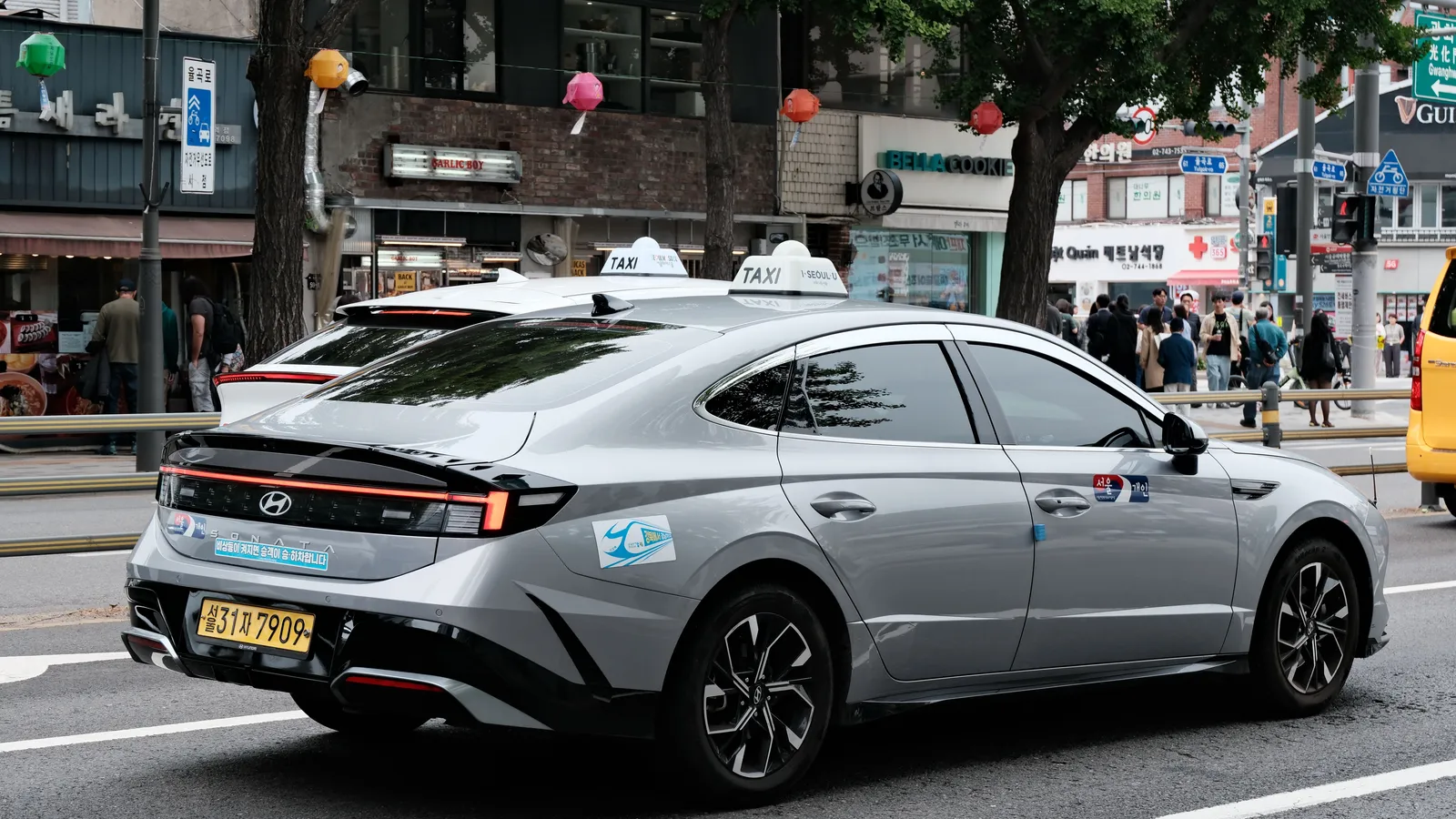
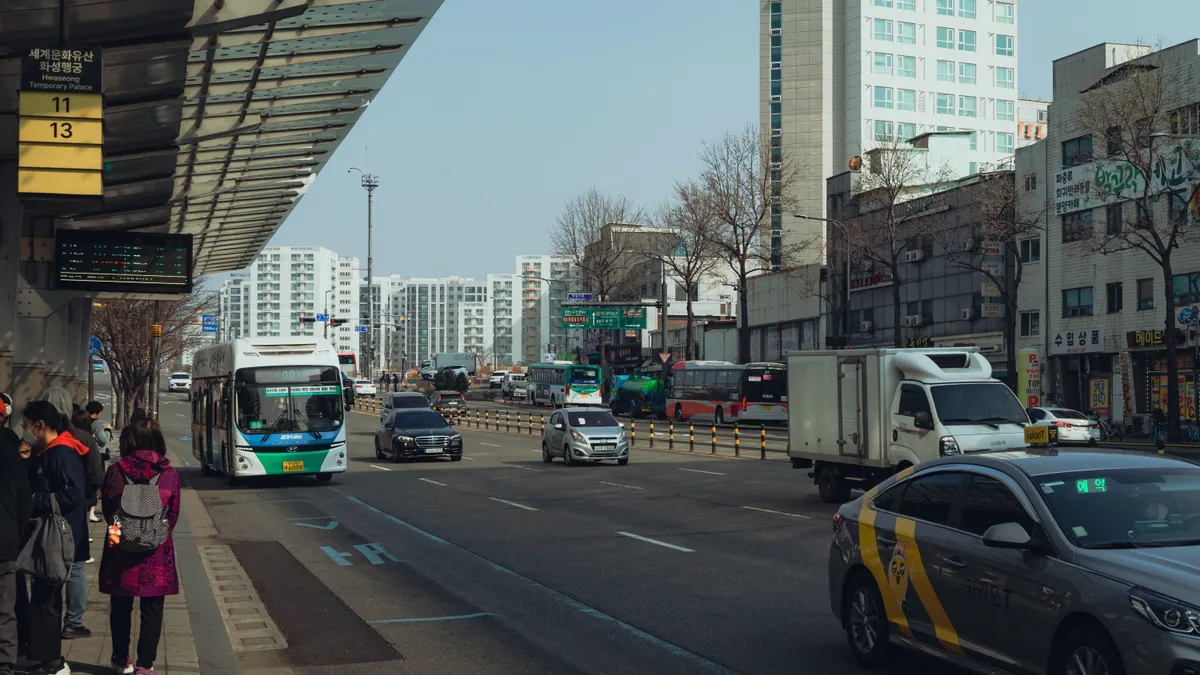
- Street hailing: an orange or silver taxi with a red 빈차 (bincha — vacant) light in the windshield is free. Wave it down, show your destination on a map, and go. No call fee.
Taxi colors are just branding — orange, silver and white are all regular metered taxis. Black taxis are "deluxe" (모범 — mobeom): roomier, pricier, and often with an English-speaking driver.
What it costs
Fares are set by the meter, by city. In Seoul as of 2026:
- Base fare: about ₩4,800 for the first 1.6 km, then it ticks up by distance and time.
- Night surcharge: roughly 20–40% extra between 10pm and 4am, with the steepest rate from 11pm to 2am.
- Call fee: booking through an app can add up to ~₩3,000, rising with demand (rush hour, late night, rain). A street hail has none.
- Tolls: any bridge or expressway toll is added to your fare, shown separately.
A typical short hop across a district is ₩6,000–12,000; a longer cross-city ride ₩15,000–30,000. It is one of the better taxi bargains among wealthy countries. For how card-vs-cash works more broadly, see cash vs card in Korea.
Common misconceptions
- "I have to tip." You do not. There is no tipping culture for taxis in Korea — pay the meter (plus call fee if any) and that is it.
- "Kakao T takes my foreign card." Often it does not for in-app payment. Assume it won't, and plan to pay the driver directly or use k.ride.
- "Drivers speak English." Usually not much, and they don't need to — the app passes your destination in Korean, or you show a map pin. Deluxe (black) and international taxis are the ones with English-speaking drivers.
- "Refusing a ride is normal." Legally drivers shouldn't refuse based on your destination, and with app dispatch it rarely happens because they accept before seeing you.
What locals do
Koreans live in Kakao T. They register a Korean card, hail with two taps, and pay automatically — the call fee is just accepted as the price of not waiting. For short distances in a busy area, plenty still flag one down on the street to skip the fee. Late at night, when demand spikes and the surcharge kicks in, everyone books ahead through the app rather than fighting for a street cab. Copy that rhythm: app when it's busy or you're far out, street hail when a vacant taxi is right there.
Good to know
- Keep T-money loaded. Tapping a T-money card in the taxi is the most reliable cashless payment for foreigners — it sidesteps the foreign-card problem entirely. See the T-money card guide.
- Screenshot your destination in Korean. The app does this for you, but for a street hail, having the Korean name or a map pin ready removes all doubt.
- Buckle up in back. Rear seatbelts are required and drivers may remind you.
- Airport runs are their own thing. From Incheon, taxis add a ₩7,900 expressway toll and there are flat-fare international taxis — we cover that in Incheon Airport to Seoul compared.
- Get the app before you need it. Install and set the language on hotel WiFi, not curbside in the rain. Our essential apps guide lists the rest.
Frequently asked questions
›Can I use Kakao T with a foreign phone number and card?
You can register Kakao T with a foreign phone number and use it in English, but its in-app payment rejects many foreign cards. The fix is to call the car, choose pay-the-driver, and tap your own card or T-money on the in-car terminal at the end — or use k.ride, which is built to take overseas cards.
›Do I tip taxi drivers in Korea?
No. Tipping is not part of Korean taxi culture, and drivers do not expect it. You pay exactly what the meter shows, plus any call fee if you booked through an app. Rounding up a few hundred won is fine but never required.
›What is the call fee on Kakao T and when does it apply?
Booking a car through the app can add a call fee of up to about ₩3,000 on top of the meter, and it rises with demand — higher at rush hour, late night and in the rain. A taxi you flag down on the street has no call fee, just the meter.
Sources and updates
Last edited on September 4, 2026. Sources support the specific details discussed in the guide; check the provider for current prices, availability and eligibility.