Cash or Card in Korea? What Actually Works Where
Korea runs on cards and phone taps, but a little cash still saves you at markets, street food, and T-money machines. Here's exactly where.
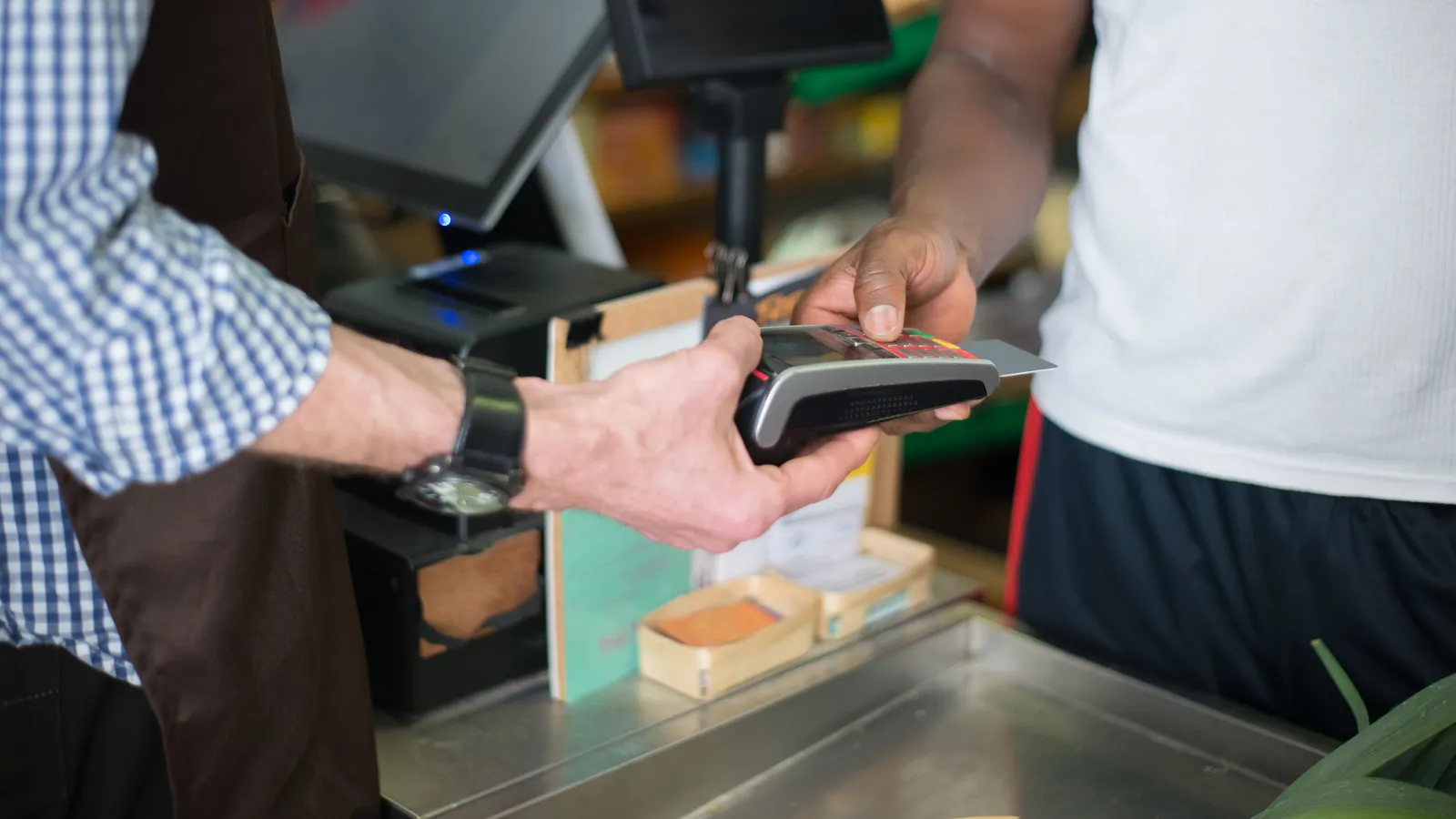
Korea is one of the most card- and phone-friendly countries on earth. You can tap a card for a ₩900 bottle of water and nobody blinks. But "cards work everywhere" is not quite true, and the gap is exactly where new arrivals get caught out. Here's the honest breakdown of where plastic wins and where you still want a few notes in your pocket.
The short version
Carry a card as your default and a small cash cushion for the exceptions. In practice that means keeping roughly ₩50,000–100,000 in cash on you, mostly in ₩10,000 and ₩1,000 notes, and paying by card for basically everything else.
The exceptions that actually matter are traditional markets, street-food stalls, a handful of tiny family-run restaurants, and recharging your T-money transit card, which almost always wants cash. Everything from department stores to convenience stores to taxis takes cards without a second thought.
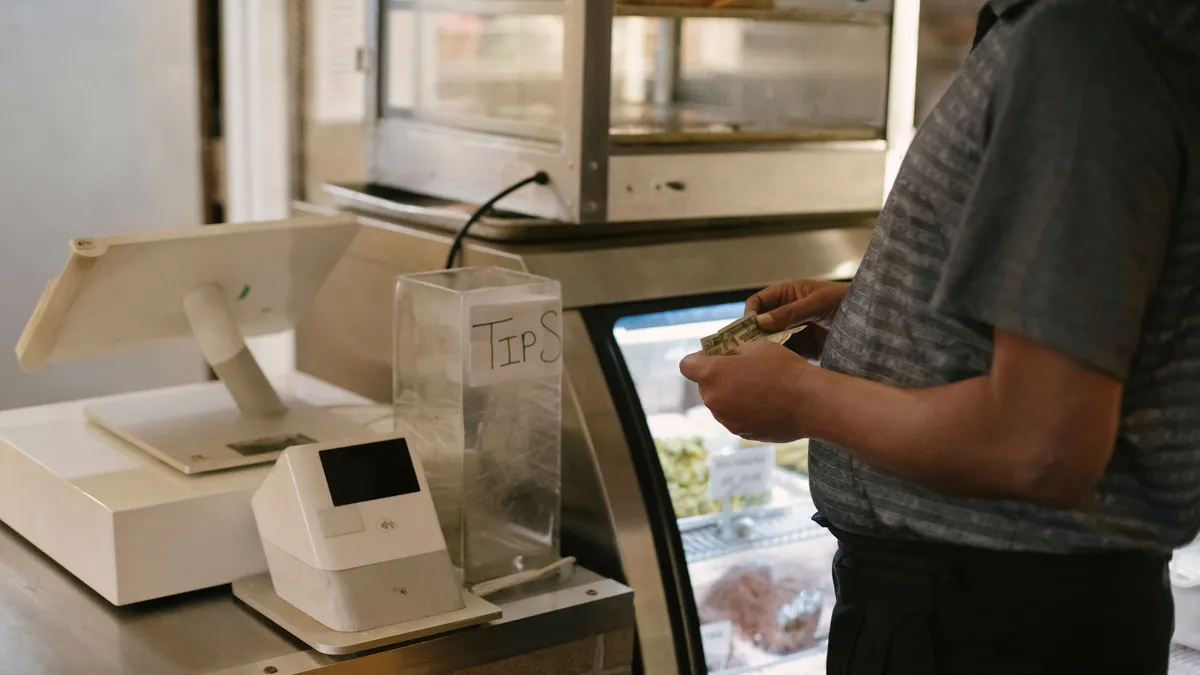
How it actually works
Korean card acceptance is genuinely excellent. Convenience stores, cafes, chain and independent restaurants, taxis, pharmacies, and shops nearly all take cards, and the minimum-purchase-for-card rules you might know from other countries basically don't exist here — a ₩1,000 payment by card is completely normal.
Foreign cards work at most established businesses. Visa and Mastercard are the safest bets, with JCB and American Express also widely accepted. Contactless tap-to-pay is spreading fast. Where foreign cards occasionally fail is at very small or older mom-and-pop places whose terminals only speak to domestic Korean cards — annoying, but rare, and always solved by having cash.
The places that still run on cash are specific and predictable:
- Traditional markets like Gwangjang or Namdaemun, where individual stall vendors rarely have a card reader.
- Street food — the pojangmacha (포장마차 — street tents) and stalls selling tteokbokki, hotteok, or fish cakes.
- Small, cheap eateries — some family kimbap or lunch-set spots under about ₩10,000 a head.
- T-money recharge — the machines and convenience-store top-ups for your transit card take cash, not cards. This one surprises almost everyone.
What it costs
Paying by card in Korea costs you nothing extra at the register — merchants absorb the fees, and there's no surcharge for tapping a card. The cost to watch is on foreign cards: your home bank may add a foreign-transaction fee, typically around 1–3% per purchase, unless you use a card that waives it.
Cash itself is "free" to spend, but getting it isn't — you'll pay either an exchange spread or an ATM fee to obtain won. If you'd rather not carry much, a fee-free travel card (Wise, Revolut, or similar) plus your regular card covers almost everything. See our guides on where to exchange money and using ATMs in Korea for the cheapest ways to get cash when you need it.
Common misconceptions
"I should exchange a lot of cash before I arrive." You really don't need much. A few days' worth of small-purchase cash is plenty; over-exchanging just means carrying won you'll spend a worse rate to unload later.
"Tipping is expected somewhere." It isn't. Restaurants, taxis, hotels, hair salons — no tips anywhere. Prices are final. Don't budget cash for tipping.
"Mobile pay like a local will just work." Kakao Pay, Naver Pay, and Samsung Pay are everywhere, but most require a Korean bank account or card and a local phone number to set up, so short-term visitors usually can't rely on them. Longer-stay residents can — see our banking apps comparison.
What locals do
Most Koreans pay for nearly everything by tapping a card or their phone, and many carry very little physical cash — sometimes none at all. The one habit worth copying is keeping a small amount of cash specifically for markets and street food, because that's the culture where card readers still haven't taken over and probably never fully will.
Locals also lean on their T-money card for transit and small convenience-store buys, tapping it like a wallet. If you're staying a while, that's the smoothest daily rhythm: card or phone for shops, T-money for transport, and a little cash for the old-school corners of the city.
Good to know
- Break your big notes early. ₩50,000 notes can be awkward at tiny stalls; convenience stores are happy to break them.
- Always pay in won. If a terminal offers to charge your foreign card in your home currency, decline — that's dynamic currency conversion, and the built-in markup is worse than your bank's rate.
- Convenience stores are your safety net. Open 24/7, they take cards, sell almost anything, and let you top up T-money — a lifesaver on your first day in Korea. Our convenience store guide has more.
- Keep coins and small notes for laundry and lockers. Coin lockers and some older vending machines still want physical change.
Check the payment method before ordering
Korea Tourism Organization says major international card networks are widely accepted but advises checking availability at the business. Before ordering, ask whether your card is accepted and whether the machine can process an overseas-issued card. Keep modest won for places or services that require cash. If a terminal offers home-currency billing, compare the displayed conversion with your issuer's terms; Visa explains the choice.
If your foreign card is declined
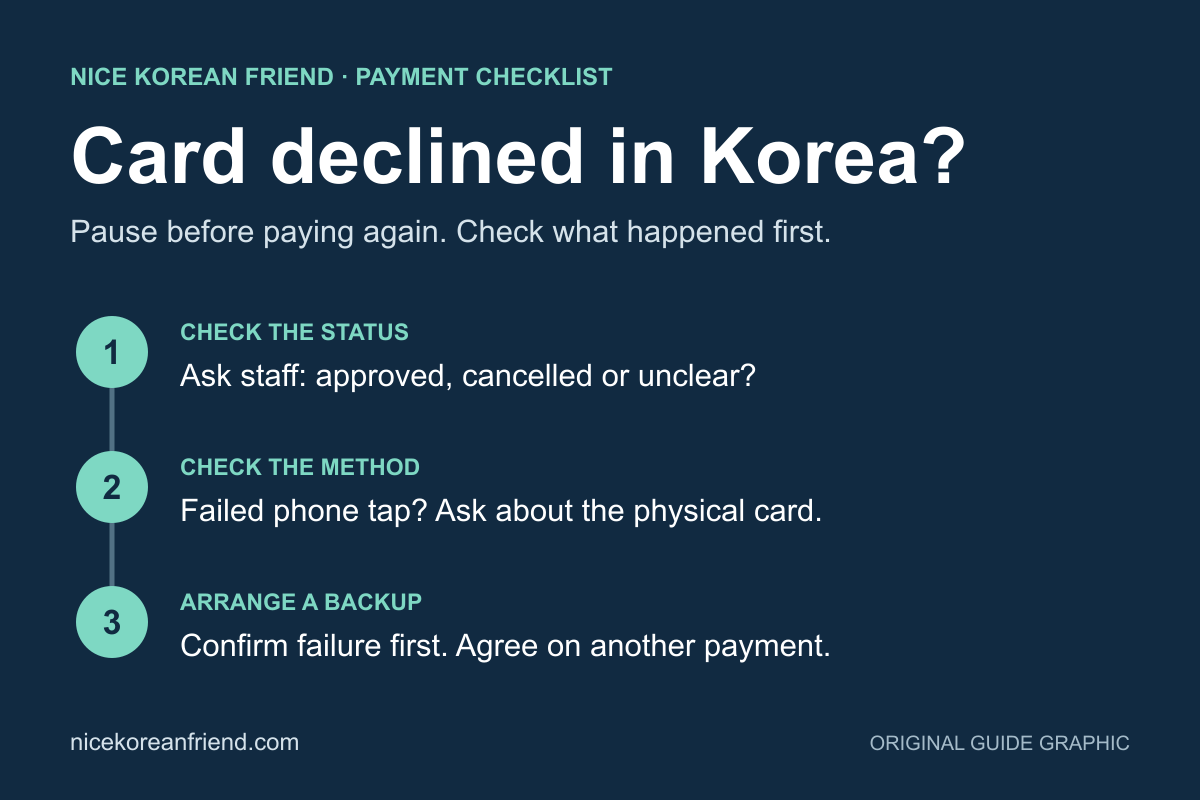
Before trying again, confirm the payment status with staff. Our card-decline checklist for Korea covers physical cards, phone wallets, online checkout and pending entries.
Frequently asked questions
›Can I get by in Korea with only a card?
Mostly yes. Cards are accepted at nearly every shop, restaurant, cafe, and convenience store, including for purchases under ₩1,000. But traditional-market stalls, street-food tents, and some tiny eateries are cash-only, and T-money recharge machines take cash, so carry a small buffer.
›Are foreign credit cards accepted in Korea?
Visa, Mastercard, JCB, and American Express work at most established businesses, and contactless tap is increasingly common. Some very small or older shops only take Korean cards, which is another reason to keep some cash on hand.
›Do I need to tip in Korea?
No. There is no tipping culture in restaurants, taxis, cafes, or hotels, and staff may be confused if you try. Prices already include service, so you never need to set aside cash for tips.
Sources and updates
Last edited on October 12, 2026. Sources support the specific details discussed in the guide; check the provider for current prices, availability and eligibility.