20 Korean Phrases That Do 80% of the Work
The twenty Korean phrases visitors actually use — with pronunciation, when to deploy each one, and the two that instantly warm every interaction.
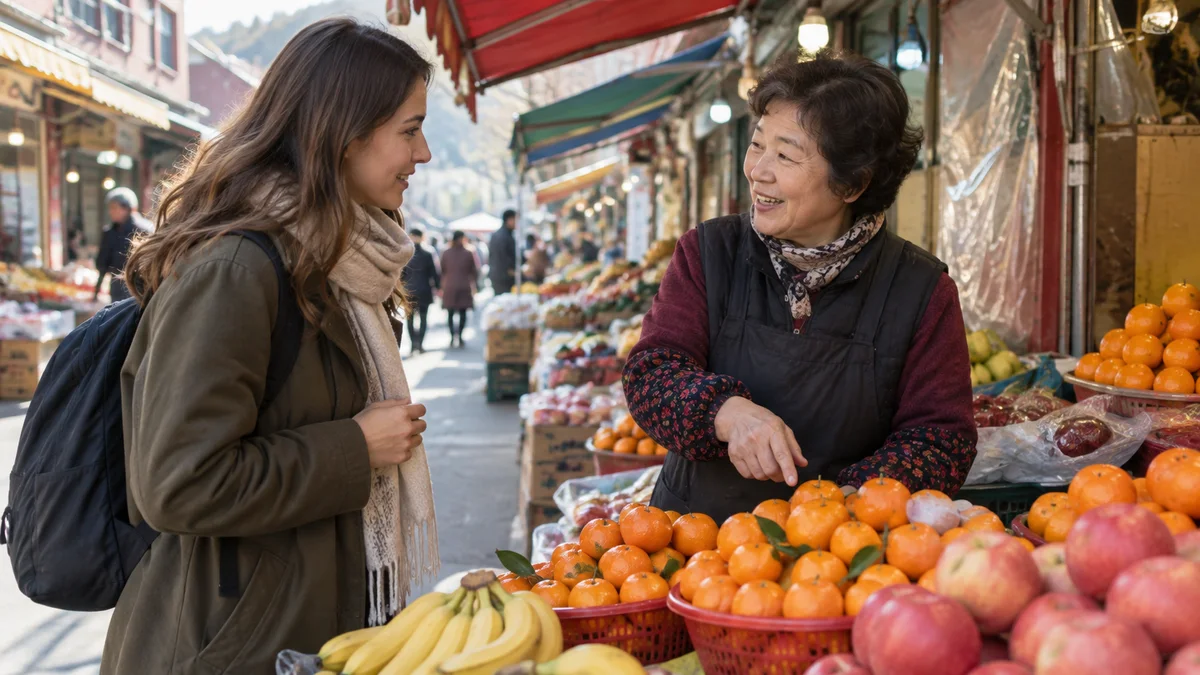
You don't need Korean to travel Korea — but ten grams of Korean buys a kilogram of goodwill. These twenty phrases are the actual working set, ordered by how often you'll fire them.
How we chose
Each phrase had to be (1) short enough to memorize, (2) usable dozens of times per trip, and (3) understandable even with imperfect pronunciation. This is a toolkit, not a lesson.
The list
The big five
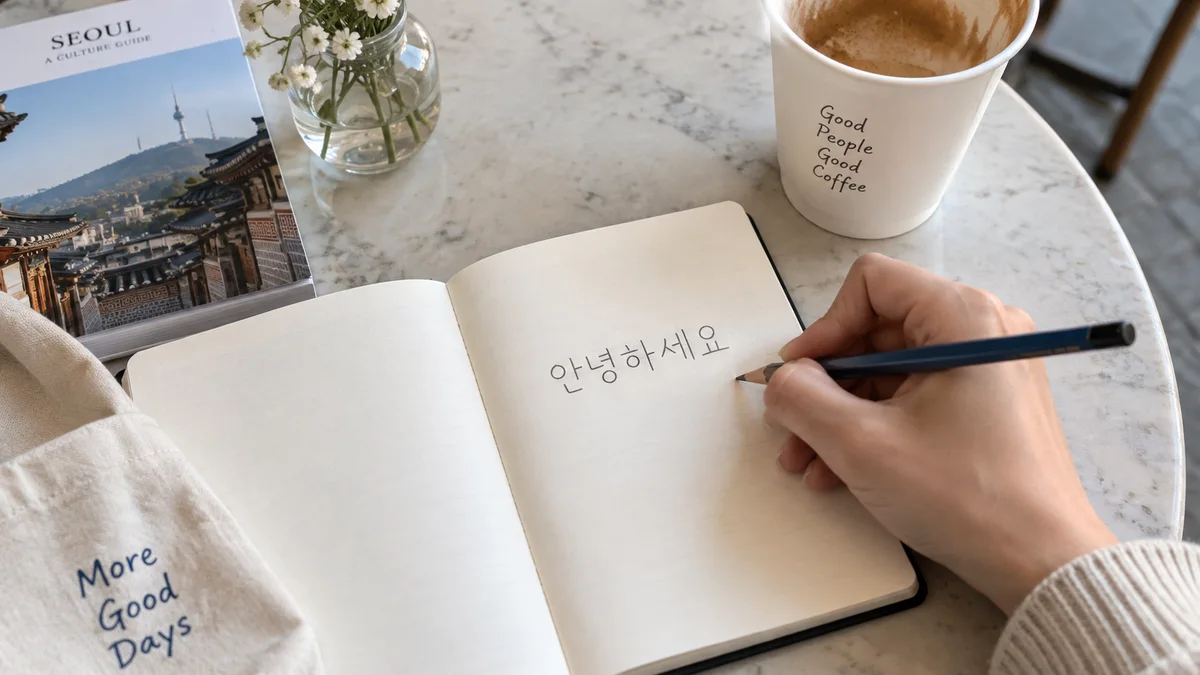
- 안녕하세요 — annyeong-haseyo — "Hello." Universal: entering shops, meeting anyone, any time of day. Pair with a small nod.
- 감사합니다 — gamsahamnida — "Thank you." The single highest-yield phrase in Korea. A casual alternative you'll hear: 고맙습니다 (gomapseumnida).
- 주세요 — juseyo — "Please give me ___." The Swiss Army phrase: point at anything + "juseyo" = a complete, polite sentence. 이거 주세요 (igeo juseyo) = "this one, please."
- 네 / 아니요 — ne / aniyo — "Yes / no." Note: ne can also be a general "mm-hm, I hear you."
- 죄송합니다 — joesong-hamnida — "I'm sorry / excuse me (apology)." Bumped someone, blocking the door, general repair work.
Restaurants and cafes
- 저기요! — jeogiyo — "Excuse me!" (calling staff). Not rude — it's the standard summons where there's no call bell.
- 얼마예요? — eolmayeyo — "How much is it?"
- 잘 먹겠습니다 — jal meokgesseumnida — "I'll eat well" (before eating). The politeness bomb — deploy when someone treats or serves you.
- 잘 먹었습니다 — jal meogeosseumnida — "I ate well" (after eating, to staff on the way out). Restaurant owners visibly brighten.
- 덜 맵게 해 주세요 — deol maepge hae juseyo — "Less spicy, please." Insurance for the beginner dishes.
- 포장해 주세요 — pojang-hae juseyo — "To go / takeout, please."
- 물 주세요 — mul juseyo — "Water, please" (though water is usually self-serve).
Getting around and shopping
- 화장실 어디예요? — hwajangsil eodiyeyo — "Where's the bathroom?" Arguably phrase #1 in importance-per-use.
- 영어 하세요? — yeongeo haseyo? — "Do you speak English?" Politer than launching into English cold.
- 이거 있어요? — igeo isseoyo? — "Do you have this?" (showing a photo). The shopping cheat code.
- 카드 돼요? — kadeu dwaeyo? — "Do you take card?" (Answer: almost always yes.)
- 여기서 세워 주세요 — yeogiseo sewo juseyo — "Please stop here" (taxi).
Social and emergency
- 괜찮아요 — gwaenchanayo — "It's okay / I'm fine / no thanks." Astonishingly versatile: declining a bag at the register, reassuring someone who bumped you, waving off seconds.
- 한국어 못해요 — hangugeo motaeyo — "I can't speak Korean." Ironically, saying it in decent Korean is charming.
- 도와주세요! — dowajuseyo — "Help me, please!" For emergencies — along with the numbers in our emergency guide.
Honorable mentions
아이스 아메리카노 주세요 (aiseu amerikano juseyo) — the national beverage order, essential kit for cafe culture. 건배! (geonbae) — "cheers!" 사장님 (sajangnim) — "boss," the friendly way to address a shop owner.
How to use this list
Screenshot it. Practice the big five out loud once — actually out loud — before landing. Deploy #2 relentlessly. When a phrase fails, Papago picks up the pieces; but you'll be surprised how rarely it has to.
Asking politely when you are unsure
The National Institute of Korean Language’s dictionary entry for 좀 includes its use to soften a request. The phrase examples in this guide are practical editorial suggestions, not guarantees of how every person or restaurant will respond. Listen to the pronunciation where available and show the written Korean if your meaning is unclear.
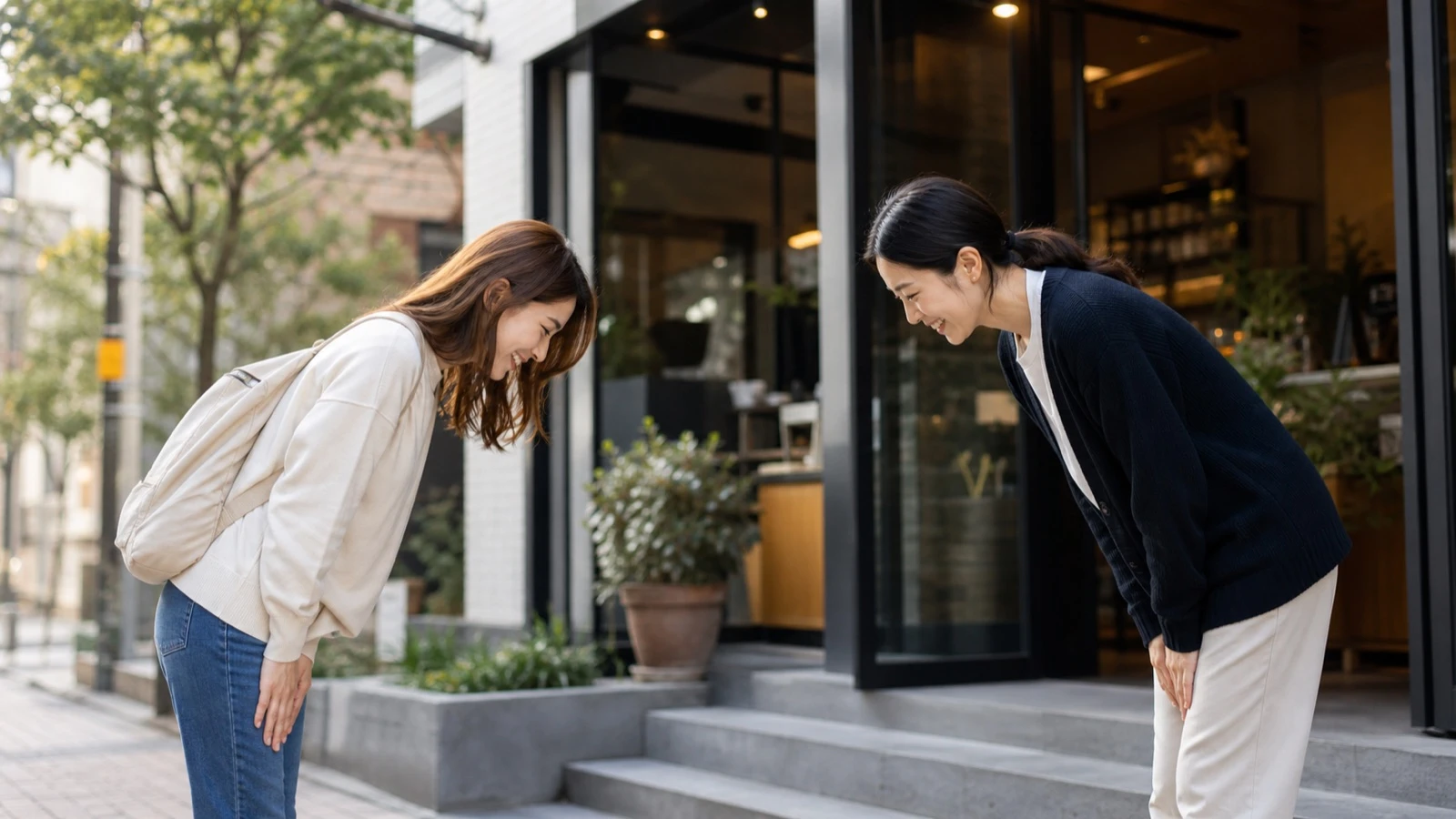
Our editor’s local advice is to feel comfortable asking for help. Many people are willing to assist even if they do not speak much English. A translation app or ChatGPT can help you prepare a short question; let the other person confirm the meaning. At a restaurant, point to the exact menu item and confirm quantity, price and any dietary restriction before ordering. Customs vary by setting, so follow the host’s cues and ask rather than worrying about performing every gesture perfectly.
Frequently asked questions
›Will people just speak English to me anyway?
In tourist-heavy areas and among younger Koreans, often yes — but English comfort drops fast at markets, old-school restaurants and outside Seoul. More importantly, opening in Korean changes the temperature of the interaction even when it immediately switches to English. The effort is the message.
›Is Korean pronunciation hard to fake from romanization?
Romanization is only a rough pronunciation aid. Listen to a native recording and show the written Korean if you are misunderstood; do not assume that one English spelling captures every Korean sound.
›Should I learn to read Hangul for a short trip?
It's genuinely optional for two weeks — but Hangul is famously learnable in a weekend (it's an alphabet of 24 letters, designed in the 1440s specifically to be easy), and being able to sound out menu items and station names pays off absurdly. If you enjoy small superpowers, do it.
Sources and updates
Last edited on October 12, 2026. Sources support the specific details discussed in the guide; check the provider for current prices, availability and eligibility.