Korean Clothes and Shoe Sizes: Check the Measurements Before the Label
Shop Korean clothes and shoes with fewer sizing surprises: understand product versus body measurements, free size and brand-specific footwear charts.
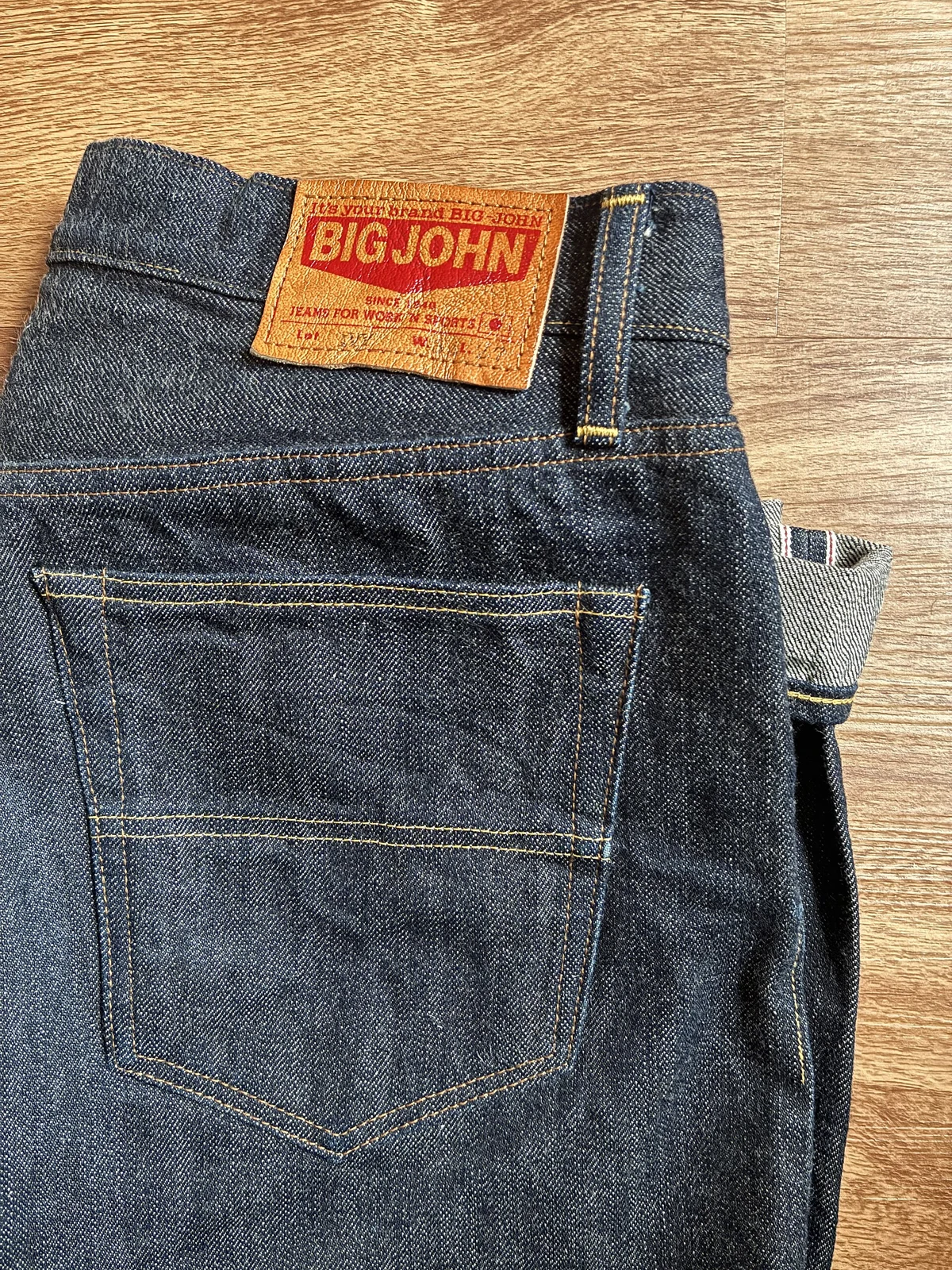
The most useful thing to carry into a clothes shop is a short measurement note. Your usual letter size is helpful, but a favorite shirt's width and length can tell you much more about an unfamiliar brand.
This guide deliberately avoids a universal conversion chart. A neat table that turns every Korean label into a US or European size can look reassuring while sending you toward the wrong garment.
First ask what the number measures
| What you see | What it may describe | The useful next step |
|---|---|---|
| S, M, L or a numbered clothing label | A brand's size category | Open the exact product chart |
| Body measurements | The wearer the item is designed for | Compare with your own body measurements |
| Product measurements | The garment itself | Compare with a similar garment laid flat |
| Free size · 프리사이즈 | A single offered size | Check dimensions, shape and stretch |
| KR shoe size | The footwear size designation | Compare with that brand's foot-length chart |
UNIQLO UK's measuring guide distinguishes body measurements from finished garment dimensions and explains why one size label can fit differently across designs. Use it for the measuring method, then check the actual Korean product listing for the item you plan to buy.
Make a measurement note before you shop
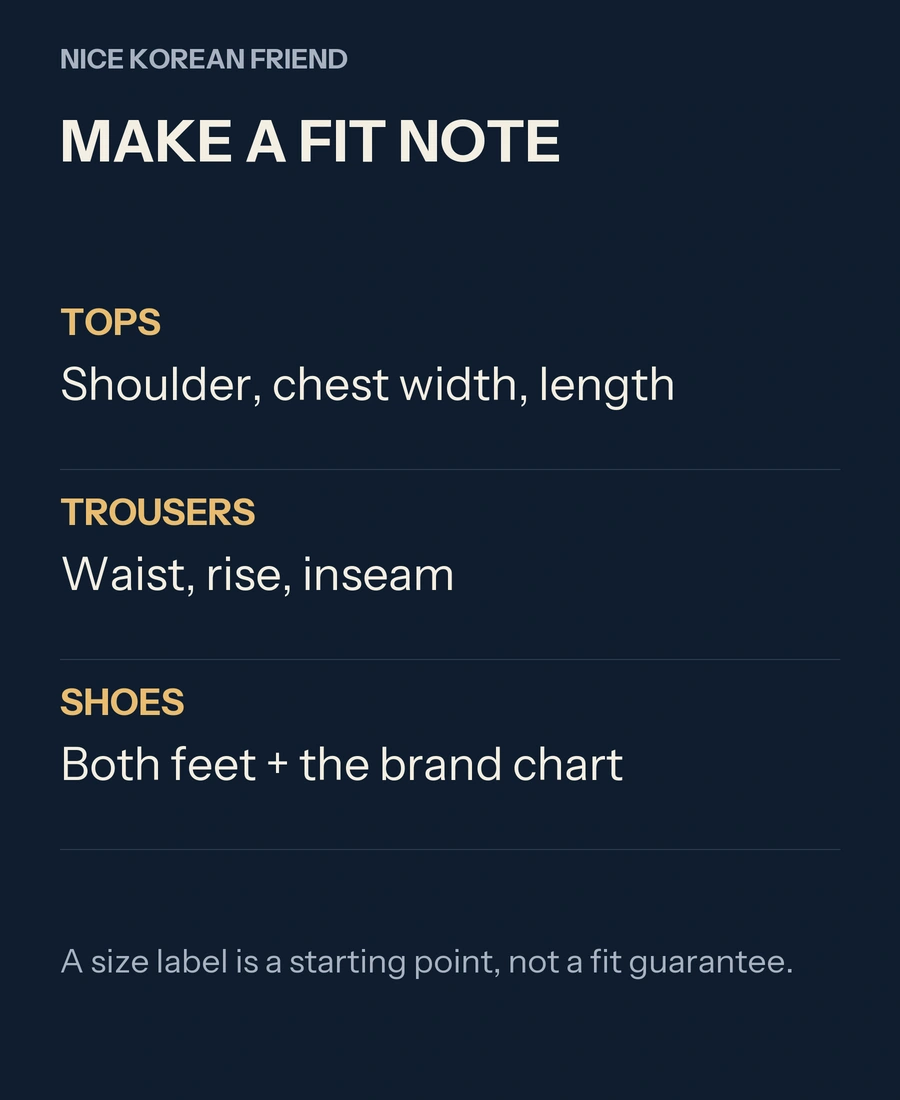
Choose a garment you already enjoy wearing. Lay it flat without stretching it. For a top, note chest width, shoulder width, sleeve length and overall length. For trousers, note waist width, hip width, rise, inseam and outer length. Compare whichever dimensions the seller actually lists; 총장 means total or overall length. Record centimeters and the method you used.
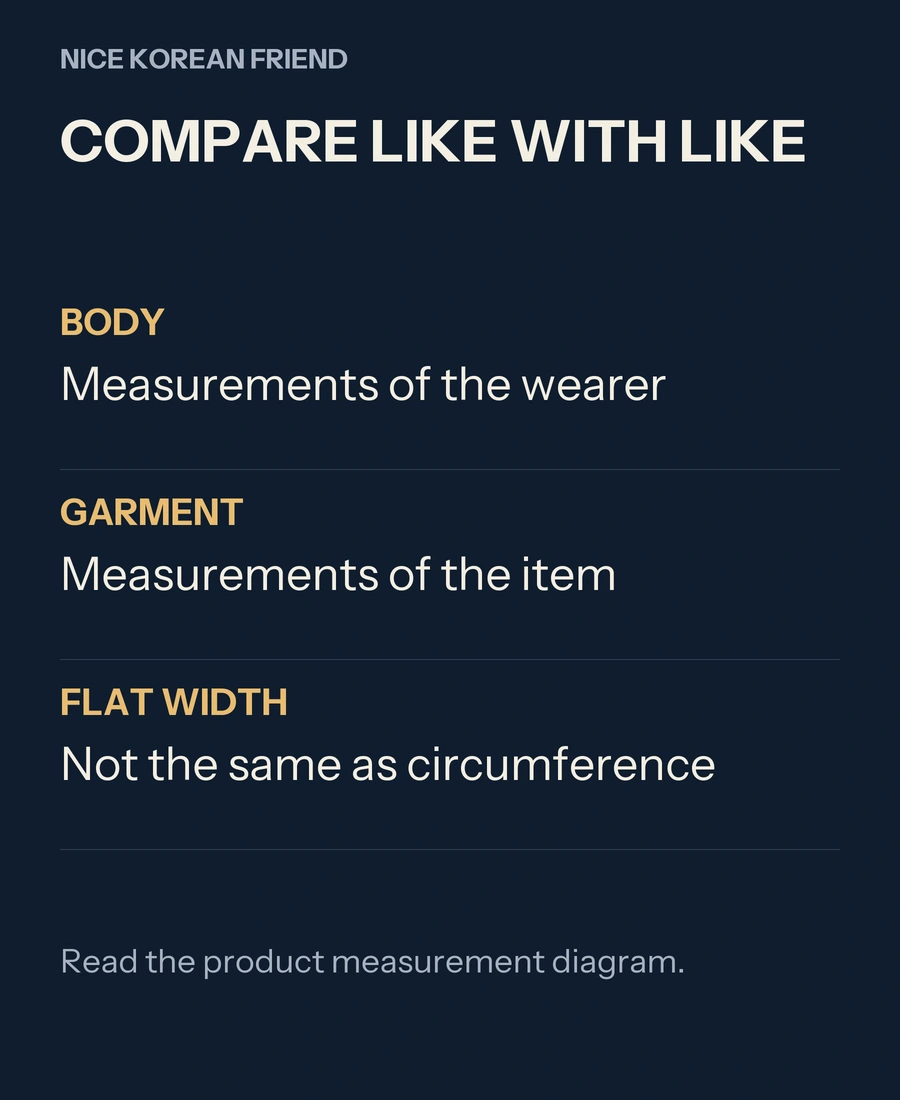
Then read the seller's diagram. Chest width measured flat across a garment is not the same thing as body chest circumference. Do not compare the two as though they were the same number. If the seller gives a circumference, use a circumference for your comparison too.
Here is a simple example, not a size recommendation: your favorite shirt measures 52 cm across the chest when laid flat. A listing that also measures flat across the chest can be compared with that figure. A listing that says 104 cm body chest describes a different thing. The arithmetic alone does not tell you how much wearing room the garment provides.
Learn a few chart labels
| Korean | English | Why it matters |
|---|---|---|
| 어깨너비 | Shoulder width | Where the shoulder seam may sit |
| 소매길이 | Sleeve length | Compare with your own top |
| 가슴단면 | Flat chest width | How the garment compares with your own shirt |
| 총장 | Total length | Where the hem may fall |
| 허리단면 | Flat waist width | A useful trouser comparison |
| 밑위 | Rise | How the waist and crotch position may feel |
| 신축성 | Stretch | Whether the fabric gives as you move |
Do not let the word free size make the decision for you. A loose shoulder line may still come with a short hem or narrow sleeve opening. An elastic waist can have a comfortable range, but it also has limits. Look at the garment's shape as well as its largest measurement.
Treat shoe charts as brand-specific tools
Korean footwear listings often display numbers such as 250 or 260. Check the exact chart rather than reading 260 as an exact 26 cm foot. Nike's Korean footwear chart notes that the CM size printed on a box or label is not the same thing as your measured foot length.
Follow the brand's measuring instructions, measure both feet and compare the longer measurement with its chart. Try on shoes with the socks you intend to use. Check toe room, heel hold and width while standing and walking, not just while seated. A conversion between size systems cannot promise that a particular last will suit your foot.
In the shop: ask before committing
입어 봐도 돼요? — May I try it on? is a useful first question. For shoes, use 신어 봐도 돼요? — May I try these on? If you need another size, 다른 사이즈 있어요? — Do you have another size? keeps the question simple.
Confirm the store's exchange and return conditions before paying, especially for sale goods, altered garments or items you cannot try on. Keep tags and the receipt until you have decided to keep the purchase. This is a shopping checklist, not a claim that every store has the same policy.
If you are buying for someone at home, bring their measurements and a photo of a well-fitting item's label. When those details are missing, an accessory may be a more predictable gift than fitted clothing. Our shopping tax-refund guide covers a separate checkout question; a tax-refund process does not determine whether an item fits or can be returned.
Official sources
Frequently asked questions
›Does free size fit everyone?
No. It usually means the item is offered in one size, not that it is suitable for every body. Read the item’s measurements and stretch information.
›Is Korean shoe size 260 exactly a 260 mm foot?
Do not assume that. Nike distinguishes the CM size printed on a box or label from measured foot length. Use the exact brand chart.
›Can I convert every Korean 66 label to the same US size?
No. Brand, cut, category and fit differ. Compare actual product dimensions instead of relying on a single conversion.
Sources and updates
Last edited on November 20, 2026. Sources support the specific details discussed in the guide; check the provider for current prices, availability and eligibility.