Your First Korean Convenience Store Meal: 5 Easy Steps
Eating at a Korean convenience store for the first time? Learn the simple routine: check facilities, pay first, prepare food correctly, eat and tidy up.
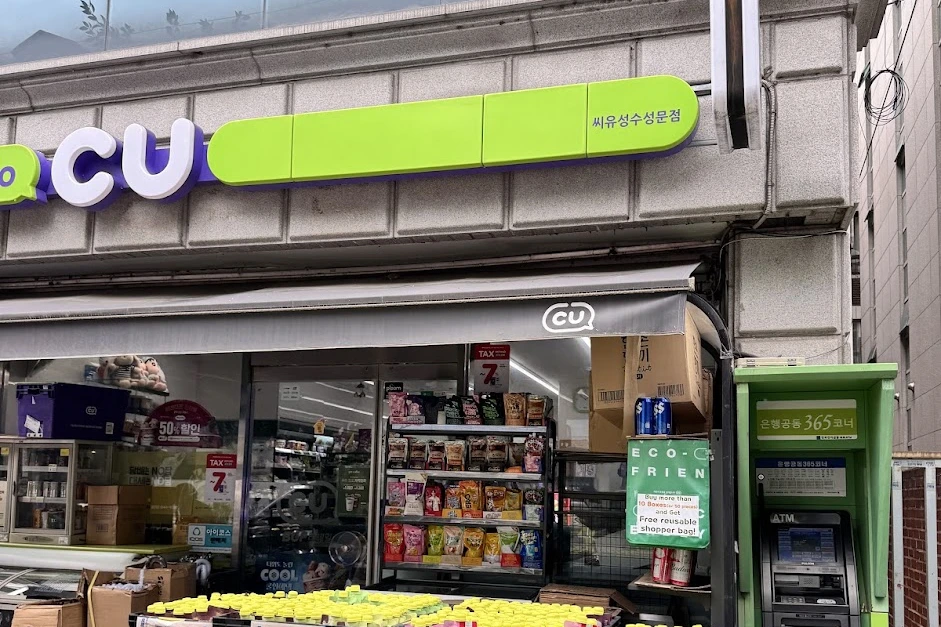
Walking into a Korean convenience store for the first time can feel like entering a tiny, brightly lit food hall. There are walls of cup noodles, chilled lunch boxes, triangle gimbap and drinks you've never seen, and near the window there may be a counter where people are quietly slurping noodles. A simple routine makes that first visit easier.
This guide walks you through that routine, from stepping inside to leaving your spot clean. If you're still deciding what to eat, start with our Korean convenience store food combos, then come back here for the how. Use the steps below as a practical routine, and check the facilities and house rules at the branch you visit.
The 5-step routine
Here's the whole process at a glance:
- Check what this branch has: microwave, hot water, a place to sit.
- Pay for your food before you open it.
- Prepare it the way the package says.
- Eat where eating is allowed, or take it away.
- Tidy up following the store's own setup.
Step 1: Look around before you buy
Before picking anything up, take thirty seconds to scan the store. Is there a microwave customers can use? A hot-water dispenser? Tables or a window counter, and any signs about eating inside? Some stores have all of these, some have none, and some limit seating at certain times. Equipment can also be out of order.
What you find should decide what you buy. Cup noodles make little sense without hot water, and a lunch box that needs heating won't help without a microwave. If you can't tell, a quick question at the counter saves confusion later.
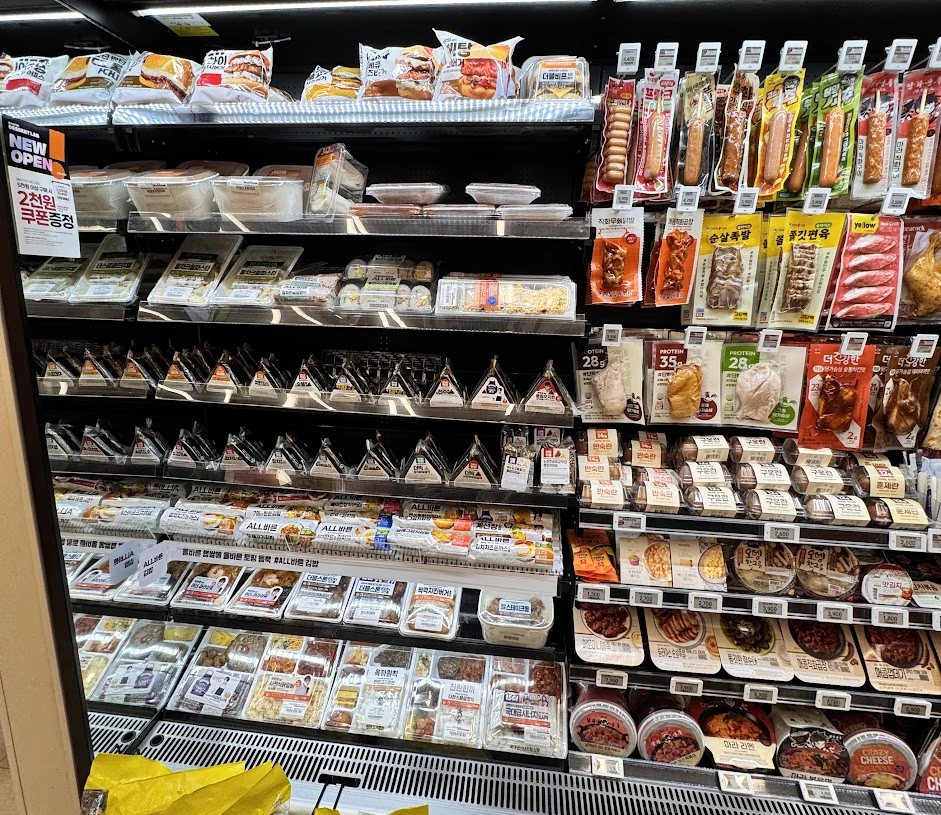
Choose your food after checking the preparation facilities. Products and shelf labels reflect the time of the photograph.
Step 2: Pay first, then open
A straightforward order to follow is: pay before you open, heat or eat anything. Bring your items to the counter, pay, and only then head to the microwave or hot water.
The counter is also the moment to ask for what you need. If you want chopsticks, a spoon or a bag, say so then rather than hunting for them later. Some products include utensils and some don't, and bag practices vary, so simply ask and go with the answer you get.
Step 3: Prepare it the right way
Microwave meals
Read the package before heating. Look for its microwave-use marking: Korea's food-safety authority advises following the stated time and temperature. The plastic type alone is not enough. Follow instructions for the lid, film and anything to remove. Do not microwave a metal-coated lid, or assume removing it makes the cup microwave-safe.
Match the pack's heating time to the appliance's wattage. There is no universal setting for lunchboxes. If you cannot identify the wattage or understand the instructions, ask staff before heating. Handle the hot tray with care.
Cup noodles and dedicated cookers
Check which method your product requires: hot water or an explicitly permitted microwave method. A dedicated noodle cooker, where provided, is a separate setup that may be intended for packet noodles or particular products. Ask which products and bowls it accepts and follow its posted instructions; do not put a cup into it just because it is a noodle cooker.
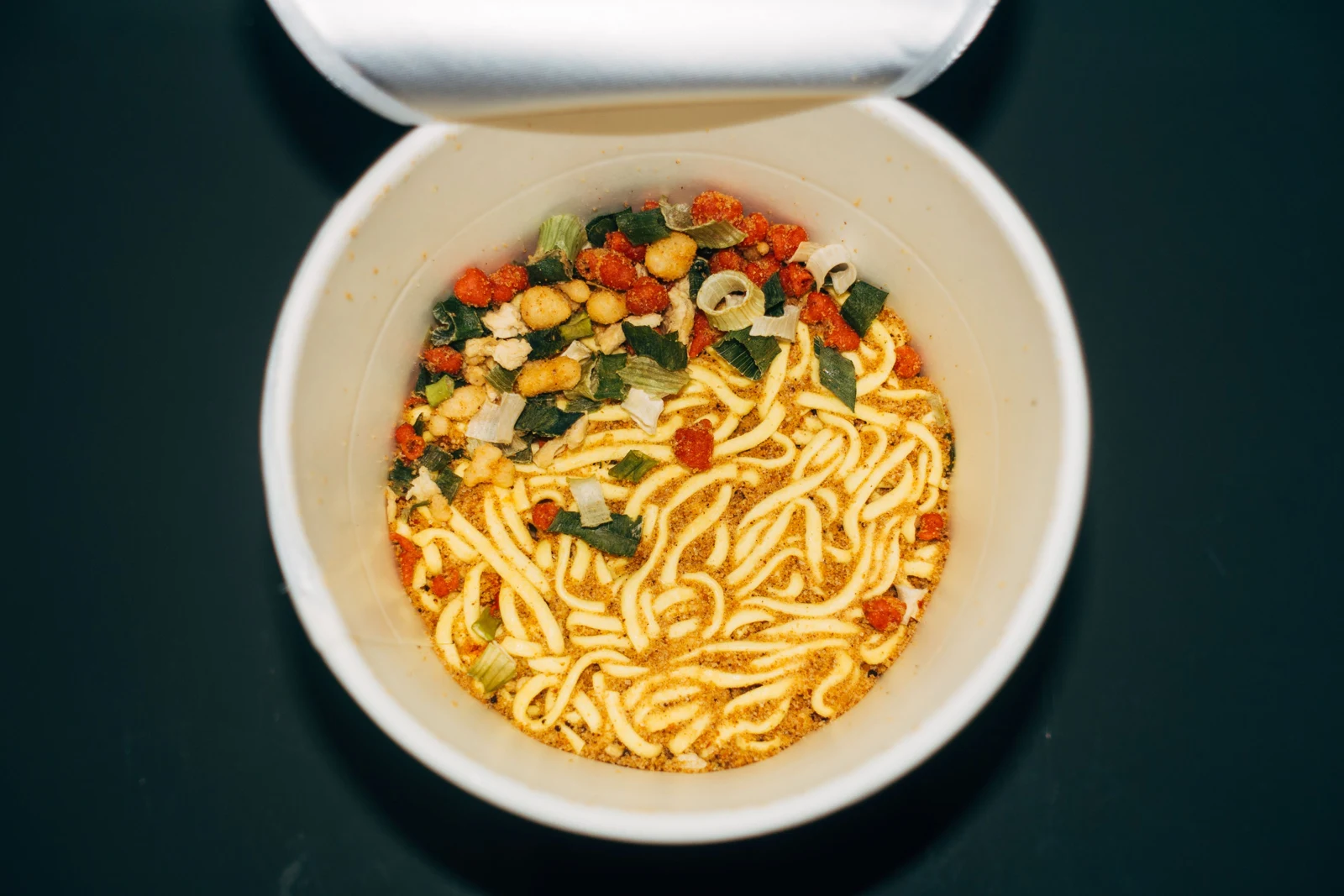
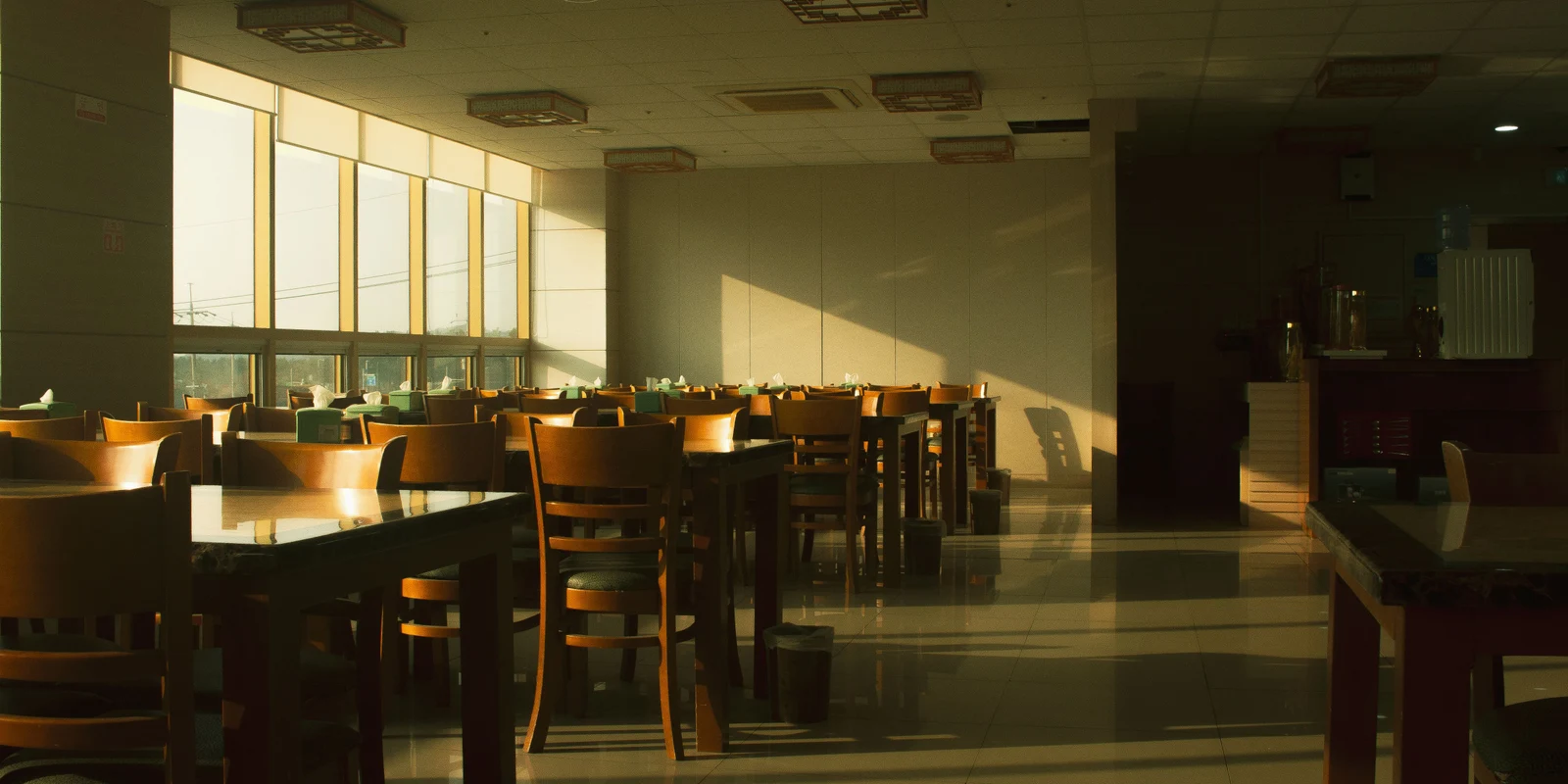
Follow the instructions on your own cup. This photograph is illustrative and does not show the Shin Ramyun Cup example below.
Nongshim's Korean-market Shin Ramyun Cup shows the first type. Its official instructions say to open the lid halfway, add the soup powder, pour boiling water up to the inside line (240ml), cover for about three minutes and stir, and they state clearly that it shouldn't be microwaved. That applies to that cup only; other sizes and versions may differ, so read the one in your hand.
Triangle gimbap
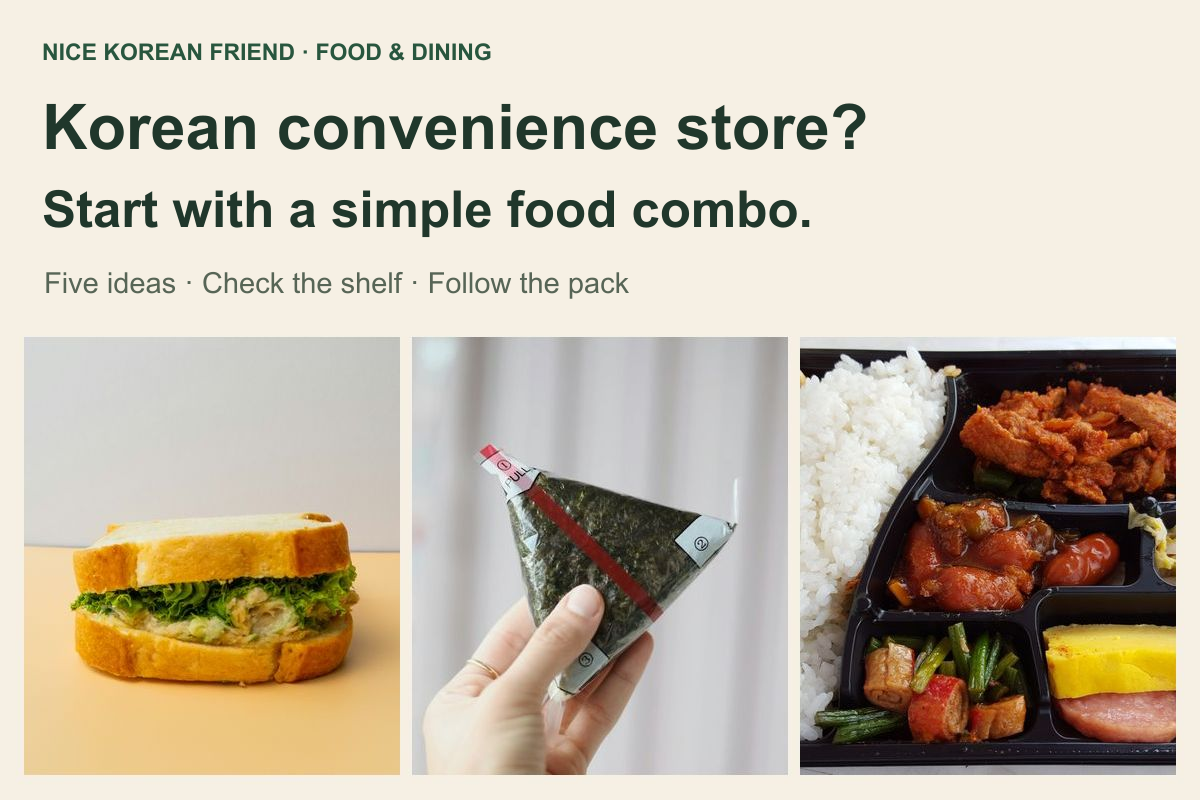
Many triangle gimbap come in a wrapper with numbered tabs: pull tab 1 down the center, then peel corners 2 and 3 outward so the seaweed stays crisp around the rice. Not every wrapper works this way, so follow the numbers or arrows printed on yours. If the wrapper tears, remove any remaining plastic before eating the rice and seaweed.
Step 4: Eat where it's allowed
Use a table or window counter only when the branch permits eating there. If permission or seating hours are unclear, ask before settling in. Keep it brief when the store is busy, and don't spread your bags across extra seats.
No seating, or no eating inside? You still have two good options. Choose a product whose package says it is ready to eat, such as a suitable gimbap or sandwich, or take your food away. If you take it away, confirm first where you'll prepare it: you will need the hot water or microwave specified on the package at your destination. Do not assume your hotel provides either.
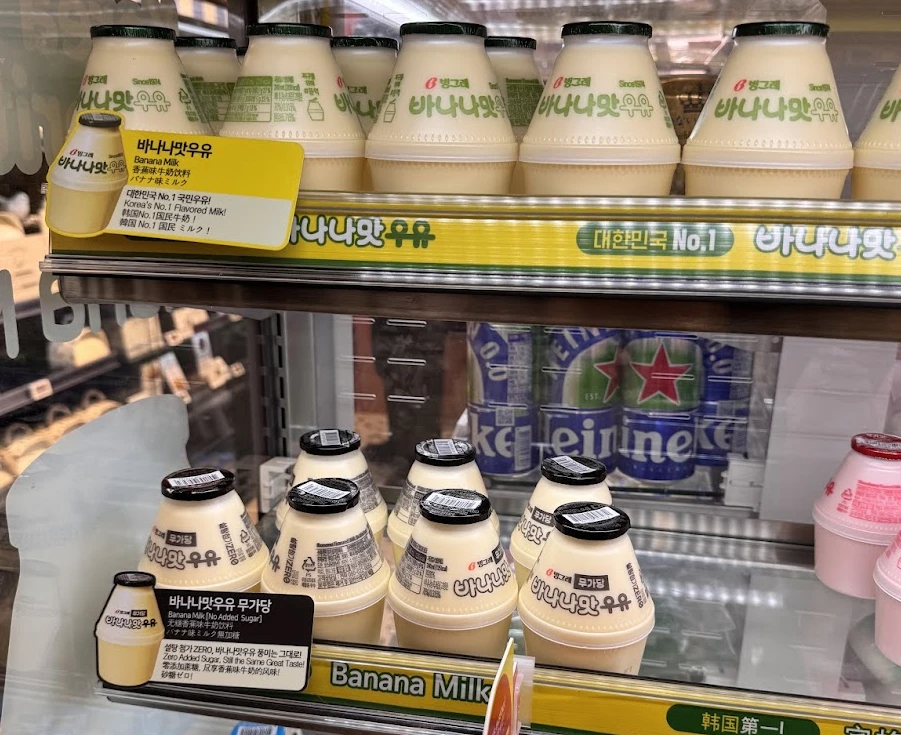
A chilled drink needs no cooking, but any food you choose with it may still need preparation.
Step 5: Tidy up the store's way
Cleanup is where each branch's setup matters most. Some provide a designated spot for leftover broth and separate bins for different waste; others don't. Use a liquid disposal point only if the store provides one, and follow any posted signs.
If it isn't clear what goes where, ask staff. Don't pour soup into a random sink, and never tip broth into a recycling bin. For general sorting habits, our Korea trash and recycling guide is helpful background, but the branch's own instructions always come first. Wipe up any spills, push in your chair, and you're done.
Useful phrases at each stage
Point, smile and try these:
| Korean | Say it | English |
|---|---|---|
| 여기서 먹어도 돼요? | Yeogiseo meogeodo dwaeyo? | Can I eat here? |
| 이거 전자레인지에 데워도 돼요? | Igeo jeonjareinjie dewodo dwaeyo? | Can this go in the microwave? |
| 젓가락하고 숟가락 주세요. | Jeotgarak-hago sutgarak juseyo. | Chopsticks and a spoon, please. |
| 봉투 주세요. | Bongtu juseyo. | A bag, please. |
| 뜨거운 물 어디 있어요? | Tteugeoun mul eodi isseoyo? | Where is the hot water? |
| 국물은 어디에 버려요? | Gungmureun eodie beoryeoyo? | Where do I pour out the broth? |
For your first visit, keep it simple: check, pay, prepare, eat, tidy. Once you know what the branch provides, you can choose a meal that fits.
Frequently asked questions
›Can I eat inside every Korean convenience store?
No. Seating and eating rules vary by branch. Some stores have tables or a window counter, some limit use at certain times, and some have no seating at all. Look for signs or ask staff before you buy.
›Can I microwave cup noodles?
Only if that specific product says so. Many cup noodles are made for hot water only, and some, like Nongshim's Korean-market Shin Ramyun Cup, explicitly say not to microwave. Removing the foil lid does not make a cup microwave-safe.
›What should I do with leftover broth?
Use a designated liquid disposal point only if the store provides one. If you can't see one, ask staff. Never pour broth into a random sink or a recycling bin.
›What if the store has no microwave, hot water or seating?
Pick something ready to eat, such as gimbap, a sandwich or a chilled drink, or take your food away. Before buying anything that needs heating, make sure you'll have a microwave or hot water where you're going.