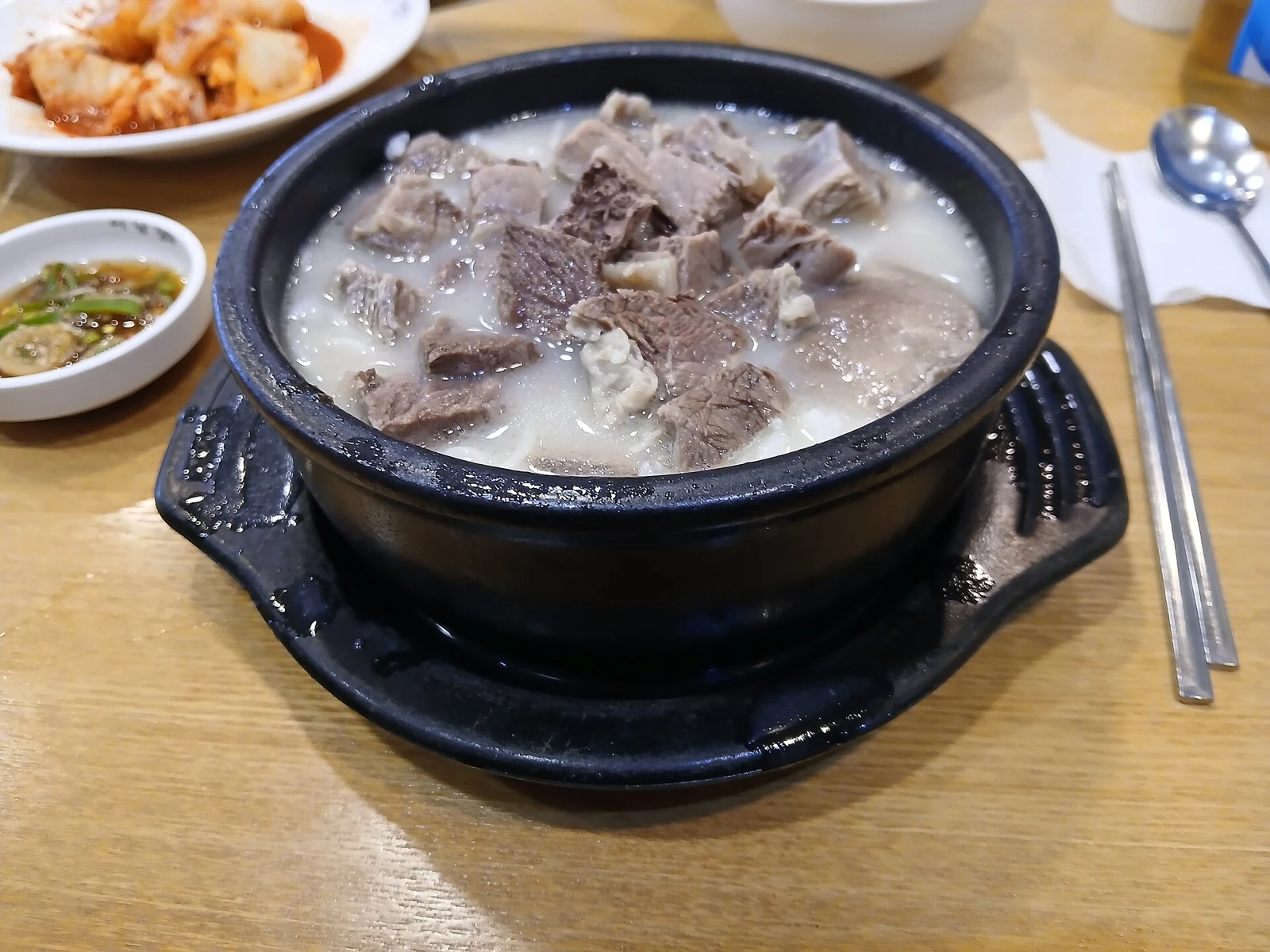
Kimchi Beyond Cabbage: Six Types to Recognize at a Korean Table
Meet six Korean kimchi varieties, compare texture and spice, and learn what to ask about seafood ingredients before ordering or shopping.
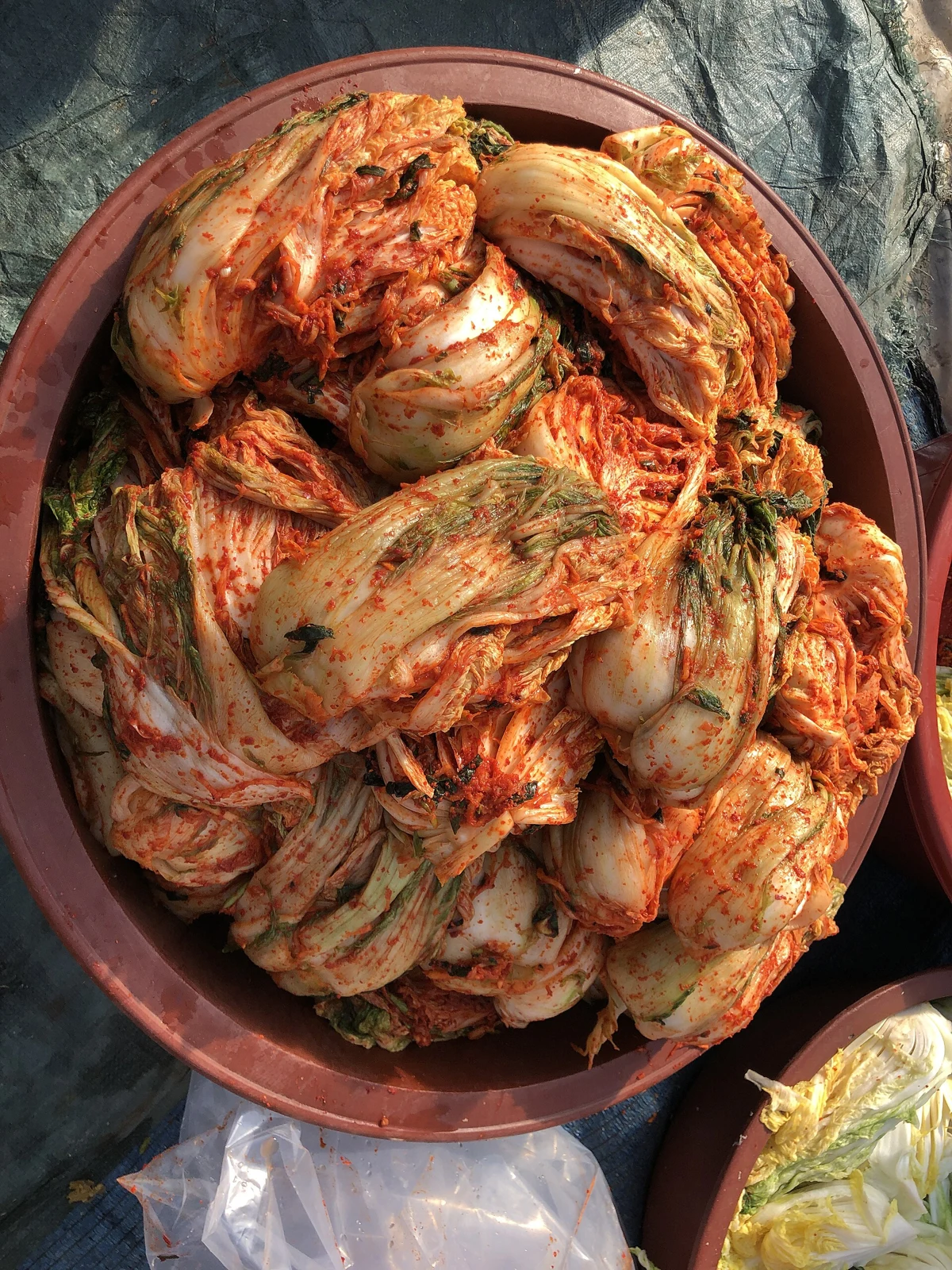
You can enjoy kimchi without learning every regional name. Three questions do most of the work: what vegetable is it, how is it cut, and is it served in a liquid? Those clues help you recognize what arrives beside your rice, even when the menu simply says kimchi.
Start with the vegetable and texture, then ask about seasoning. The same name can cover different household and restaurant recipes.
Six names worth learning
| Name | What to look for | A useful starting point |
|---|---|---|
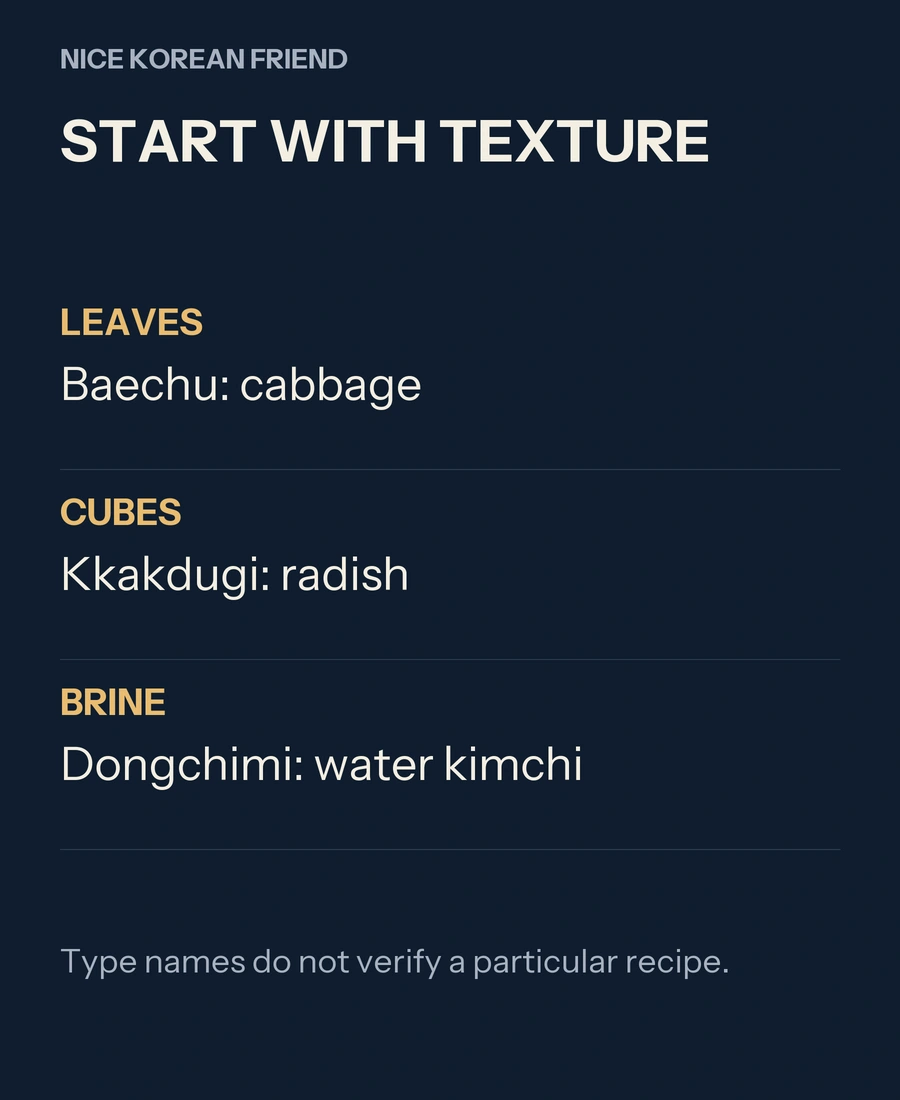
| Baechu kimchi · 배추김치 | Seasoned napa cabbage leaves | Choose this to explore the familiar cabbage style |
| Kkakdugi · 깍두기 | Cubes of radish | Choose this when texture interests you most |
| Baek kimchi · 백김치 | Pale cabbage without the usual red pepper coating | Ask for a mild option; check other ingredients separately |
| Dongchimi · 동치미 | Radish in a light brine | Try the radish and its liquid together |
| Oi-sobagi · 오이소박이 | Cucumber with seasoning tucked into cuts | Notice the cucumber texture rather than expecting cabbage |
| Pa kimchi · 파김치 | Seasoned green onions | Start with a small amount if strong onion flavor is new to you |
The Korea Tourism Organization's introduction is a useful first reference for cabbage, diced radish and water kimchi. For water kimchi specifically, the National Institute of Crop Science explains dongchimi as a radish preparation with plentiful liquid.
Korea.net also describes cucumber and green-onion kimchi.
Choose a texture before choosing a spice level
If you usually like crunchy vegetables, begin with one piece of radish or cucumber kimchi. If you prefer softer, layered vegetables, try a small piece of cabbage. Pair it with a bite of plain rice so that the seasoning is not your only point of reference.
For a first tasting, put a small portion on your own plate. You do not need to finish a large serving to decide whether a style suits you. It is also fine to enjoy one variety more than another. A plate of green onion kimchi and a bowl of dongchimi are very different eating experiences.
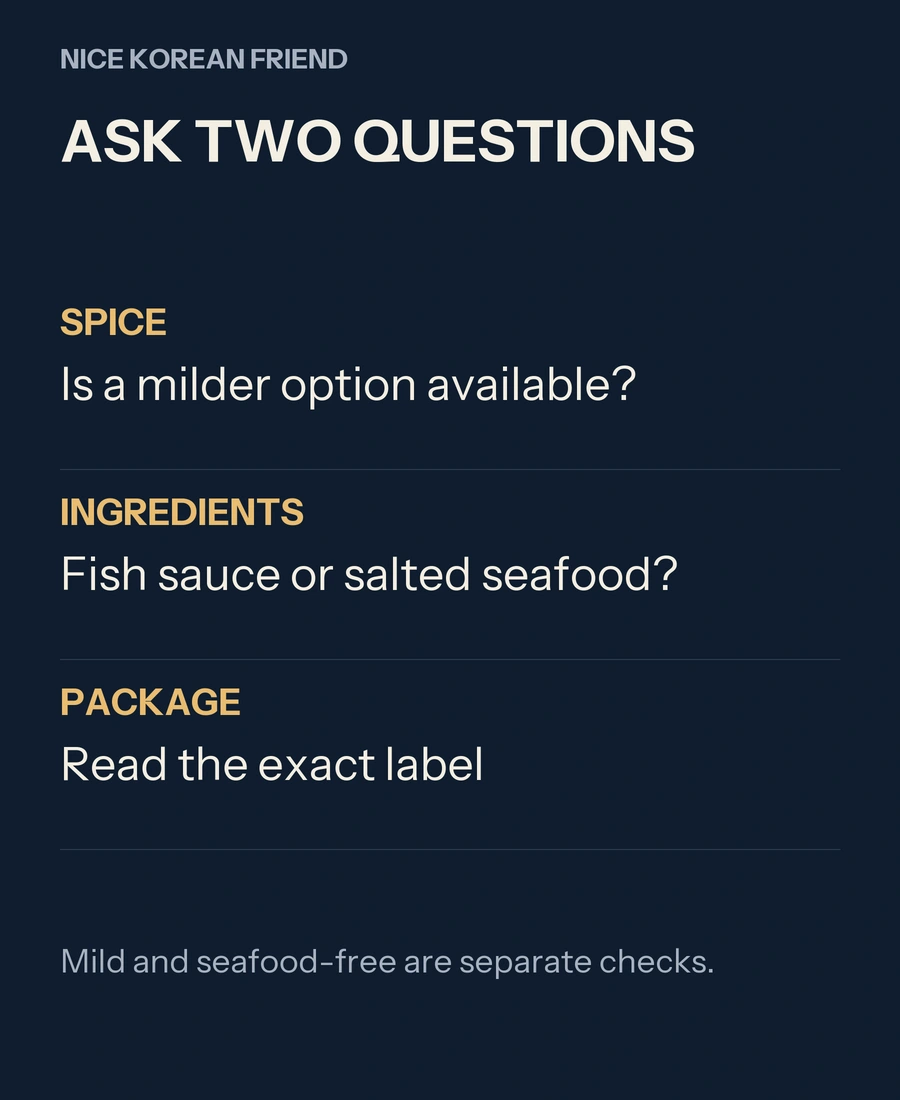
Do not treat redness as a precise spice chart. Recipes differ. A useful request is 덜 매운 김치 있어요? — Do you have less spicy kimchi? If staff offer a white or water kimchi, ask a second question if ingredients matter to you.
Mild, vegetarian and allergy-friendly are separate questions
Kimchi may include fish sauce, salted shrimp or other seafood ingredients. A pale appearance does not prove that these are absent. Name the ingredient you need to avoid instead of asking only whether a dish is vegetarian.
For example: 젓갈이나 액젓이 들어가요? — Does it contain salted seafood or fish sauce? For an allergy, show a clear written message and ask staff to check the actual recipe or package. A generic description of a kimchi type cannot verify a particular bowl.
Our vegetarian and vegan eating guide covers the wider challenge of checking stocks, sauces and side dishes. Use it alongside this recognition guide rather than treating either as a guarantee about a restaurant.
At a restaurant: taste first and share thoughtfully
Wait to see which side dishes arrive with your meal before ordering extra food. Use shared serving utensils where provided, and move a small portion to your plate. Ask before assuming an additional serving is free; ordering policies belong to the restaurant.
If kimchi is unfamiliar, consider the whole mouthful. A strongly seasoned bite alone can feel very different beside rice, soup or grilled food. The Korean table manners guide explains the shared-table habits that make this easier.
Buying a first package
Start with an amount you can realistically finish during your stay. Read the ingredient list, storage instructions and date information on the exact product. Follow its refrigeration instructions and use clean utensils. A hotel's small minibar is not automatically suitable for storing every food purchase; ask if you are unsure.
If you intend to take kimchi overseas, check your destination's current food-import rules and your airline's baggage requirements before buying. A sealed supermarket pack is not, by itself, permission to import food. For a first shop, our supermarket guide helps with finding products and checking out.
A simple tasting plan
Choose one familiar-looking cabbage kimchi and one contrasting style. Compare the vegetable, cut, texture and amount of liquid. Write down the Korean name of the one you like. Next time, you can ask for that name instead of trying to describe the color from memory.
Official sources
Frequently asked questions
›Is white kimchi always vegan?
No. A mild color does not identify every ingredient. Ask about fish sauce, salted shrimp and seafood stock in that specific recipe.
›Do you eat the liquid in dongchimi?
Its brine, usually served cold, is part of the dish and can be enjoyed with the radish. Use the serving utensils provided when sharing.
›Does every restaurant serve all six types?
No. The selection depends on the restaurant, meal and season. Treat this as a recognition guide rather than an ordering menu.
Sources and updates
Last edited on November 20, 2026. Sources support the specific details discussed in the guide; check the provider for current prices, availability and eligibility.