Eating Vegetarian and Vegan in Korea
Korea is easier than its reputation — if you know where the hidden anchovy and beef broth lurk. Safe dishes, temple food, key phrases, and veg-friendly areas.
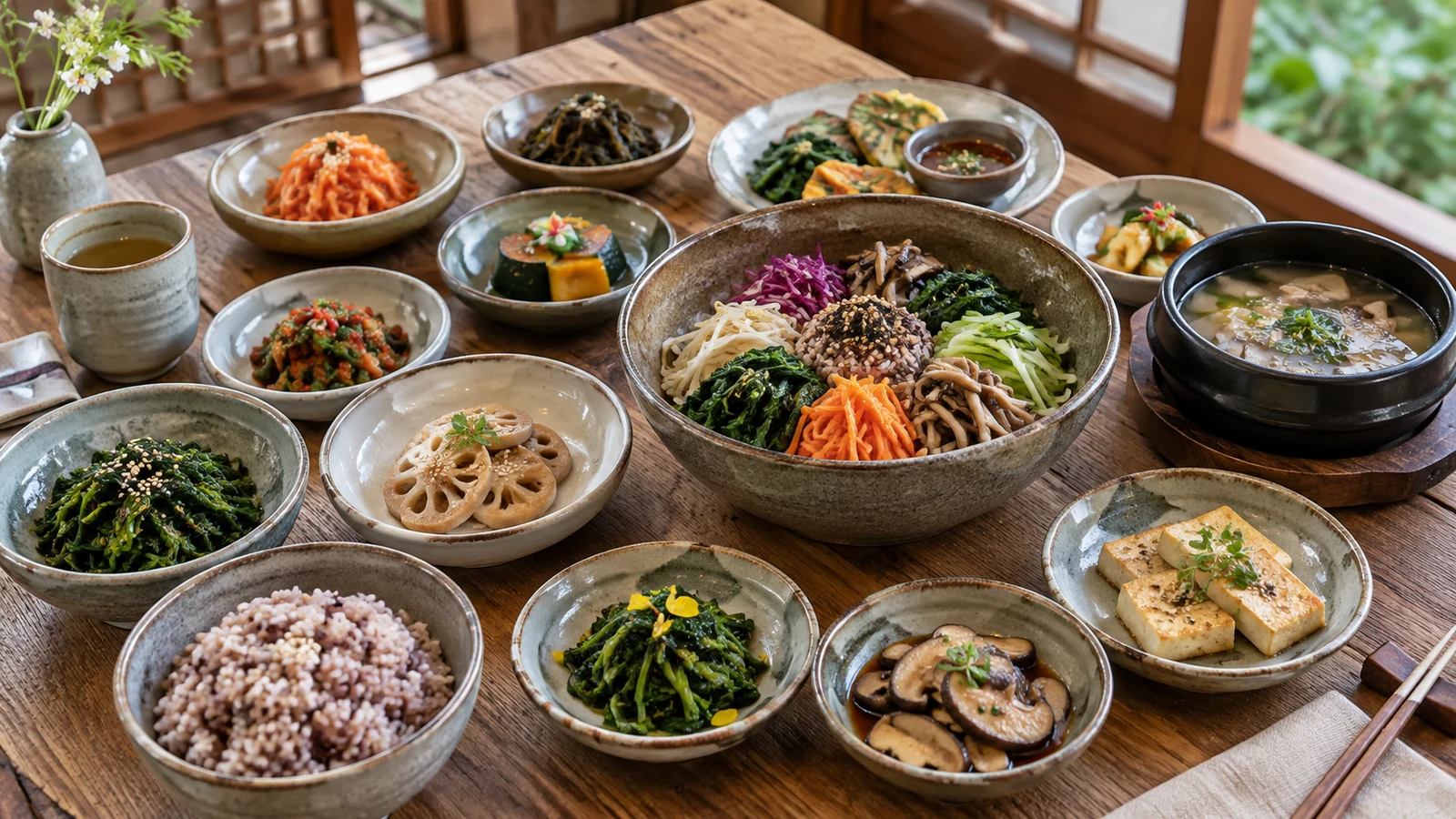
Korea has a reputation as a hard place to eat vegetarian, and it's half deserved. The half that's true: animal ingredients hide in dishes that look completely plant-based. The half that's wrong: with a couple of phrases and a sense of where to look, you can eat wonderfully here — this is, after all, the country that perfected an entire vegan cuisine in its Buddhist temples 1,500 years before anyone coined the word. Let's make it easy.
The short version
The single most important thing to understand is hidden broth and fish products. A bowl of vegetable soup, a spoonful of kimchi, a plain-looking stew — any of them can carry animal ingredients you'd never see. Learn to ask about the stock, know which dishes are usually safe, and use temple food (사찰음식 — sachal eumsik) and apps as your reliable fallback. In Seoul especially, dedicated vegan restaurants now sit every few blocks in areas like Itaewon and Hongdae.
How it actually works
Three ingredients cause almost all the trouble:
- Anchovy stock (멸치육수 — myeolchi-yuksu). The default base for a huge share of soups and stews, including many that look purely vegetable. Even doenjang jjigae usually starts here.
- Fish sauce (액젓 — aekjeot) and shrimp paste (새우젓 — saeu-jeot). Standard in most kimchi and many banchan (side dishes). That innocent red kimchi on the table is very often not vegan.
- Beef or pork base. Bits of meat or a meat broth turn up in things like gimbap (ham), bibimbap (beef, egg), and fried rice.
So your job isn't to memorize a huge list — it's to ask two questions and know a handful of safe defaults.
Dishes that are usually safe (confirm the broth)
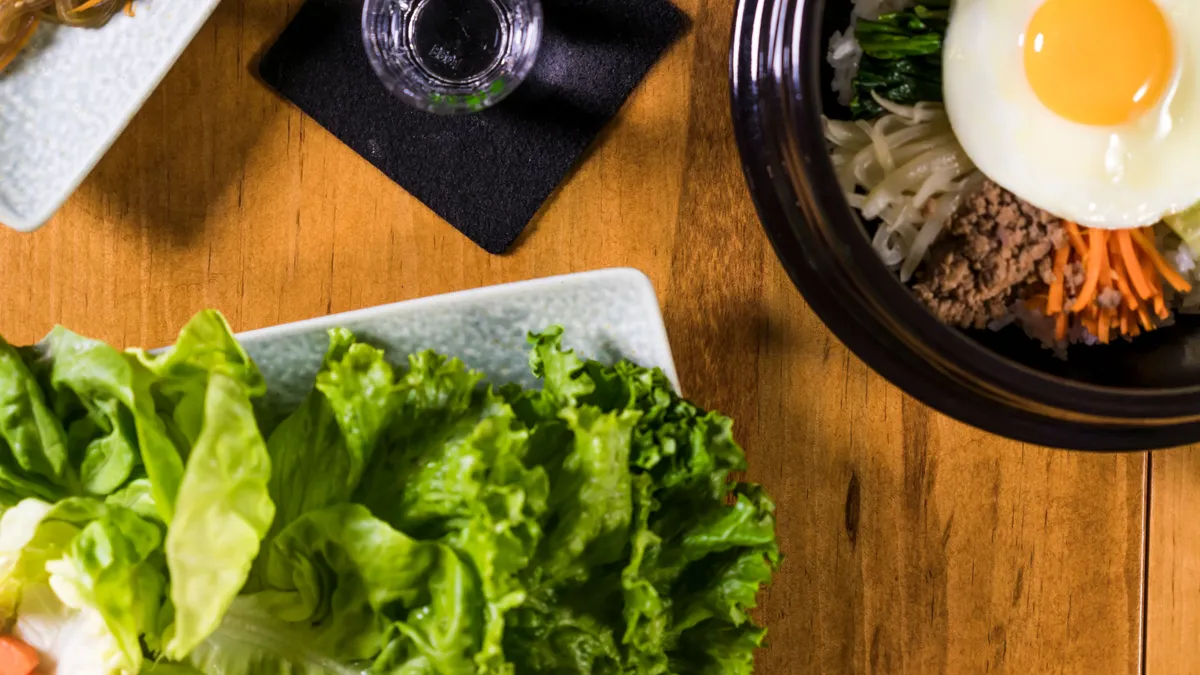
- 비빔밥 (bibimbap) — order it without meat and egg; the rice, greens, and gochujang carry it.
- 잡채 (japchae) — glass noodles with vegetables (sometimes cooked in a little meat; ask).
- 김밥 (gimbap) — ask for it without ham and egg (야채김밥, yachae-gimbap, is the veggie version).
- 파전 / 감자전 (pajeon / gamja-jeon) — savory scallion or potato pancakes.
- 순두부찌개 (sundubu-jjigae) — soft tofu stew, but check the broth; many use anchovy or beef.
- 사찰음식 (temple food) — the safest category of all, below.
What it costs
Everyday veg-friendly eating is cheap: a 김밥 (gimbap) roll runs a few thousand won, and a plate of 비빔밥 (bibimbap) or 잡채 (japchae) typically lands around ₩8,000–13,000. Dedicated vegan cafes and restaurants in Seoul sit a bit higher, roughly ₩12,000–20,000 for a main. The splurge is a temple-food course: a multi-course set at a refined restaurant like the Michelin-listed Balwoo Gongyang near Jogyesa Temple runs well into the tens of thousands of won per person — worth it once for the experience. Convenience stores are a budget backstop; see our convenience store guide.
Common misconceptions
- "Kimchi is just vegetables, so it's vegan." Usually not — most kimchi contains fish sauce or shrimp paste. Ask, or seek out temple-style kimchi.
- "If there's no visible meat, it's safe." The broth is the trap. A clear or vegetable-looking soup is frequently built on anchovy stock.
- "Vegetarian and vegan are understood the same way." Not always. "채식 (chaesik)" can include people who still eat some seafood or eggs, so being specific — especially about fish and broth — matters.
- "Temple food is bland." The opposite. It's layered, seasonal, and celebrated worldwide precisely because it coaxes deep flavor without meat, garlic, or onion.
What locals do
Temple food (사찰음식) is the local secret weapon: Buddhist cuisine that excludes all meat, fish, dairy, and eggs, plus the "five pungent vegetables" (garlic, onion, scallion, leek, chives). It's effectively vegan by design. You'll find it around Insadong and Jogyesa Temple, and some temples offer templestay meals.
For finding places, veg-savvy locals and long-termers live on HappyCow, which has 300-plus listings in Seoul (accuracy varies, so read recent reviews). Neighborhood-wise: Itaewon and Haebangchon (HBC) have the widest range and the most international options; Hongdae skews toward young vegan cafes and health spots; Insadong leans traditional and temple-food-friendly. When ordering in a regular restaurant, they simply state their needs clearly up front rather than mid-meal.
Good to know
Keep these phrases in your pocket:
- 고기 빼주세요 (gogi ppae-juseyo) — please leave out the meat.
- 저는 채식해요 (jeoneun chaesik-haeyo) — I'm vegetarian.
- 완전 비건이에요 (wanjeon bigeon-ieyo) — I'm fully vegan.
- 육수가 뭐예요? (yuksu-ga mwoyeyo?) — what's the stock/broth?
- 멸치나 해산물 들어가요? (myeolchi-na haesanmul deureogayo?) — does it contain anchovy or seafood?
Delivery apps are veg-friendly too — filter for vegetarian or search "비건" — see our food delivery apps guide. And for the mechanics of ordering, banchan, and paying, our how to order at a Korean restaurant walkthrough pairs well with this one. Be specific, ask about the broth, and Korea turns out to be a quietly great place to eat plant-based.
Ask about broth and seasoning, not just the visible meat
Korea Tourism Organization's vegetarian advice explains that meat or fish broth and salted seafood can appear in dishes that look vegetable-based, including kimchi and tofu dishes. Prepare a translated list of the ingredients you exclude, show it before ordering, and confirm the soup base and side dishes separately. A vegetarian preference and a serious food allergy require different conversations: ask staff about the actual preparation rather than relying only on a translated menu name.
Frequently asked questions
›Is it hard to be vegetarian or vegan in Korea?
It's easier than its reputation, especially in Seoul, but you have to watch for hidden animal ingredients. Anchovy stock, fish sauce in kimchi, and beef or pork bits appear in dishes that look vegetable-based, so a few checking phrases go a long way.
›What Korean dishes are usually safe for vegetarians?
Bibimbap without egg and meat, japchae, kimbap without ham, sundubu (ask about the broth), pajeon, and most temple-food (사찰음식) menus. Always confirm the broth and whether the kimchi uses fish sauce, since defaults often include animal products.
›How do I say I don't eat meat in Korean?
Useful phrases: 고기 빼주세요 (gogi ppae-juseyo — please leave out the meat), 저는 채식해요 (jeoneun chaesik-haeyo — I'm vegetarian), and 완전 비건이에요 (wanjeon bigeon-ieyo — I'm fully vegan). To catch hidden broth, ask 육수가 뭐예요? (yuksu-ga mwoyeyo — what's the stock?).
›What is Korean temple food and is it vegan?
Temple food (사찰음식, sachal eumsik) is Buddhist cuisine that excludes all meat, fish, dairy, and eggs — plus the five pungent vegetables like garlic and onion. It's effectively vegan and one of the world's most refined plant-based cuisines. Balwoo Gongyang near Jogyesa is a famous Seoul spot.
Sources and updates
Last edited on October 12, 2026. Sources support the specific details discussed in the guide; check the provider for current prices, availability and eligibility.