Hotel Check-in and Check-out in Korea: A First-Timer’s Guide
A first-timer's guide to hotel check-in and check-out in Korea: late arrivals, passports, deposits, key cards, receipts, luggage and Korean phrases.

Checking in to a hotel in Korea is usually simple, but a few details decide whether your first night goes smoothly: the exact branch, your real arrival time and how the deposit works. This guide covers each step, from the day before you land to the moment you hand back your key. Policies differ from property to property, so treat everything below as questions to ask, not rules to assume.
Before you arrive
Open your booking confirmation and check these details against the hotel's own website or app:
- The exact branch and its Korean address. Chains often have several properties in one city with similar names. Save the Korean-language address so you can show it to a taxi driver or paste it into a Korean map app.
- The booking name and your dates. The name should match your passport, and the dates should be in Korean time, not your home time zone.
- Check-in and check-out times. Each property sets its own.
- Front desk hours. Some smaller hotels do not staff the desk around the clock.
Your landing time is not your hotel arrival time. Immigration, baggage claim and the trip into the city take additional time. Our Incheon to Seoul transport guide helps you estimate that leg.
Arriving late at night
If you expect to arrive after midnight, tell the property in advance through an official channel, such as the hotel's own website, email or the booking platform's messaging, and keep the reply. Some properties may treat a guest who has not arrived by the expected time, without notice, as a cancellation. Toyoko Inn's Korean terms of service include a rule along these lines. That is one chain's policy, not a national rule, but it shows why a short message matters.
Arriving early in the morning
A room at 7 a.m. is not guaranteed. If you arrive just after midnight, state the calendar date and local time and confirm which booked night covers that arrival. Tell the hotel the actual date and time you will arrive and ask what is possible: early check-in, a paid option, or storing your bags until the room is ready.
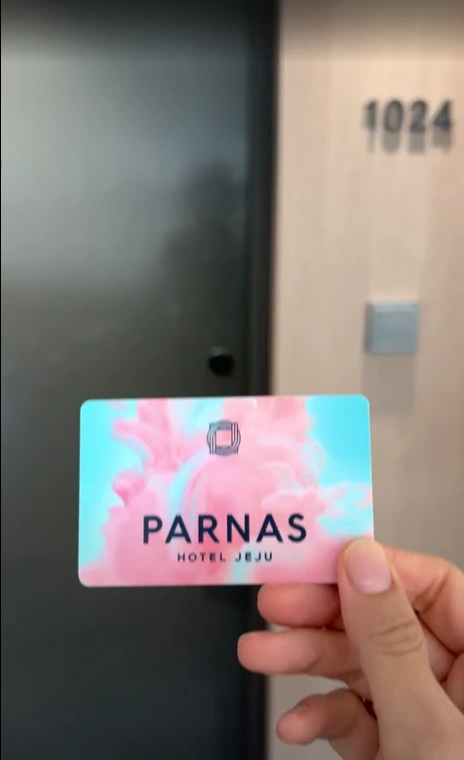
Keys and access instructions differ by hotel.
Check-in
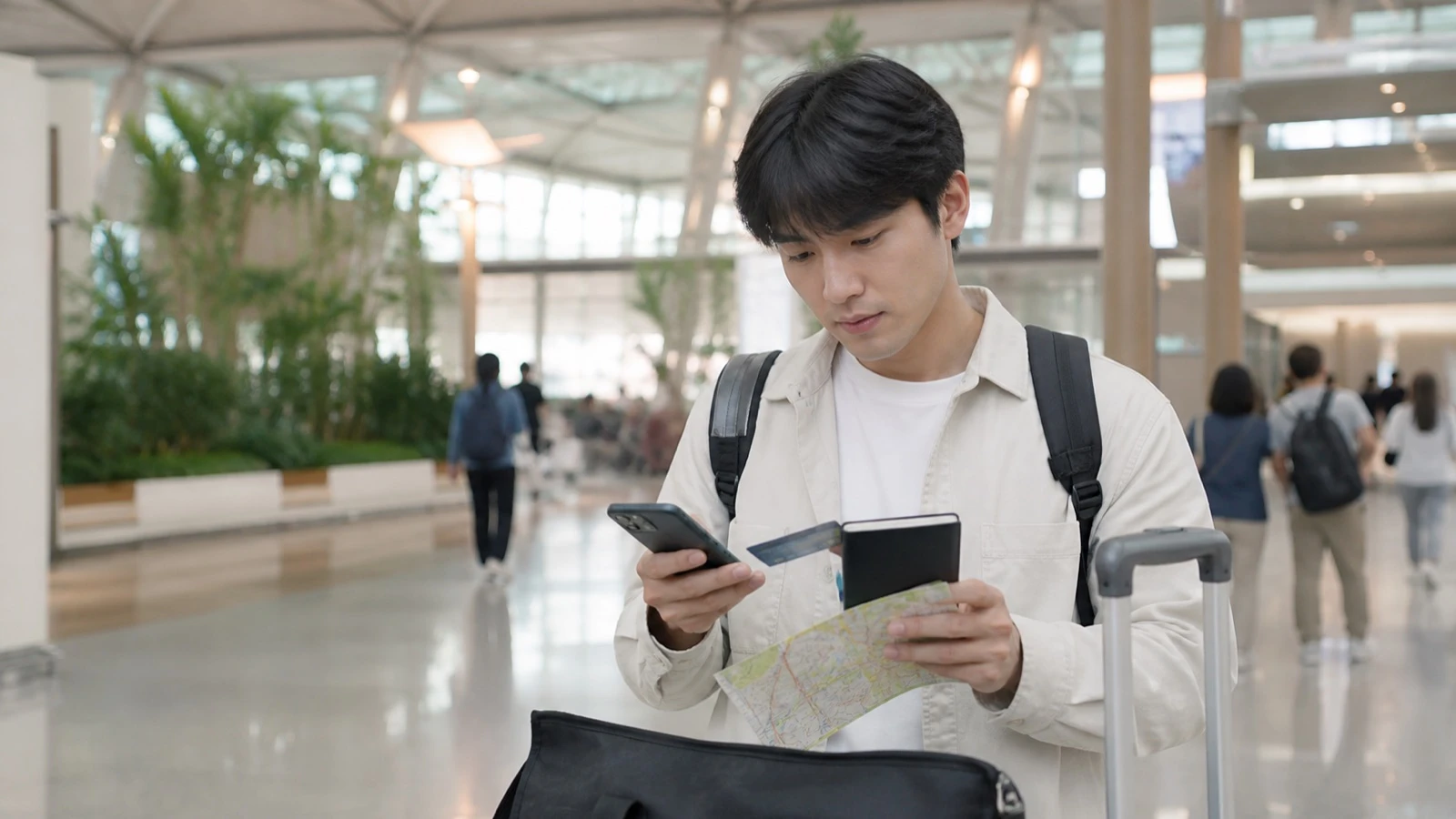
Have your passport and booking confirmation ready. Save the confirmation offline, for example as a screenshot, in case your phone has no data yet. Keep your original passport with you; the property will tell you what it needs to see or record. Toyoko Inn Korea's terms, for instance, say that passport details are recorded and a copy is made for foreign guests without Korean resident registration. Follow what the front desk asks in person, and do not send passport images to an email address you cannot confirm belongs to the hotel.
Payment and deposits
A security deposit for incidentals can be separate from your room payment. Even if you prepaid on a booking platform, the hotel may still ask for a card or cash deposit to cover incidental charges. Grand Hyatt Incheon's official FAQ, for example, says a credit card or cash deposit is required at check-in for the room and incidentals.
Before you hand over a card, ask:
- How much is it, and in which currency?
- Which payment methods are accepted?
- Is this a charge or a pre-authorization (a temporary hold)?
- How and when is it released?
- Can I have a receipt?
If you think you are being asked to pay for something you already paid for, ask the desk to show you what the charge covers before paying again. If your card does not go through, see our guide on what to do when a foreign card is declined in Korea.
Your room key and room
If your room key also operates the elevator, or your room has a card slot that controls the power, ask staff for a quick demonstration. Do not put a random card in the slot to keep the power on; use what the hotel gives you.
While you are at the desk, note the check-out time and ask what is included: breakfast, water, toiletries, the minibar. Do not assume anything in the fridge is free. If something is wrong, such as the bed type, cleanliness or a broken fixture, report it to the front desk right away rather than waiting until check-out.
Check-out
Check-out times vary even among hotels in the same country. Three examples from official hotel pages:
| Property | Check-out |
|---|---|
| Toyoko Inn (Korea) | 10 a.m. |
| Grand Hyatt Incheon | 11 a.m. |
| Sotetsu Hotels The Splaisir Seoul Dongdaemun | 12 p.m. (noon) |
These are examples only, not a Korea-wide rule. Confirm your own hotel's time. Late check-out may depend on availability and may cost extra.
At check-out:
- Return any physical key or key card as instructed.
- Review the itemized bill line by line.
- Ask for a receipt, and know which one you need. Grand Hyatt Incheon's FAQ notes that the hotel issues receipts for charges paid directly to it, while booking documents come from the third-party provider.
- Ask how your deposit will be released. Ask what confirmation the hotel can provide, and who to contact if the deposit or hold still appears after the timeframe they give you.
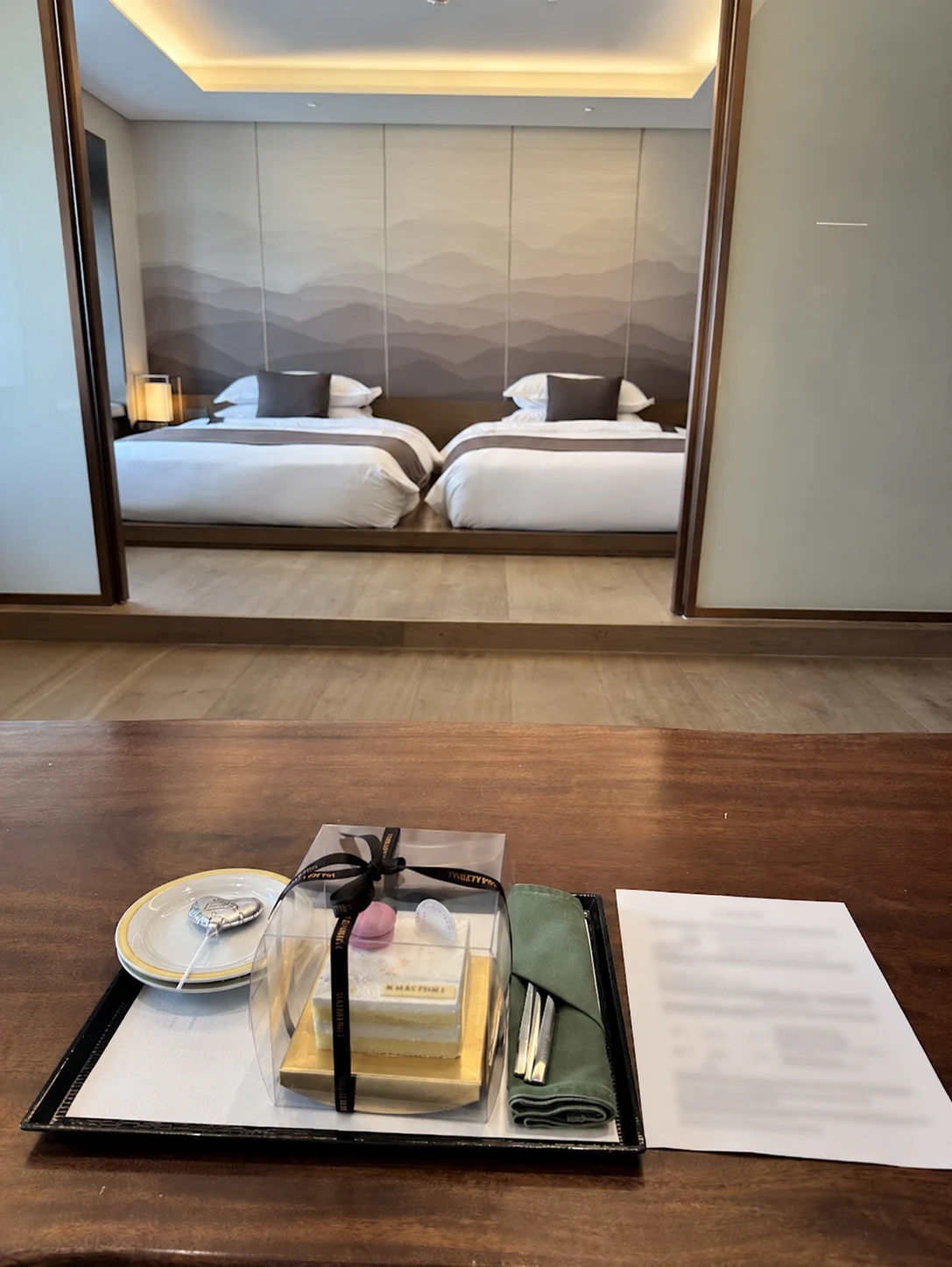
Room furnishings and items vary by booking. Confirm what is included; photographed notices reflect the time of the visit.
Luggage before check-in and after check-out
Many hotels will hold bags before check-in or after check-out, but only with permission. Ask about hours, any fee, items they will not accept and how you collect your bag, usually with a tag or ticket. Do not assume overnight storage is free or available. Some properties offer self-service lockers under limited conditions, as the Sotetsu Dongdaemun FAQ describes. Keep your passport, cash and electronics with you. If the hotel cannot help, see our Seoul luggage storage guide.
Six useful Korean phrases
- 예약했어요 (yeyak-haesseoyo): I have a reservation.
- 늦게 도착해요 (neutge dochak-haeyo): I will arrive late.
- 보증금인가요? (bojeunggeum-ingayo?): Is this a deposit?
- 체크아웃은 몇 시예요? (chekeu-aus-eun myeot si-yeyo?): What time is check-out?
- 짐을 맡길 수 있어요? (jim-eul matgil su isseoyo?): Can I leave my luggage?
- 영수증 주세요 (yeongsujeung juseyo): A receipt, please.
Frequently asked questions
›What should I do if I will arrive at my Korean hotel after midnight?
Tell the property in advance through an official channel, such as the hotel's own website, email or your booking platform's messaging, and keep the reply. Some hotels may cancel a reservation if a guest does not arrive by the expected time without notice, so a short message helps.
›If I prepaid my room online, will the hotel still ask for money at check-in?
It might. Room payment and a deposit for incidentals are separate, and some hotels require a card or cash deposit even for prepaid bookings. Ask the amount, the currency, whether it is a charge or a temporary hold, and how it will be released.
›Is check-out at the same time at every hotel in Korea?
No. Each property sets its own time. Among the official examples in this guide, one hotel lists 10 a.m., another 11 a.m. and another noon. Confirm your own hotel's time at check-in.
›Can I leave my bags at the hotel after check-out?
Often, but only with the hotel's permission. Ask about hours, fees, restricted items and how to collect your bag. Do not assume overnight storage is free or available, and keep valuables such as your passport with you.