Myeongdong vs Hongdae vs Gangnam: Where to Stay in Seoul
Choose a Seoul base by your actual itinerary: compare Myeongdong, Hongdae and Gangnam, airport rail, hotel-to-station walks and the checks that matter.
For a first Seoul trip built around central sightseeing, start your hotel search in Myeongdong. For a trip centered on west-side cafés, music and evenings out, look at Hongdae. For repeated appointments, work or sightseeing south of the Han River, compare Gangnam locations near the stations you will actually use.
These are starting points, not rules about your age or travel style. The right hotel is the one that makes your own days easier. A good room in the wrong part of a broad neighborhood can still give you a long walk every morning.
The comparison that matters
| Base | Best starting point when… | Check closely |
|---|---|---|
| Myeongdong | Much of your itinerary is in central Seoul | Exact station, street slope and route with luggage |
| Hongdae | You want west-side exploring and convenient airport rail | Walk from the AREX platform, street noise and late arrival plan |
| Gangnam | You have repeated plans south of the river | Which part of Gangnam, nearest station and repeated cross-city journeys |
We are not assigning a fixed nightly price to each area. Compare your actual dates, room type, taxes and cancellation terms. Neighborhood reputation cannot tell you whether a particular room is good value.
Myeongdong: start here for a central sightseeing trip
Myeongdong works well as a search area if your plans include shopping in central Seoul, Namdaemun and journeys toward Jongno's palaces and historic streets. It does not put every attraction within walking distance, but it gives many first-time itineraries a useful central starting point.
The name on the listing needs a closer look. Some hotels marketed as Myeongdong are nearer Euljiro, Chungmuro or Hoehyeon than Myeongdong Station itself. Those locations can be useful, but they produce different routes. Place the exact hotel entrance on a map and see which station you would use most often.
Myeongdong Station is on Line 4. If the hotel you are considering is nearer a Line 2 station, evaluate that actual walk instead of assuming the neighborhood has one interchangeable station. A steep final street or a stair-only entrance matters more when you arrive with a suitcase.
Choose this area if it simplifies several days, not just one shopping evening. If nearly all your saved places are around Hongdae or south of the river, a central-sounding name is not enough reason to stay here.
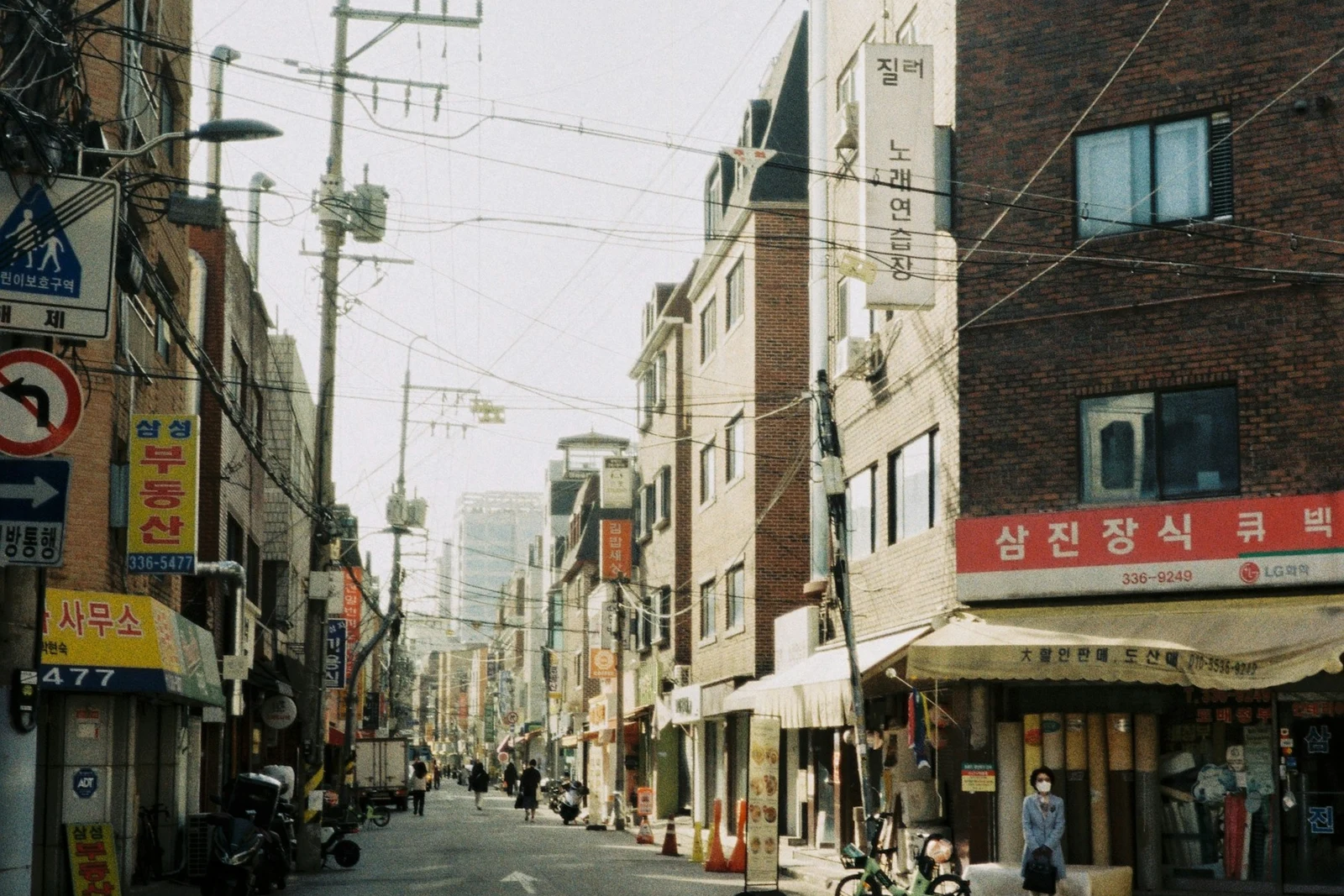
Hongdae: useful for west-side days and airport rail
Hongdae is a good search area when you expect to spend time around Hongik University, Yeonnam or other west-side neighborhoods. Seoul's tourism material describes the area's music and street-performance culture. That may be part of the appeal, but it also makes the exact street and room position worth checking.
For airport travel, the important station is Hongik University, also written Hongik Univ. The AREX operator's station page confirms its place on the all-stop airport railway and connections with Line 2 and the Gyeongui–Jungang Line. Use the all-stop service for Hongik University; the airport Express service is a different product and is not a Hongdae stop.
Direct rail is useful, but the door-to-door journey still includes the walk through the station and onward to your accommodation. Look at the exit and elevator route that suits your hotel. “Near Hongik University Station” does not tell you how far the room is from the airport-rail platform.
If sleep is a priority, read recent reviews about sound and look at what is immediately below and beside the building. Ask about room orientation when it matters. A side street can feel different from a busy entertainment lane, but no neighborhood label guarantees a quiet room.
For a late flight, check the last usable airport connection and the property's check-in arrangements for your date. A direct rail line is not the same thing as a 24-hour service.
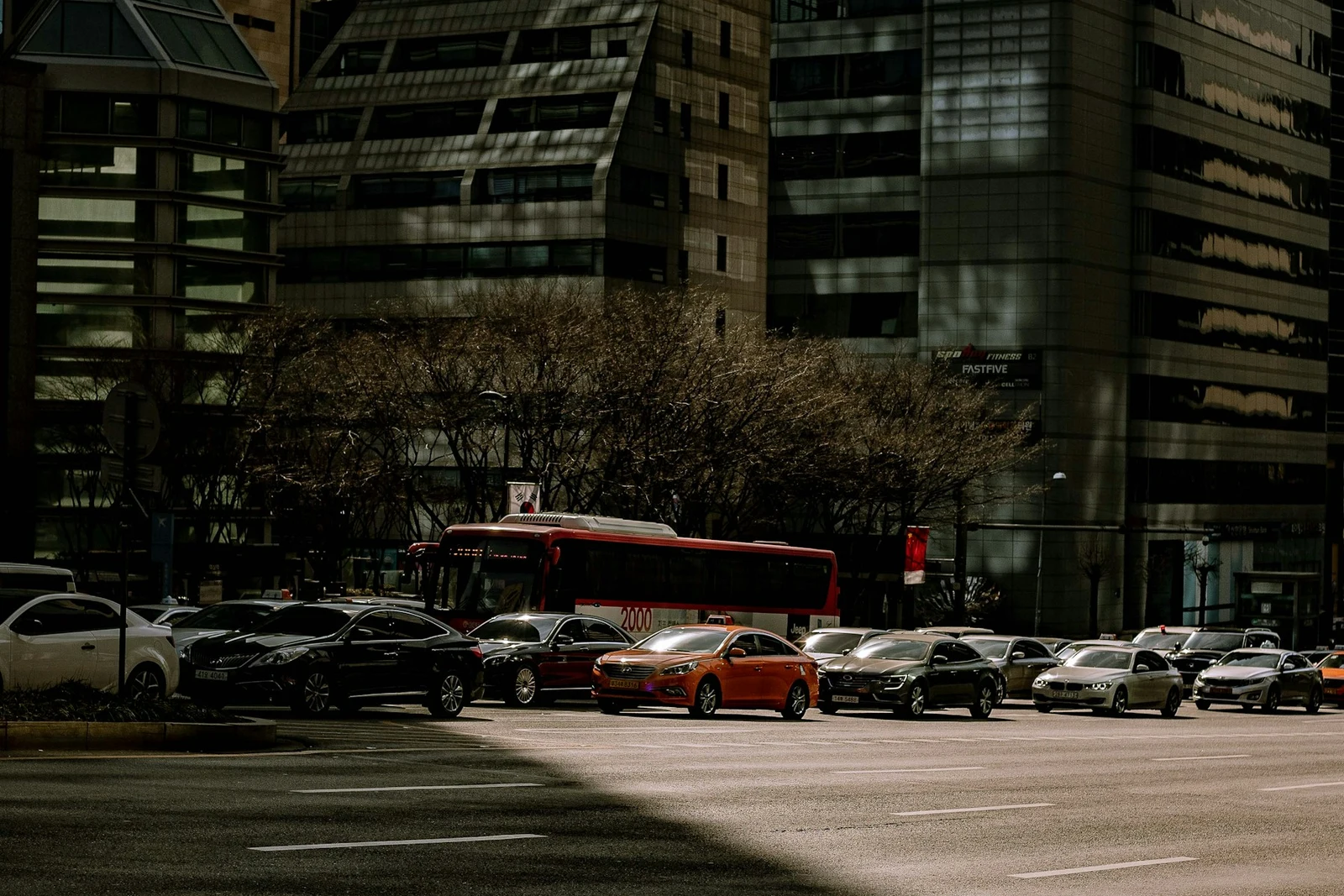
Gangnam: choose a station before choosing a hotel
Gangnam is often used as if it were one small hotel district. It is not. A listing near Gangnam Station, a room near Samseong and a stay around another south-side station can serve very different trips.
Start with the address of the activity that brings you south. If you have several workdays or appointments in the same area, being close to that destination may be more useful than being near a northern sightseeing stop you will visit once. For a COEX-centered trip, compare the actual COEX and Samseong-area route rather than assuming any “Gangnam” hotel is close enough.
The reverse also applies. If your saved itinerary is mostly palaces, Jongno, Myeongdong and Hongdae, staying south may add repeated journeys that you would rather avoid. Check complete routes for the times you expect to travel. We are not promising a single travel time between two large districts.
Do not choose Gangnam solely because you assume it is more luxurious, quieter or safer. The building, room, immediate street and transport connection are the things you can evaluate. Hotels of different types exist across Seoul.
A ten-minute test before you book
Pick three destinations you will definitely visit, rather than every place you might go. For each candidate hotel, check the route from the entrance, including the walk, platform access and transfers. Use a local mapping app and your likely travel time. Our Korea map app comparison can help you choose a planning tool.
Then check the journey you will make while tired: airport arrival, a late evening or the departure morning. A hotel that is slightly less convenient for sightseeing may still work if it solves a repeated work journey or a difficult arrival. Decide which trade-off matters to you.
Finally, compare the room itself. Check bed configuration, floor area, private bathroom, elevator access, heating or cooling arrangements, luggage storage and cancellation terms. If step-free access is essential, ask about the complete route to the room; a lift in the building is only one part of it.
Should you split the stay?
For a short trip, our default is one base. Changing accommodation means packing, checking out, traveling and waiting for the next room. A second neighborhood has to save enough repeated travel to justify that effort.
A split can make sense on a longer trip with clearly different phases: several workdays near a south-side venue followed by several sightseeing days in central Seoul, for example. Compare that benefit against the changeover day. You can visit a neighborhood without sleeping there.
Before booking, confirm your arrival arrangements directly with the property when necessary. Our Korea hotel check-in guide covers the practical questions to settle before reaching reception.
Frequently asked questions
›Which of the three is best for a first visit?
For a central sightseeing itinerary, Myeongdong is our starting point. Hongdae or Gangnam may be better when your actual destinations cluster there. Compare the hotel entrance and station route before choosing.
›Can I take the airport train directly to Hongdae?
The AREX all-stop service calls at Hongik University Station. The Express service does not. Check the timetable and your onward hotel walk for your arrival date.
›Is Hongdae only for younger travelers?
No. Choose by your plans and preferred street environment. Noise, room quality and station access are property-specific questions rather than age rules.
›Is Gangnam too far for sightseeing?
It depends on what you plan to see. It may suit repeated south-side destinations, while a mostly central or west-side itinerary may involve more travel. Compare complete routes instead of relying on a district-wide time estimate.