Landing at Incheon: A Step-by-Step Arrival Guide
From the plane to your hotel: immigration, e-Arrival Card, SIM pickup, T-money and getting into Seoul — everything you do in your first two hours at ICN.
Incheon (ICN) is one of the smoothest big airports on earth, and arrival is genuinely easy — but the first two hours go faster when you know the order of operations. Here is exactly what happens from the moment the seatbelt sign turns off, and the two or three things worth doing before you leave the building.
Before you start
Sort your entry paperwork on the plane or before boarding, because there is nothing to buy or queue for once you land if you have it ready.
- e-Arrival Card: Since January 1, 2026, Korea is fully digital and the old paper arrival card no longer exists. Submit the e-Arrival Card online at e-arrivalcard.go.kr with your passport number, flight number and the address where you are staying. You can file it up to a few days before arrival — do it at home on hotel WiFi.
- K-ETA holders are exempt: If you hold a valid K-ETA (the travel authorization some nationalities apply for), you do not need the e-Arrival Card. That exemption runs through December 31, 2026.
- Know your terminal: ICN has two terminals. Terminal 2 serves Korean Air, Delta, Air France, KLM and a few partners; almost everyone else uses Terminal 1. It matters later for where you catch transport, so check your boarding pass.
What you need
- Your passport and any arrival declaration or travel authorization required for your status. These documents serve different purposes; check the airport’s current instructions.
- A card or a little cash. Nothing costs money to enter, but you will want ₩30,000–50,000 handy for a SIM and transport.
- Your Seoul address written down — immigration and the e-Arrival Card both ask for it.
- A phone with your accommodation and a maps app ready. Korea uses Naver Map or Kakao Map rather than Google Maps for directions. See our essential apps guide for what to install before you fly.
Step-by-step
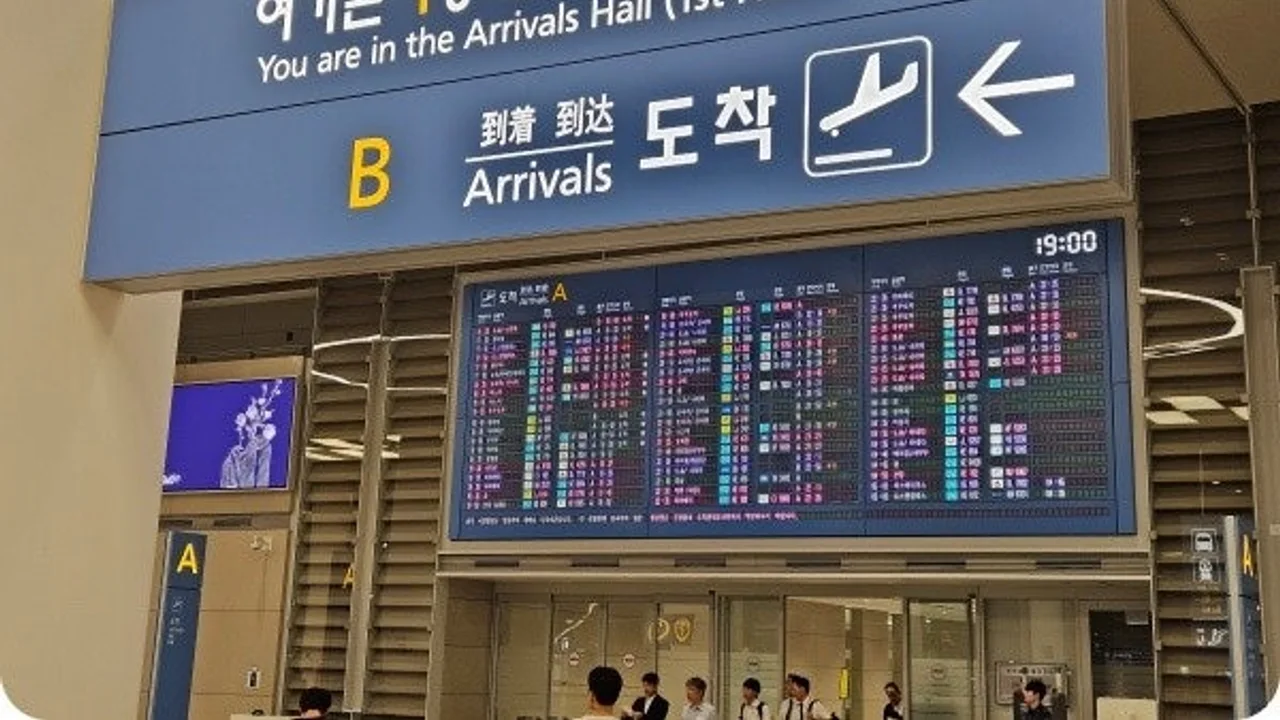
- Follow the purple "Arrival / Immigration" signs. Signage is in English the whole way. From far gates it can be a 10–15 minute walk plus a short shuttle train inside the terminal.
- Clear immigration. Follow the signs for your passport and status. Use automated gates only if airport staff or the current eligibility instructions confirm you qualify; do not assume every visitor can use them.
- Collect your bag. Check the screens for your flight's carousel. Free luggage carts are everywhere.
- Walk through customs. If you have nothing to declare, take the green lane — you usually just hand over a customs slip or walk straight through.
- Exit into the arrival hall. Now you are landside. This is where you pick up your SIM and T-money card (next section).
- Head to transport. Follow signs down to the basement (B1) for the AREX train, or to the ground-floor curb (gates 4–9 area) for airport buses and taxis.
What to budget for
Check the current quote for your connection plan, transport card and onward journey. T-money card prices and refund arrangements differ from the fare loaded onto the card. For airport travel, compare the train, bus and taxi options using your terminal and hotel location.
Counter hours and product availability vary. Confirm your collection desk before buying; do not assume every SIM counter operates overnight or that an online offer is always cheaper.
Common problems (and fixes)
- "I forgot the e-Arrival Card." You can still fill it on your phone in the immigration hall using the free airport WiFi (network "AIRPORT WiFi Free"), or a staff member will point you to a kiosk. Do it before you reach the desk.
- Long immigration lines. Peak crunch is late morning and early evening when banks of flights land together. If your line is crawling, look for the automated e-gates; eligible passport holders skip most of the wait.
- My eSIM won't activate. Follow your provider’s activation instructions using a reliable connection. If it fails, contact the seller or its support counter; another provider’s counter may not support your product.
- Wrong side of the airport. If you took the free inter-terminal shuttle to the "wrong" terminal by mistake, note it only runs one way on some loops; ask staff rather than doubling back blindly.
Good to know
- You need almost no Korean. Signs, immigration and the transport counters all work in English. A few polite phrases still go a long way, but nothing here requires them.
- Money: ATMs marked "Global" in the arrival hall take foreign cards, and exchange counters are fine for a small top-up (rates are better in the city). Korea is very card-friendly, so you do not need much cash.
- Late arrival: check the final train and current night-bus options for your terminal. If you use a taxi, confirm the applicable fare, tolls and surcharges.
- Terminal 2 travelers: your AREX, bus stops and taxi ranks are all clearly signed and slightly less crowded than Terminal 1 — the process is identical.
Use the terminal and immigration instructions for your flight
Incheon Airport's arrival sequence separates immigration, baggage claim and the arrival hall. Confirm your terminal against your flight rather than an airline rule of thumb. The airport's immigration guidance distinguishes registered foreign residents from visitors who need an arrival declaration. Check the declaration requirements for your own status before departure. Keep the hotel address in Korean and a screenshot of your onward route ready for use after collecting your bag.
Frequently asked questions
›Do I need a K-ETA or the e-Arrival Card to enter Korea?
Most short-term visitors need one or the other. Since January 1, 2026 the paper arrival card is gone and everyone fills the e-Arrival Card online, except travelers holding a valid K-ETA, who are exempt through December 31, 2026. Fill whichever applies before you land.
›Where do I get a SIM card and T-money card at Incheon?
Check your provider’s current counter location and opening hours at your arrival terminal. Eligible airport convenience stores can sell transport cards, but availability and hours vary.
›How long does it take to get from the plane to leaving the airport?
Plan for about 60 to 90 minutes: 10–15 minutes to walk to immigration, 20–40 minutes at passport control on a busy arrival, then baggage claim and customs. Off-peak it can be much faster, especially if you qualify for the automated e-gates.
Sources and updates
Last edited on October 12, 2026. Sources support the specific details discussed in the guide; check the provider for current prices, availability and eligibility.