Ordering Korean Fried Chicken: Flavors, Portions and Half-and-Half
Order Korean fried chicken with confidence: compare flavors, half-and-half choices, bone-in and boneless formats, portions, extras and takeaway details.
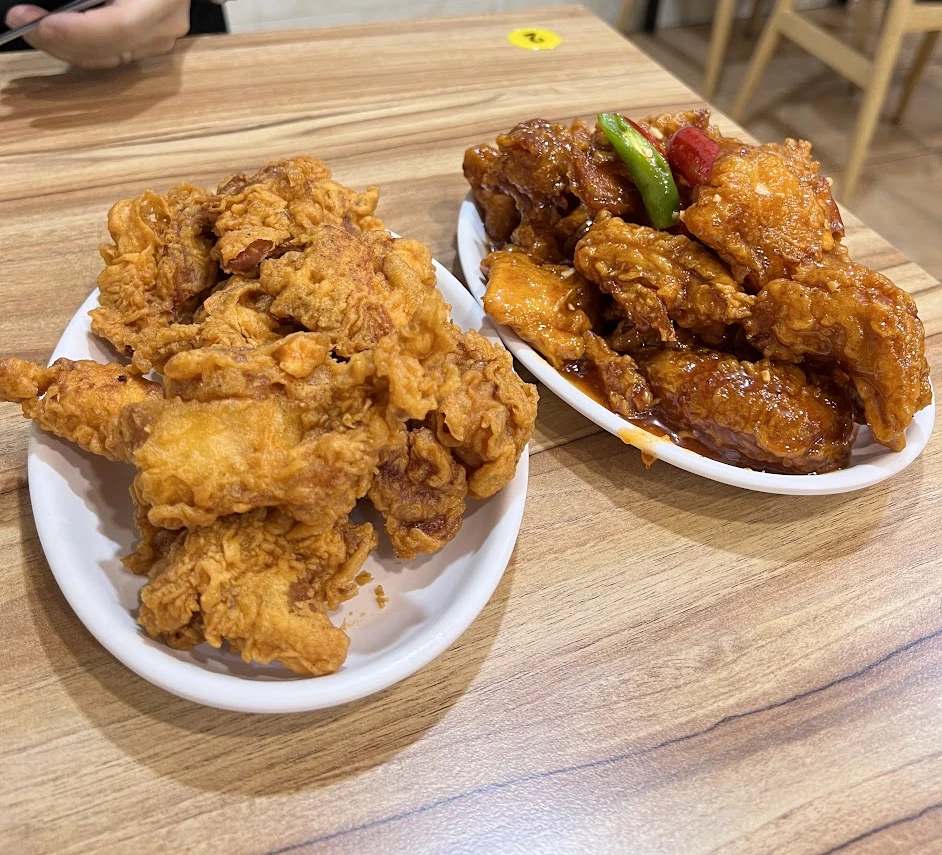
Choose a flavor, a bone-in or boneless format, and the amount before adding extras to your Korean fried chicken order. Then check which half-and-half combinations the shop offers and confirm the total. This guide walks through those choices for a first dine-in or takeaway meal.
Start with the three main flavor families
The Korea Tourism Organization's introduction to Korean fried chicken presents it as a crisp, much-loved dish that comes in many sauce variations. For ordering purposes, it helps to think in three broad families.
Plain fried chicken, often written huraideu (fried), has no sauce coating. Seasoned chicken, called yangnyeom (seasoned), is coated in a sticky sweet-and-spicy sauce. Soy-based chicken, labeled ganjang (soy sauce), usually leans savory and lightly sweet, often with garlic.
Spice level is not standardized. One shop's "red" or "hot" item can be gentle, while another's can be properly fiery. Judge by the specific named product rather than the color of the sauce, and ask staff "maewoyo?" (is it spicy?) if you are unsure.
What half-and-half really means
Banban (half-half) means one order split between two flavors. It normally appears as its own menu item, such as half plain and half seasoned. It does not mean you can combine any two products you like. A chain menu such as Kyochon's Korean-language chicken menu lists honey, soy and red flavors alongside specific half-and-half options. That brand is only an example, not a recommendation.
Bone-in, boneless, whole or half
Check whether the menu item is bone-in. Boneless is often labeled sunsal (boneless meat). Boneless does not guarantee zero bone fragments, so eat carefully, especially with children.
Size formats vary too. A whole chicken is han mari (one whole bird), and a half is ban mari (half bird), though not every shop sells halves. Rather than assuming how many people an order feeds, read what the menu actually states: piece count, weight, or what a set includes. The Kyochon menu itself notes that prices differ between stores, and set contents can differ across shops in general.
A practical ordering sequence
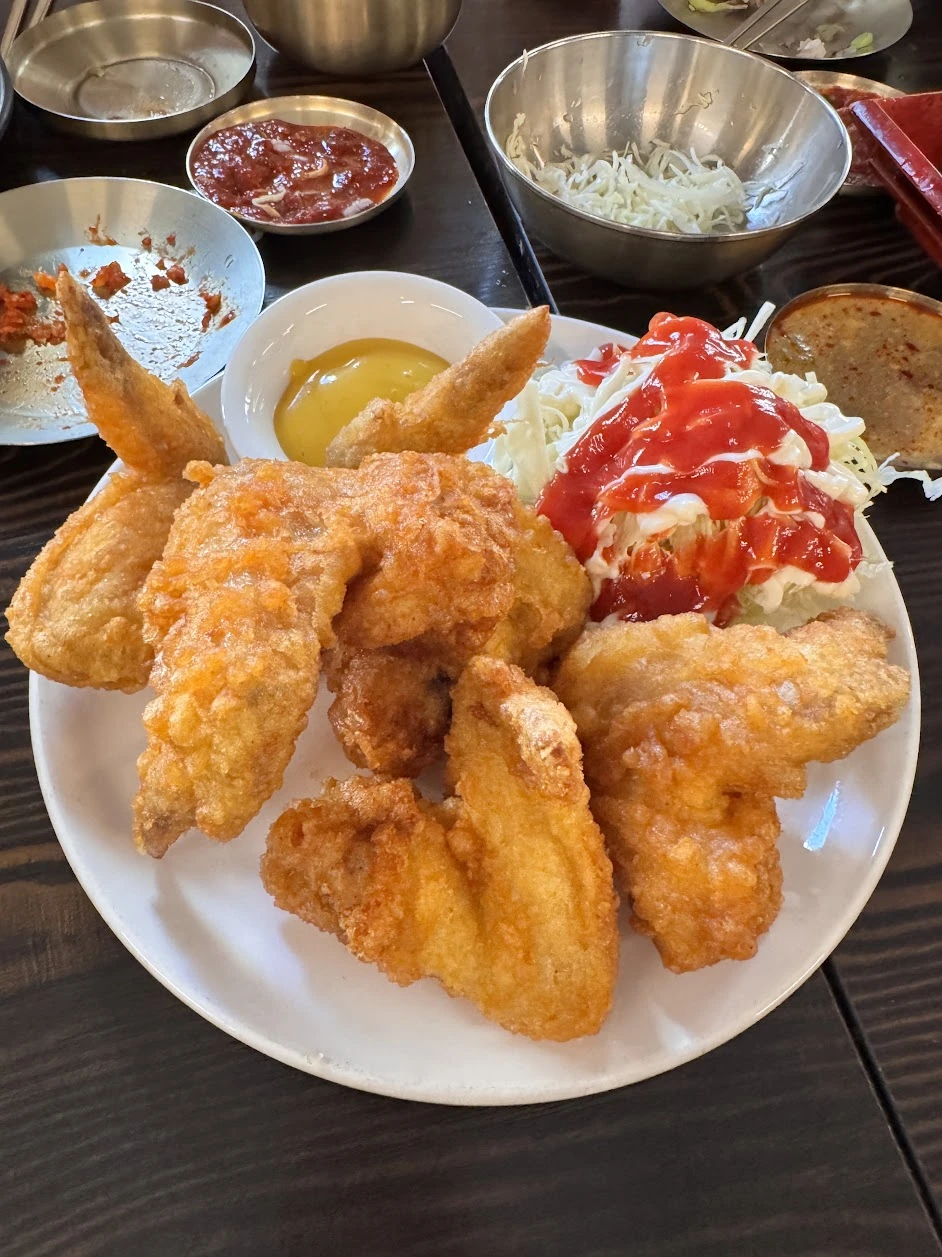
First, decide whether you are eating in or ordering pojang (takeaway). Then choose your flavor or a listed banban option, followed by bone-in or boneless, and finally the size. After that, add drinks and any extra sauces. Ask whether chikin-mu (pickled radish cubes) is included rather than assuming. Before paying, check the total, since drinks, dips and extra sides can add up.
Many shops use tablets or kiosks, and our guide on how to order at a Korean restaurant covers common screens and phrases. If you would rather stay in, see our Korean food delivery apps guide.
For a group, compare a listed banban order with separate flavors and check the total amount. Dining solo? Look for a smaller format that suits your appetite, and our tips on eating alone in Korea can help.
Takeaway and hotel rooms
Ask whether your order will be prepared fresh and how long the wait will be. Before leaving, open the bag and confirm the radish, sauces and wipes you expected are there. Sauced chicken softens in a closed box, so eat it soon.
Some hotels and guesthouses restrict outside food or strong smells in rooms and shared lounges. Check house rules and ask how to dispose of bones and boxes.
Chimaek is optional
Chimaek (chicken plus maekju, beer) is a popular pairing, but it is entirely optional. Soft drinks or water work just as well, and you never need alcohol to enjoy the meal. For another shared table, see our Korean BBQ first visit guide.
Checking ingredients and allergens
Batter commonly contains wheat, and sauces may include soy, sesame, nuts or other allergens. Do not assume any item is gluten-free. Ask for ingredient or allergen information, show a translated note, and choose a shop that can confirm details if your needs are serious.
Frequently asked questions
›Can I mix any two flavors in a half-and-half order?
Not necessarily. Banban usually refers to the specific splits a shop lists on its menu. If your combination is missing, ask, but some shops will not change it.
›How much chicken should two people order?
It depends on the format. Compare piece counts, weight and set inclusions on the menu rather than relying on a set number of people.
›Is pickled radish always included?
Often, but not always. Ask when ordering, and check your takeaway bag before leaving. Extra dips and sides may cost more.