Your First Korean BBQ Meal: Ordering, Grilling and Paying
A practical first Korean BBQ meal: understand portions, ask who grills, make wraps, check extras and handle the bill without assuming every restaurant works alike.
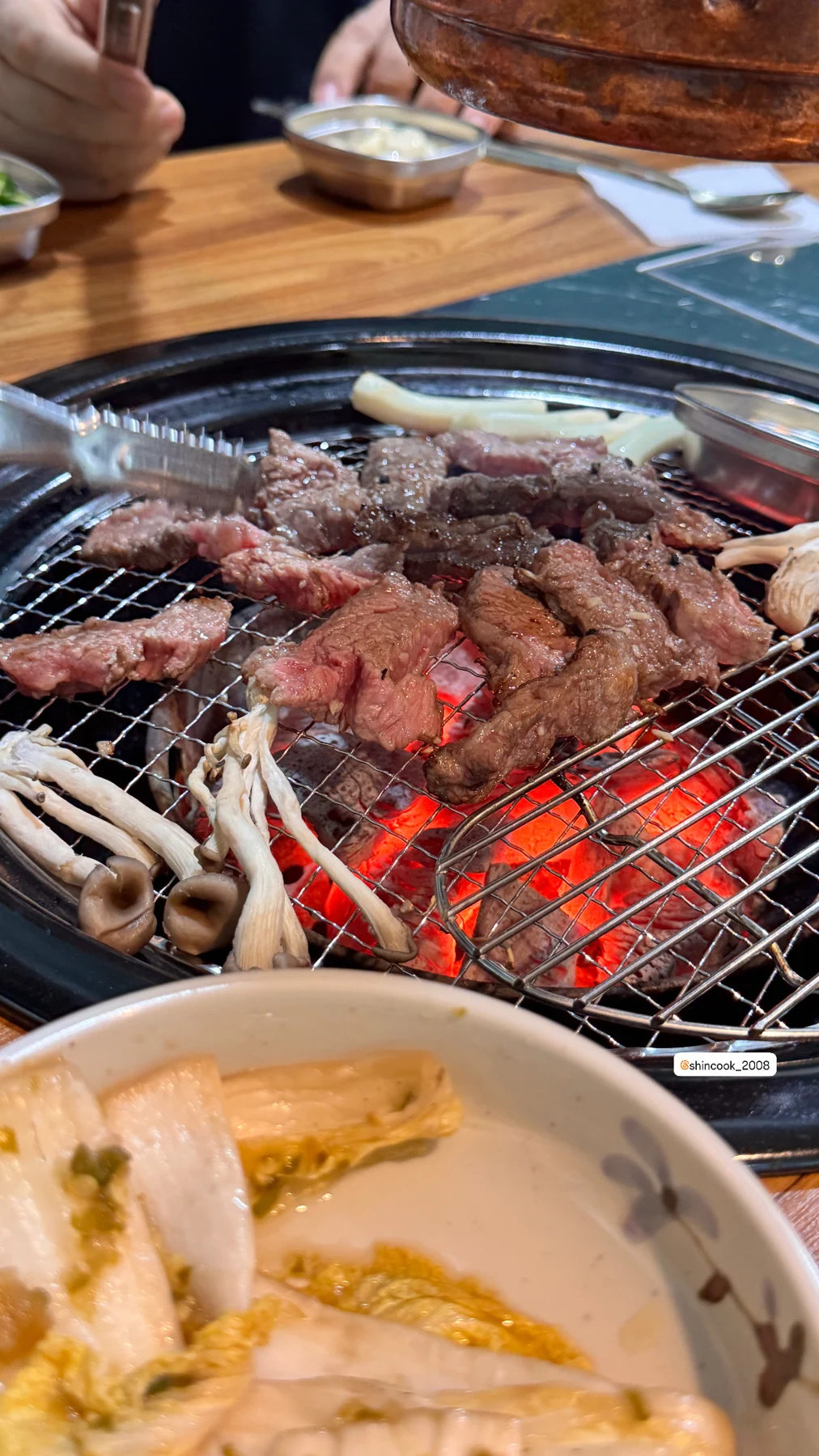
At a Korean BBQ restaurant, meat is grilled at the table, either by staff or by diners. You eat it in small bites with side dishes and leafy wraps. Two questions help you get started. Before you sit down, ask how the restaurant sells its meat. Once you're seated, ask who does the grilling.
Know the common cuts
Menus vary, but a few words come up often. Samgyeopsal (삼겹살, samgyeopsal) is pork belly. The Korea Tourism Organization's Korean food guide describes it as a classic grilled dish. Moksal (목살, moksal) is pork shoulder or neck. Galbi (갈비, galbi) means ribs, and it can be pork or beef, so check which one the menu means.
Some meat comes plain, and the flavor comes from the dips and wraps. Other dishes come marinated, so they brown faster and can scorch. If the menu is unclear, point to the item and ask whether it's pork or beef, and whether it's plain or marinated.
Portions and pricing: ask before you sit
Pricing differs from place to place. Some restaurants charge per serving (인분, inbun, "portion"), some charge by weight, and some sell sets. Some have a minimum order and others don't. Don't assume every restaurant requires two servings, and don't assume none do.
If you're dining alone, ask at the entrance before you're seated: 1인분도 돼요? (Il-inbun-do dwaeyo?, "Is one serving okay?"). Our guide to eating alone in Korea has more tips. If there's a line, read the restaurant waitlist guide. For call buttons and ordering basics, see how to order at a Korean restaurant.
Who does the grilling?
It depends on the restaurant, as the KTO guide also notes. At some places staff cook everything. At others they start the meat and hand over the tongs. At others, you grill it yourself. Ask rather than assume: 구워 주실 수 있어요? (Guwo jusil su isseoyo?, "Could you grill it for us?"). If you're grilling yourself:
-
Keep one pair of tongs for raw meat and use different tongs or chopsticks for cooked pieces. Ask for an extra pair if you only have one.
-
If scissors are provided, use them to cut meat into bite-size pieces on the grill; if not, ask staff.
-
Ask a staff member to confirm that your meat is ready to eat if you are unsure.
-
Move finished pieces to the cooler edge so they don't burn. If the grill plate turns black, ask whether it can be changed.
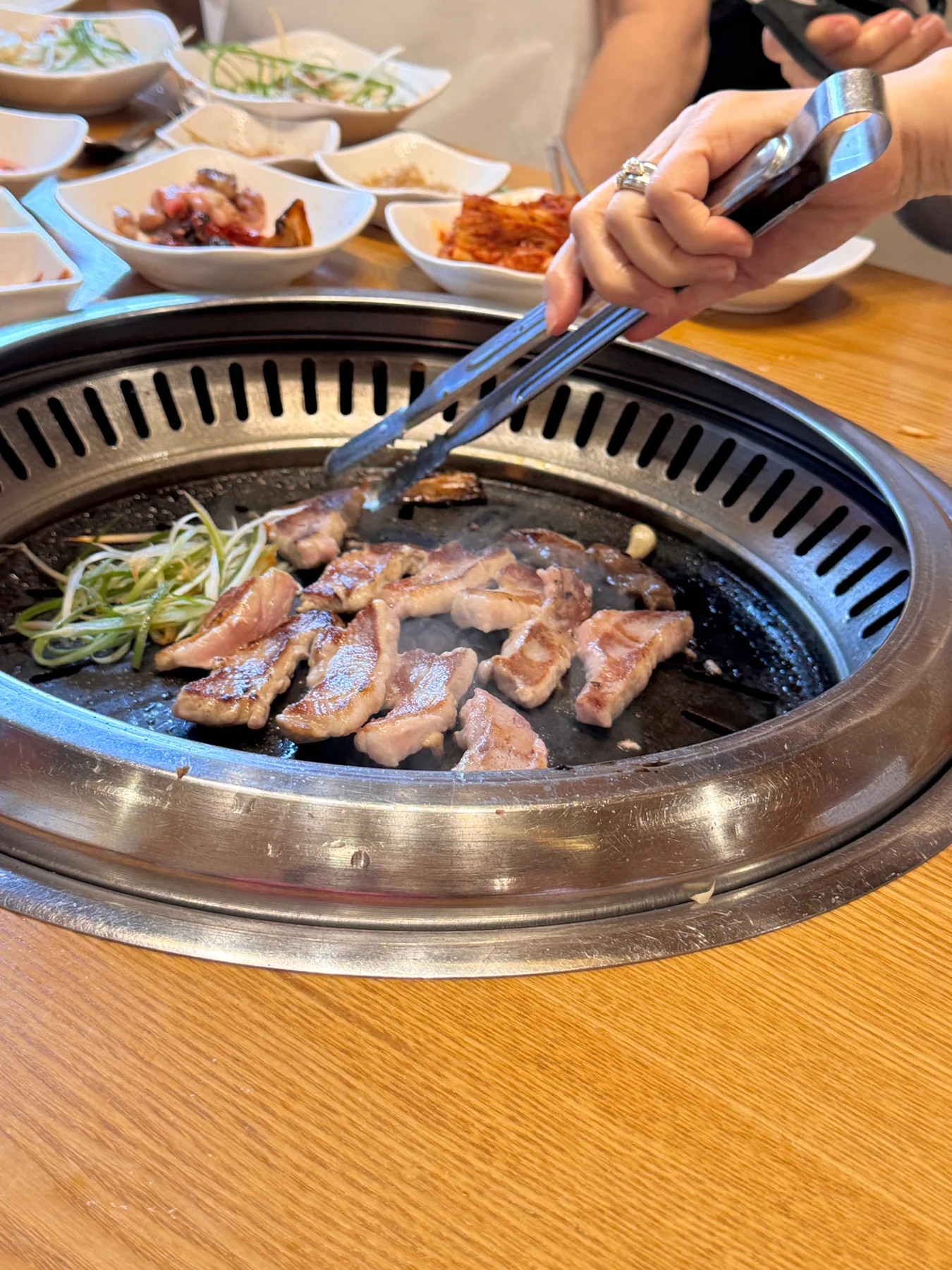
Wraps, side dishes and extras
Ssam (쌈, ssam) means wrap. Take a lettuce or perilla leaf, add a piece of meat, maybe some garlic or sauce, and fold a small wrap that is comfortable to eat. You can also eat the meat on its own. Nobody expects perfect technique.
Side dishes (반찬, banchan, "side dishes") usually arrive with the meal. Refills are common, but some restaurants charge for certain items or have a self-service station, so ask before you assume something is free. Many diners finish with rice, a stew (찌개, jjigae, "stew") or cold noodles (냉면, naengmyeon, "cold noodles"). These are usually priced separately, so check the menu first.
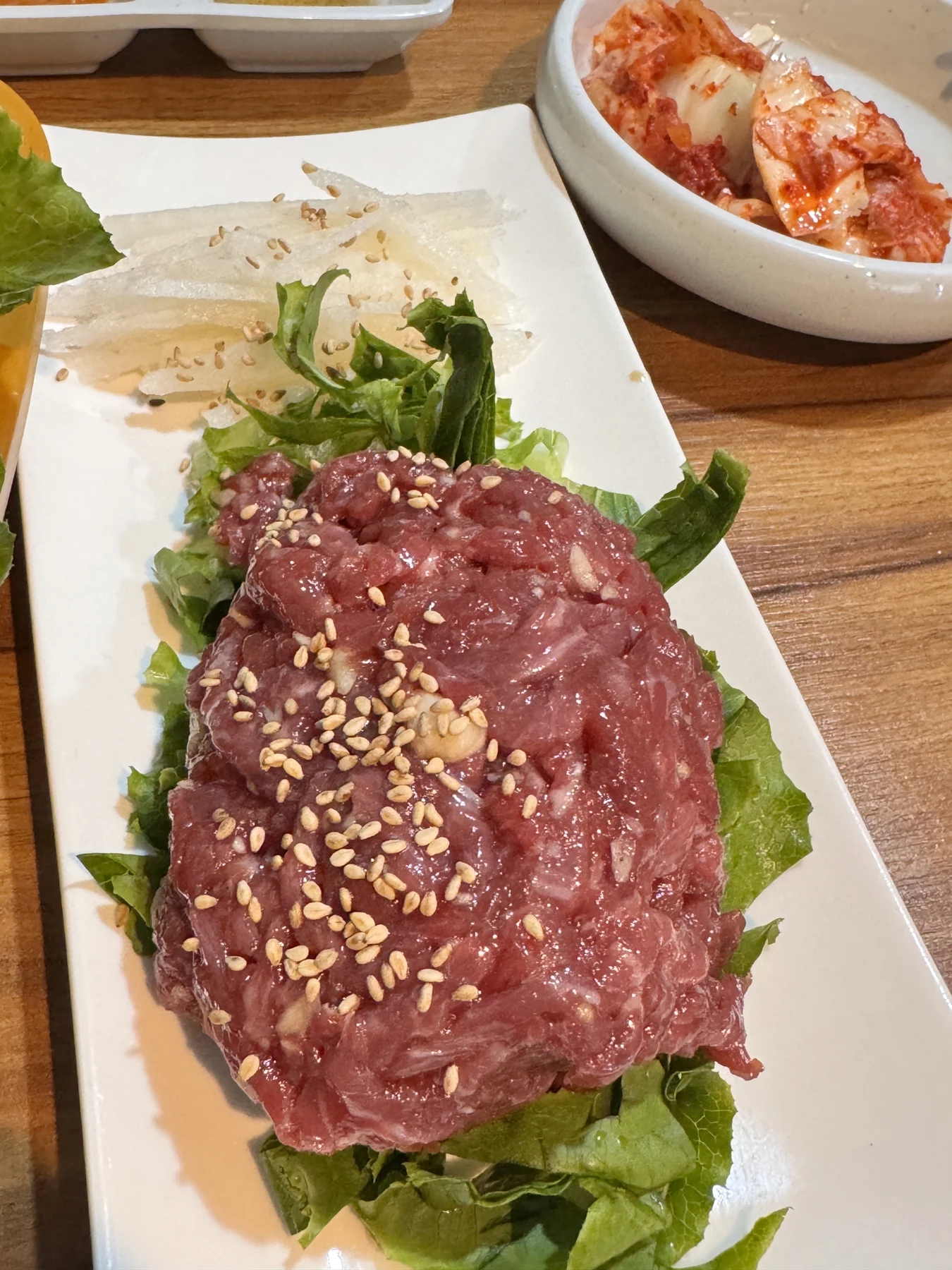
Yukhoe: seasoned raw beef, served separately
Yukhoe (육회, yukhoe, "Korean beef tartare") is seasoned raw beef served ready to eat, rather than meat waiting to go on your grill. The Korea Tourism Organization's yukhoe guide describes a sweet-savory seasoning that can include soy sauce, garlic and sesame. In the photo here, the beef is served with sesame seeds, pear and leafy greens; recipes and accompaniments vary.
If it is listed on the menu, check the portion, price and ingredients before adding it to your order. Do not assume every BBQ restaurant serves it or that it comes free with grilled meat. Ask whether it contains egg or other ingredients you need to avoid, and use clean eating utensils rather than tongs used for uncooked grilling meat.
Because yukhoe is raw, it carries a foodborne-illness risk. The FDA advises people at higher risk, including pregnant people, children under five, older adults and people with weakened immune systems, to avoid raw or undercooked meat. Choose a fully cooked dish if you prefer to avoid raw beef.
Smoke, coats and comfort
Overhead vents help, but your clothes may still smell of grilled meat afterward, so don't wear your best coat. Some restaurants offer bench seats with storage inside or covers for jackets, but not all of them do. Ask a staff member where to put your things.
Easygoing table etiquette
The mood is relaxed. The grill is shared, so pace yourself and let everyone take finished pieces. Placing a piece in a friend's bowl is something some groups do, but ask before putting food in someone else's bowl. Tell staff about dietary restrictions before ordering; sauces, marinades and side dishes can contain ingredients you cannot identify by sight. If you do not eat meat, check whether the restaurant can provide a suitable meal. Our vegetarian and vegan guide suggests better options.
Paying the bill
Some BBQ restaurants take payment at the counter as you leave, while others handle it at the table; ask if you are unsure. Check the bill against what you ordered, including extra portions and drinks. If your group wants to split the bill, ask the cashier before they process the payment.
Frequently asked questions
›Can I eat Korean BBQ alone?
At many restaurants, yes, but some have minimum orders. Ask at the entrance whether one serving is okay before you sit down.
›Will the staff cook the meat for me?
Sometimes. Some restaurants grill everything, some help partway and some leave it to you. Just ask, and you can also ask staff to confirm when the meat is ready.
›Are side dish refills free?
Often, but not always. Some items cost extra or are self-service. If you're unsure, ask before ordering more.